Technical Library · Dry-Type Transformer Cluster
Dry-Type Transformer: Types, Insulation, Cooling and Selection Guide
Technical reference updated 2026-07-28. Final design, testing and installation requirements must follow the project specification, applicable standards, local authority and qualified engineering review.
A dry-type transformer uses solid and air-based insulation and cooling rather than a conventional liquid-filled tank. The category includes multiple construction systems, ratings and enclosure arrangements, so the term “dry type” does not describe one universal product.
This Technical Library hub explains the principal types, insulation concepts, cooling methods, installation conditions and selection process. It is a neutral engineering reference; the paired Blog page covers price and procurement.
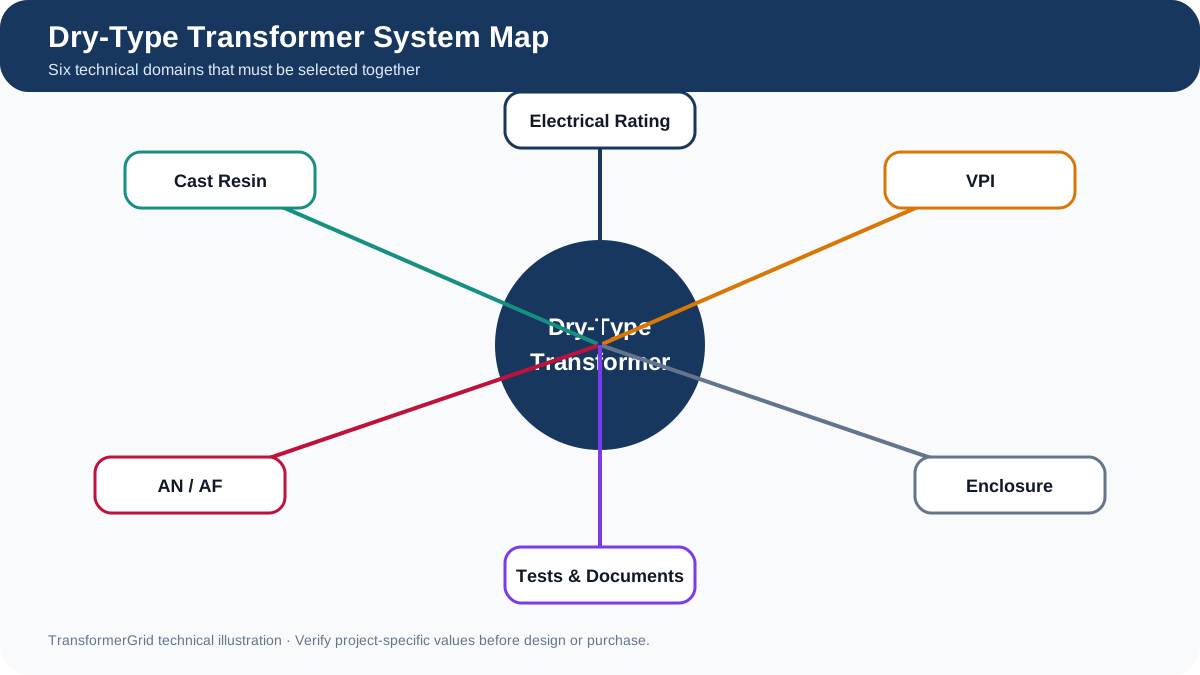
Main dry-type transformer families
Cast-resin transformers encapsulate windings in a cured resin system. VPI transformers use vacuum-pressure impregnation to drive varnish into the winding structure before curing. Open-wound and encapsulated variations exist, and manufacturers may use different internal details.
The correct family depends on environment, voltage, rating, contamination, maintenance strategy, repair philosophy, space, noise and project standards. The terms should be defined in the specification rather than assumed from marketing names.
Electrical and insulation variables
Selection begins with kVA, voltage, phase, frequency, connection, neutral, impedance and tap range. Insulation coordination, dielectric tests and system grounding must be consistent with the upstream and downstream network.
The insulation system also has a thermal class and a specified temperature rise. A high thermal class does not by itself guarantee long life; actual hot-spot temperature, loading, ventilation and manufacturing quality remain decisive.
AN and AF cooling
AN uses natural-air circulation around and through the transformer. AF uses fans to increase airflow and may provide additional rating or contingency capacity. AF requires sensors, controls, power supply, alarm logic and maintenance of moving parts.
The base and forced-air ratings should be clearly stated. Fans cannot compensate for an electrical room that has no effective path to remove the released heat.
Enclosure and room interface
Open indoor construction, ventilated NEMA enclosures and IP-rated arrangements provide different physical protection and airflow. Cable entry, louver location, filters, clearances and access doors are part of the thermal and maintenance design.
The room designer should use guaranteed loss data to size ventilation and should consider altitude, ambient temperature, adjacent heat sources, noise, structural loading and access for replacement.
A disciplined selection sequence
A practical sequence is: define the system; characterize the load; describe the environment; choose the insulation family; establish thermal and enclosure requirements; define tests and documents; then compare manufacturers.
Project-specific design, protection, room ventilation and approval must be completed by qualified local parties. TransformerGrid can coordinate RFQ clarification, drawings, FAT documentation and export delivery with verified manufacturing partners.
FAQ
Is every cast-resin transformer a dry-type transformer?
Yes, cast resin is one major dry-type construction, but not every dry-type transformer is cast resin.
Can dry-type transformers be installed outdoors?
Some designs can, but the enclosure, environment, condensation and maintenance strategy require specific engineering.
What is the difference between AN and AF?
AN relies on natural air. AF adds forced airflow with fans and controls.
Does dry type mean maintenance free?
No. Cleaning, connections, ventilation, sensors and insulation condition still require inspection.
This page is educational. TransformerGrid coordinates RFQ clarification, drawings, documentation, FAT and export delivery with verified manufacturing partners; it does not replace the utility, local design authority or qualified installation contractor.