Technical Library · Dry-Type Transformer Cluster
Dry-Type Transformer Testing and Acceptance: Partial Discharge, Ratio, Resistance, Losses and Heat Run
Technical reference updated 2026-07-28. Final design, testing and installation requirements must follow the project specification, applicable standards, local authority and qualified engineering review.
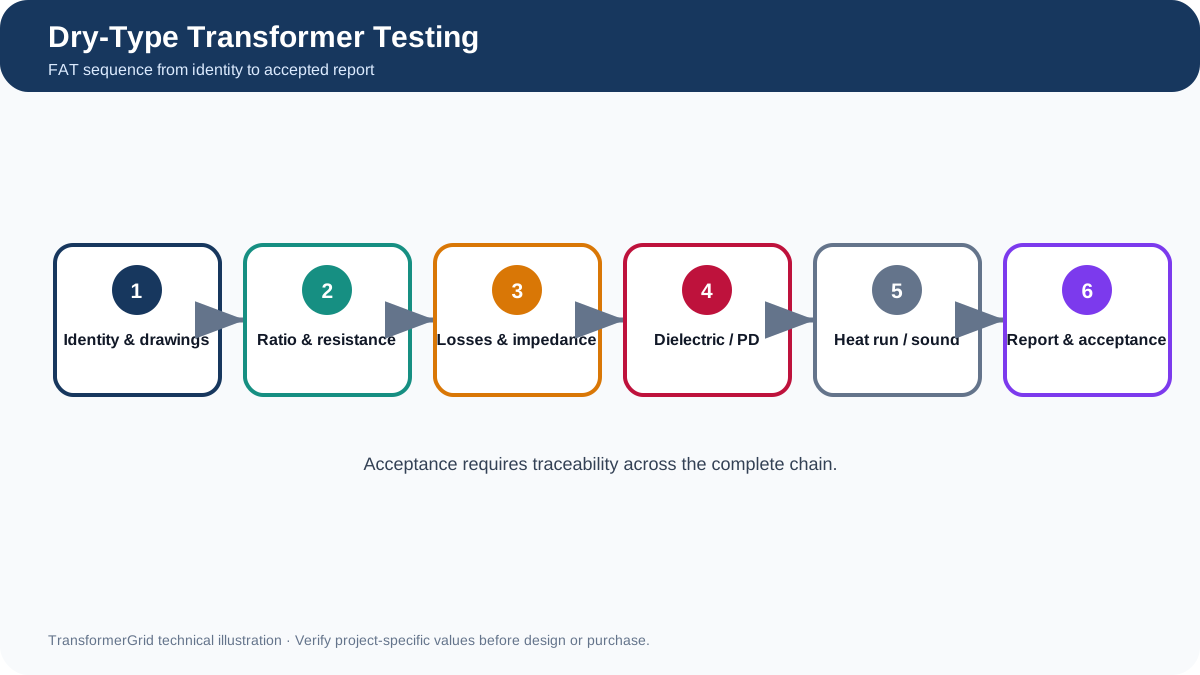
Testing confirms that the manufactured transformer matches the approved design and performs within agreed limits. Acceptance is not a single pass/fail number; it is a chain linking quotation, drawing, nameplate, test method, report and equipment identity.
This guide explains the main test categories used in dry-type procurement and how buyers can define a risk-based FAT scope.
Routine electrical tests
Typical routine evidence includes winding resistance, ratio, polarity or phase relationship, no-load loss and current, load loss and impedance, and applicable dielectric checks. The exact list depends on the standard and transformer design.
The report should identify serial number, rating, voltage, connection, tap position, temperature correction where applicable, instrument identification and test date.
Partial-discharge testing
Partial discharge is a localized dielectric discharge that does not completely bridge the insulation. In cast-resin systems, voids or defects can become discharge sites under electric stress.
Acceptance criteria and test voltage must be defined by the applicable standard and purchase specification. Background noise, calibration and test setup affect the result, so isolated numbers from unrelated reports are not comparable.
Temperature-rise or heat-run evidence
A heat-run test validates thermal behavior under defined loading and ambient conditions. Full testing can be time-consuming, so projects may use type-test evidence or design-family justification depending on risk and contract.
The buyer should verify that the evidence is relevant to the offered rating, enclosure, cooling method and loss level.
Sound and mechanical checks
Sound level may matter in hospitals, offices, residential buildings and data centers. Test conditions, background noise and measurement method should be stated. Visual and dimensional inspection should confirm enclosure, labels, terminals, clearances and accessories.
Fan operation, temperature controller, alarms and communication contacts should be functionally checked when included.
FAT planning and acceptance records
A FAT plan should list equipment identity, applicable standard, tests, witness points, acceptance criteria, report deliverables and schedule. Not every project needs an independent witness, but critical equipment can justify one.
Final acceptance should confirm that offer, approved drawings, nameplate, accessory list and test report describe the same transformer. TransformerGrid can coordinate FAT documents and communication with verified manufacturing partners, while the purchaser or appointed engineer retains acceptance authority.
FAQ
Are routine tests the same as type tests?
No. Routine tests apply to each manufactured unit; type tests demonstrate design performance and may be performed on a representative design.
Is partial-discharge testing required for every dry-type transformer?
The requirement depends on design, voltage, standard and contract.
What is the purpose of a heat-run test?
It verifies temperature behavior under defined load and cooling conditions.
What should a FAT plan include?
Identity, standards, test sequence, witness points, criteria, reports, schedule and responsibilities.
This page is educational. TransformerGrid coordinates RFQ clarification, drawings, documentation, FAT and export delivery with verified manufacturing partners; it does not replace the utility, local design authority or qualified installation contractor.