Technical Library · Dry-Type Transformer Cluster
Cast Resin vs VPI Dry-Type Transformer: Insulation, Moisture, Repairability and Application
Technical reference updated 2026-07-28. Final design, testing and installation requirements must follow the project specification, applicable standards, local authority and qualified engineering review.
Cast resin and VPI are two common dry-type insulation systems. They differ in how the winding is protected, how the manufacturing process is controlled, how the unit responds to environment and how repairs may be approached.
Neither system is automatically superior. A technically defensible choice starts with application conditions and ends with manufacturer-specific evidence.
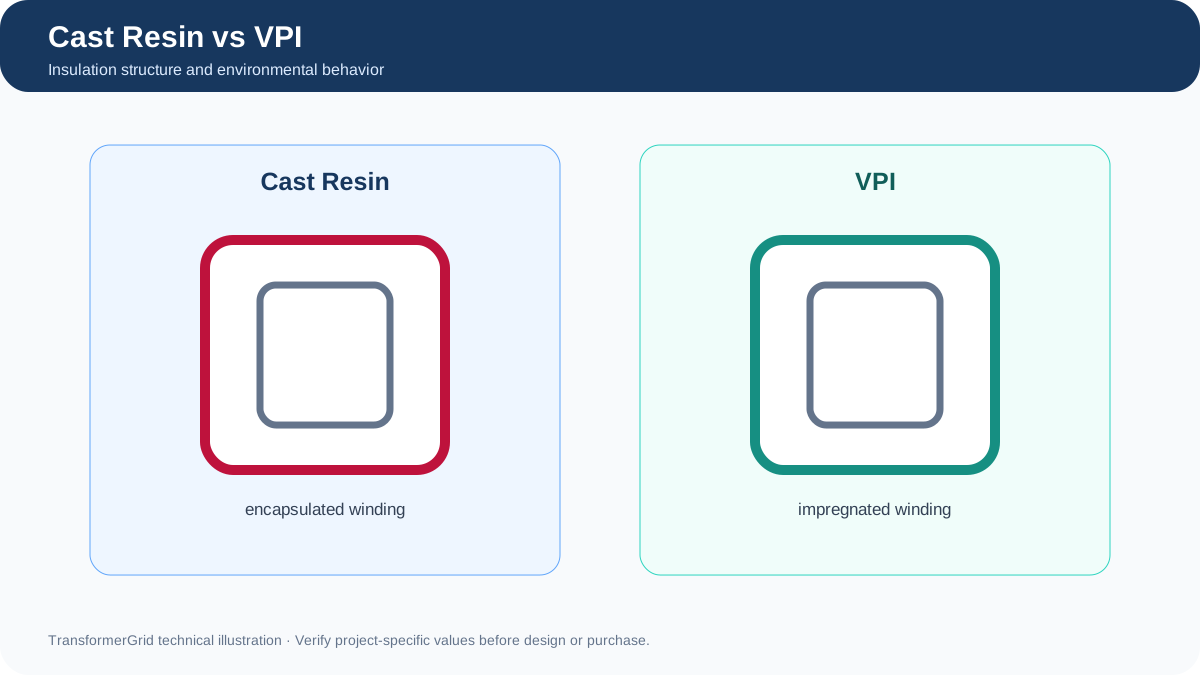
Construction and manufacturing process
Cast-resin windings are placed in molds and encapsulated with a resin system under controlled conditions, followed by curing and inspection. Process control is important because voids, contamination or poor curing can affect dielectric performance.
VPI windings are dried and impregnated with varnish under vacuum and pressure, then cured. Cleanliness, impregnation parameters and varnish condition influence the result.
Humidity and contamination
Encapsulation can provide strong resistance to humidity and contamination, which is one reason cast resin is often considered for difficult indoor environments. VPI can perform well in controlled rooms with appropriate enclosure, cleaning and ventilation.
The environmental class or product claim should be verified against the actual offered design and test evidence rather than assumed from the technology name.
Thermal behavior and cooling
Both systems release losses as heat. Geometry, conductor, insulation thickness, air ducts, temperature rise and enclosure airflow determine thermal performance. A cast-resin winding is not automatically cooler, and a VPI winding is not automatically less reliable.
AN and AF options should be reviewed with room conditions. Fan-assisted capacity adds equipment and maintenance requirements.
Partial discharge and insulation quality
Partial-discharge behavior is especially relevant to medium-voltage dry-type designs. Test method, applied voltage, background noise and acceptance criteria must be defined by the applicable standard and purchase specification.
A low measured value is meaningful only when the tested unit, method and conditions are traceable. Buyers should not compare numbers taken from unrelated reports.
Repairability and application
VPI windings may offer different repair options depending on damage location and manufacturer capability. Cast-resin repairs can be more limited when damage penetrates the encapsulated winding. The practical decision also depends on spare strategy and outage cost.
Choose the technology by environment, rating, maintenance capability, project risk and evidence from the proposed manufacturer.
FAQ
Is cast resin always better in humid rooms?
It is often considered for humidity resistance, but enclosure, ventilation, condensation and manufacturer evidence still matter.
Is VPI only a low-cost option?
No. It is an established construction suitable for many controlled indoor and industrial applications.
Which has lower partial discharge?
That depends on design and manufacturing quality. Compare traceable test results under defined conditions.
Which is easier to repair?
Repairability varies by damage and manufacturer capability; VPI may offer more options in some cases.
This page is educational. TransformerGrid coordinates RFQ clarification, drawings, documentation, FAT and export delivery with verified manufacturing partners; it does not replace the utility, local design authority or qualified installation contractor.
Project context matters.