Technical Wiki · No. 15
Oil-Immersed Power Transformer Cooling: ONAN, ONAF, OFAF, ODAF and Control Logic
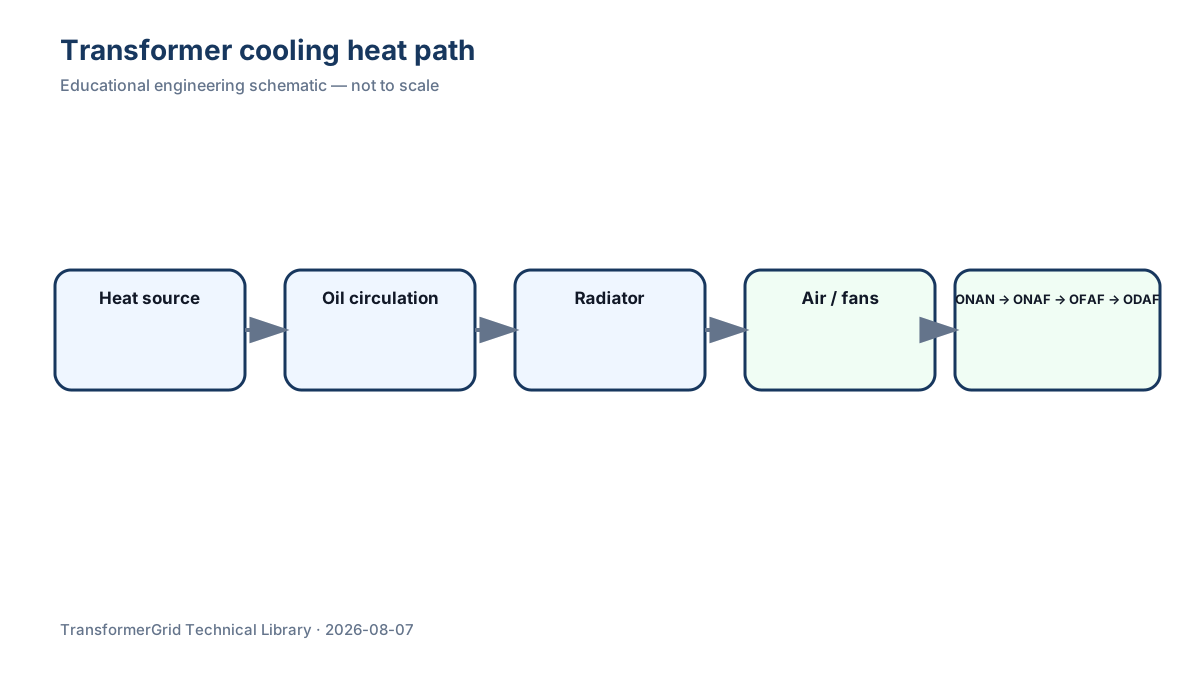
Four common cooling designations
ONAN generally indicates natural oil circulation with natural-air cooling. ONAF keeps natural oil circulation but adds forced air. OFAF uses forced oil circulation and forced air. ODAF additionally emphasizes directed oil flow through the regions that need cooling. The exact designation and associated rating stages should be confirmed from the nameplate, drawings and product documents.
The cooling chain
Heat moves from the windings and core into the insulating oil, the oil carries it to radiators or coolers, and natural air, fans or a water system removes it. A problem at any link can allow temperature to continue rising: dirty radiator surfaces, incorrect fan direction, inadequate pump flow, incorrect valve position, faulty oil-flow relays, unsuitable cooling-water conditions or loss of auxiliary power.
Control and redundancy
Forced-cooling systems should define duty groups, standby groups, staged starting, manual/automatic changeover, failure alarms and auxiliary power. Forced-oil systems require a reliable independent power supply and appropriate automatic and manual switching capability. The number of groups and redundancy level depend on the project reliability requirement.
Oil flow and pump starting
A running oil pump does not prove that the oil path is correct. Valve position, oil-flow feedback, pressure or flow, temperature difference across coolers and the operating condition of each group should be checked. Where several submerged pumps are used, the start sequence should also consider oil-flow disturbances that could unnecessarily affect the Buchholz relay.
FAT and site inspection
FAT and commissioning should verify fans, oil pumps, oil-flow relays, control-supply changeover, automatic start, alarms, remote signals and the status of every cooling group. Site inspection should also compare cooler temperatures and look for abnormal noise, vibration, leakage and fouling.
Operating boundaries
Permissible load and time after complete or partial cooling failure depend on the transformer design, temperature and operating procedure. A universal time limit should not be used. Operators should follow the manufacturer curves and approved site rules.
Conclusion
The cooling system is both an energy-transfer chain and a control chain. Writing only “ONAF” in a purchase specification, without fans, pumps, controls, redundancy and signals, does not define a complete cooling system.
Frequently Asked Questions
If the fans are running, does that prove ONAF cooling is satisfactory?
No. The oil path, radiator condition, oil flow, control logic and actual temperature response must also be verified.
How long can a transformer operate after cooler failure?
The answer depends on the specific transformer and site operating procedure; a universal time limit should not be used.
Technical References
- Qin Ganghua, Wang Zhanhong, Wang Xin, et al. 《火力发电企业绝缘技术监督手册》 [Insulation Technical Supervision Manual for Thermal Power Enterprises]. Zhejiang University Press. Consulted for: ONAN, ONAF, OFAF, ODAF, submerged oil pumps, oil flow and cooling control.
- Sun Kejun, et al. 《电工手册》 [Electrical Engineering Handbook]. China Machine Press. Consulted for: Air cooling, forced-oil cooling, water cooling, fans, oil pumps and operating inspection.
Final engineering values, setpoints and operating decisions require written confirmation from the project engineer, owner or utility and manufacturer.