Technical Wiki · No. 11
OLTC and DETC Tap Changers: Operating Boundaries, Position Indication, Oil and Maintenance
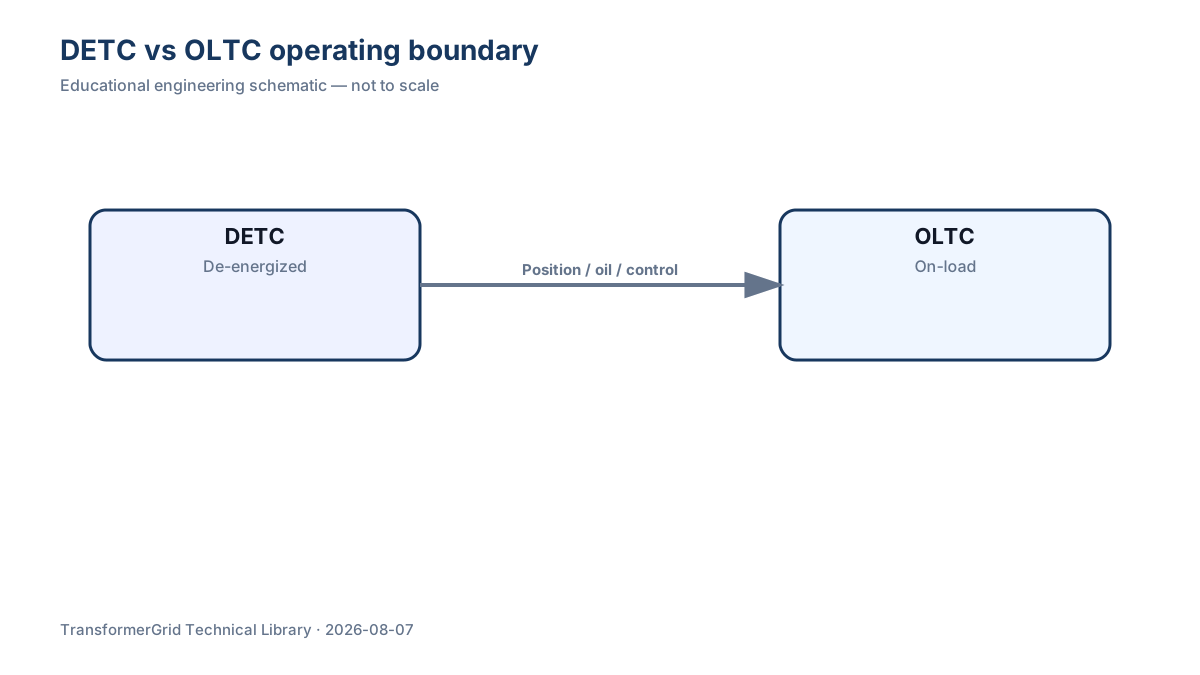
De-energized versus on-load tap changing
A de-energized tap changer can be operated only when the transformer is de-energized and isolated from the system. It suits networks where voltage conditions do not change frequently and continuous in-service regulation is unnecessary. An OLTC changes the tap connection while the transformer remains energized or loaded and is used where regulation is required during operation. The need for an OLTC should come from the system voltage-control requirement, not simply from a preference for more features.
Why taps are often placed on the high-voltage side
From a construction standpoint, the high-voltage winding is often positioned where tap leads can be brought out conveniently. High-side current is also lower, so tap leads and current-carrying parts can have smaller cross-sections, which can simplify contact manufacture and arrangement. The final winding and tap layout remains a transformer-design decision.
Position indication must agree
During operation and acceptance, compare the tap position shown at the transformer, the local drive mechanism and the remote supervisory system. If the three indications disagree, the cause may be mechanical transmission, the position transmitter, secondary wiring or control-system mapping. Editing a display value does not remove the underlying discrepancy. After changing a de-energized tap, the project procedure should also address locking status and winding DC resistance on the selected tap.
OLTC oil service and operating mechanism
The switching section of an OLTC is subjected to more complex electrical and mechanical duty than a static connection. The oil compartment, oil sampling, operation count, contact wear, drive mechanism, limit switches and interlocks therefore require separate attention. Maintenance intervals and oil-sampling requirements should follow the specific product documents, operating rules and site conditions; a period used for one manufacturer or voltage class should not be copied automatically to every transformer.
Abnormal clues worth tracking
Useful clues include failed switching, inconsistent position indication, abnormal drive behavior, changes in switching sound or time, unusual oil results, leakage, loss of control supply and interlock alarms. No single clue is enough to prove an internal failure. Operating history, oil data, electrical tests and outage inspection should be correlated.
RFQ and FAT checks
The RFQ should define regulation method, range, number of positions, voltage per step, rated tap, control supply, local/remote modes, position output, interlocks and alarms, oil-compartment or filtration provisions, operation counter, tests and documents. FAT should verify mechanical operation, all specified positions, consistency of indication, control circuits and agreement among the nameplate, drawings and test records.
Conclusion
A tap changer is not a single line on the nameplate. It is a system that runs through design, control, operation and maintenance. Final operating limitations must follow the manufacturer instructions and approved site safety procedures.
Frequently Asked Questions
Can an OLTC and a de-energized tap changer be substituted directly?
No. Their operating boundaries, construction, control and maintenance requirements are different.
Why compare three tap-position indications?
A mismatch among the transformer, drive mechanism and remote indication can reveal a mechanical, transmitter, wiring or mapping problem.
Technical References
- Qin Ganghua, Wang Zhanhong, Wang Xin, et al. 《火力发电企业绝缘技术监督手册》 [Insulation Technical Supervision Manual for Thermal Power Enterprises]. Zhejiang University Press. Consulted for: On-load and de-energized tap changing, position checks, oil service, operating mechanisms and maintenance.
- Sun Kejun, et al. 《电工手册》 [Electrical Engineering Handbook]. China Machine Press. Consulted for: Oil-immersed transformer construction, tap-changer arrangements, commissioning and operating checks.
Final engineering values, setpoints and operating decisions require written confirmation from the project engineer, owner or utility and manufacturer.