Dry-Type Transformer Buying Guide · Batch 6
Dry-Type vs Oil-Filled Transformer: Initial Cost, Installation, Maintenance and Fire Risk
Published 2026-07-28 · Prepared by the TransformerGrid technical editorial team · Project-specific requirements require manufacturer, utility and applicable-standard verification.
Dry-type and oil-filled transformers are both established technologies. The right choice depends on rating, voltage, location, fire strategy, room design, maintenance capability, energy performance and project economics. A single statement such as “dry type is safer” or “oil filled is more efficient” is not a sufficient design basis.
This guide compares the technologies from the buyer’s perspective. It focuses on the installed project and life-cycle decision rather than presenting one technology as universally superior.
Initial equipment price
Dry-type equipment, especially cast resin, often carries a higher initial price for a comparable distribution rating. Oil-filled designs can be economical and compact at many ratings. Actual differences depend on voltage, materials, losses, enclosure, accessories and testing.
Equipment price alone can be misleading. The buyer should compare the same guaranteed losses, temperature basis, accessories, testing and warranty scope.
Installation and room requirements
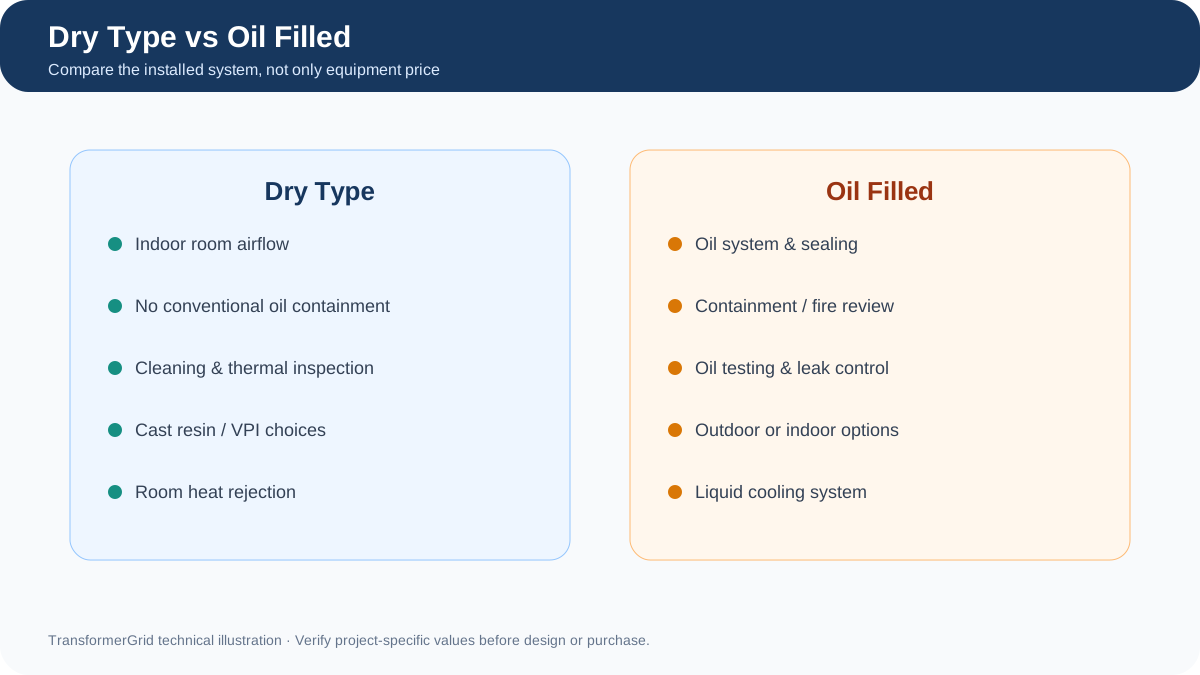
Dry-type transformers are frequently selected for indoor electrical rooms because they avoid a conventional liquid dielectric. They still require heat removal, clearances, cleaning access and a suitable enclosure. High room temperature or restricted airflow can reduce thermal margin.
Oil-filled installations may require containment, drainage, separation, fire assessment, outdoor placement or other measures depending on local rules and project policy. Those items can add civil and safety-system cost even when the transformer price is lower.
Maintenance and condition assessment
Dry-type maintenance commonly emphasizes cleaning, ventilation, temperature monitoring, connection inspection and insulation condition. Oil-filled units add liquid sampling, sealing, leak management, oil condition and dissolved-gas interpretation where applicable.
The best technology is often the one the owner can inspect and maintain consistently. A theoretically optimal design can perform poorly if the site lacks the required maintenance discipline.
Losses, loading and service environment
Energy performance should be compared using guaranteed losses and the real loading profile. It is not reliable to assume every oil-filled design will have lower losses or every dry-type design will have higher losses. Manufacturer design and applicable efficiency requirements matter.
Humidity, dust, salt, chemicals, altitude, ambient temperature and proximity to occupied spaces should also be considered. Cast resin and VPI behave differently, which is why the paired technical guide separates those two dry-type systems.
A defensible decision matrix
Create a matrix with initial equipment cost, civil work, room ventilation, fire measures, maintenance tasks, losses, expected environment, access, testing and schedule. Assign project-specific importance rather than using generic scores copied from a brochure.
TransformerGrid can help organize quotations and technical evidence from verified manufacturing partners. The final technology selection must be reviewed against local codes, utility requirements, insurance and qualified engineering judgment.
FAQ
Is dry type always safer indoors?
It can reduce some liquid-related risks, but the room still requires ventilation, clearances and a project-specific fire and safety review.
Is oil filled always cheaper?
The equipment may be cheaper in many cases, but civil, containment, fire and maintenance scope can change total project cost.
Which technology is more efficient?
Efficiency depends on the specific design and required loss level, not only the insulation medium.
Can the decision be made from a price list?
No. Installation, maintenance, environment, loss capitalization and approval requirements must be considered.
Send your dry-type transformer RFQ
We can help organize the technical data, open points, drawings, FAT documents and comparable quotation scope with verified manufacturing partners.