Pad-mounted transformer RFQ guide · Specifications, drawings and testing documents
Pad-Mounted Transformers: Specifications, Drawings, Testing and RFQ Support
A pad-mounted transformer should not be quoted from kVA and voltage alone. TransformerGrid helps buyers organize the electrical specification, drawing requirements, testing scope and RFQ documents needed to compare proposals on the same basis.
Direct answer
For a reliable quotation, send the project SLD or utility specification together with the required kVA, primary and secondary voltage, phase, frequency, connection and grounding information. Define the enclosure arrangement, cable interfaces, accessories, losses or efficiency requirements, impedance basis, drawing approvals, testing scope and required delivery documents before the purchase order.
If your requirement is incomplete, send what you have. We will return the missing-information list needed to prepare a comparable RFQ.
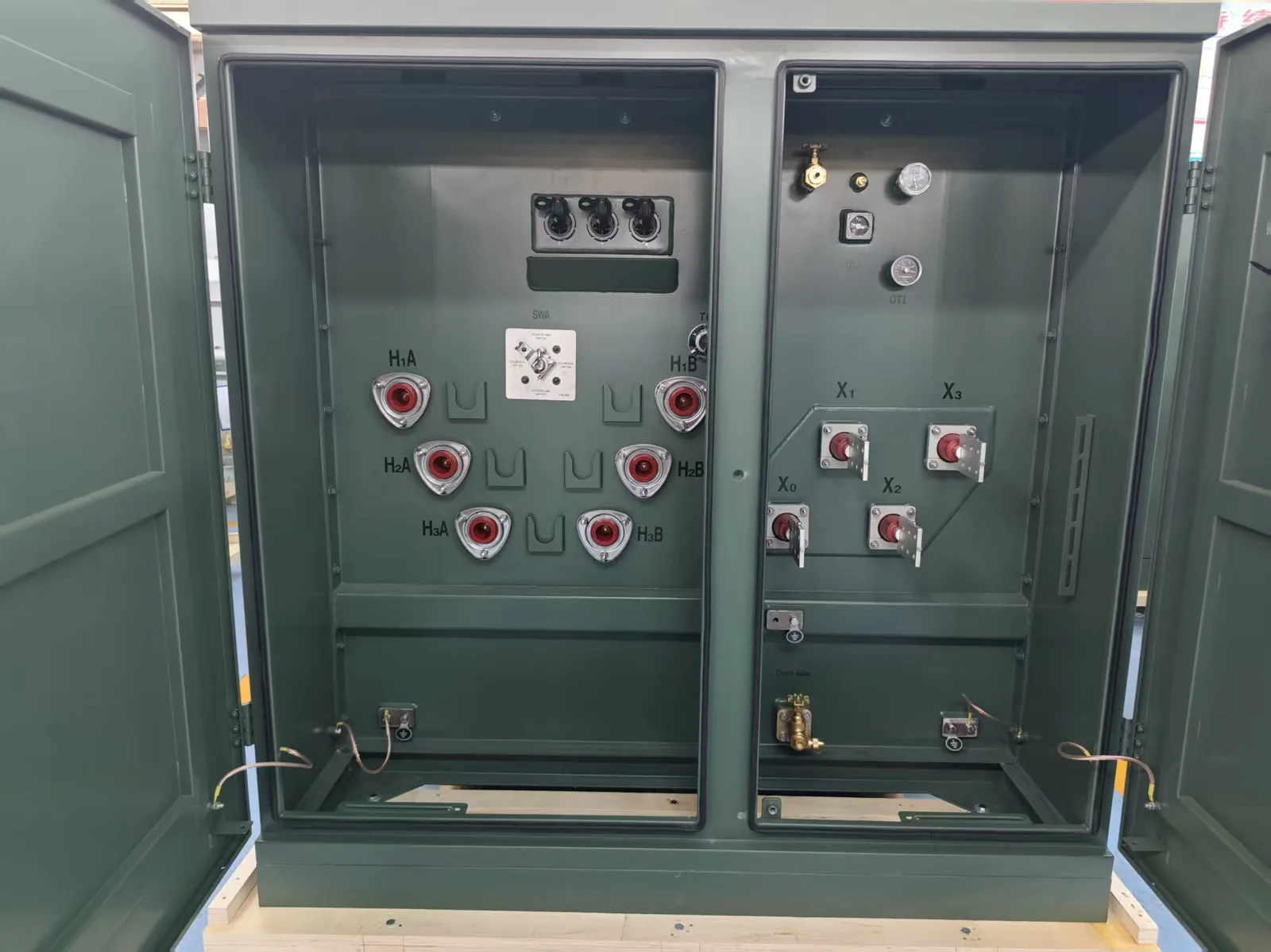
Do not compare price until the scope is comparable
Two quotations can show the same kVA and voltage while describing materially different equipment. One may include the required cable interfaces, switching, protection accessories, drawings and reports; another may leave them as assumptions or exclusions. The lowest number is not yet the lowest evaluated offer if the scope is incomplete.
Engineering rule buyers remember
Review the specification before you compare the price.
Send these first
- SLD or utility specification
- kVA, voltage, phase, frequency and grounding data
- Radial/loop feed and cable-entry direction
- BIL, impedance, fault current and protection basis if known
- Required drawings, tests, certificates and destination
Start with the system, not the catalog
| RFQ input | What the buyer should state | Why it changes the offer |
|---|---|---|
| Application and load | Load list, demand basis, duty cycle, motor or nonlinear loads, future expansion | Supports capacity, temperature and application review |
| Electrical ratings | kVA, primary/secondary voltage, phase, frequency and taps | Defines the basic electrical design |
| System connection | Vector/connection requirement, neutral and grounding method | Affects system compatibility and protection |
| Fault and protection basis | Available fault current, upstream/downstream protection and short-circuit data | Supports impedance, withstand and coordination review |
| Primary arrangement | Radial or loop requirement, cable direction, switching and interface needs | Changes the primary compartment and operating arrangement |
| Site conditions | Indoor/outdoor duty, altitude, ambient range, corrosion exposure and environment | May change insulation, cooling, enclosure and materials |
| Project controls | Required drawings, approval points, tests, witness points and final documents | Defines the verification and release scope |
Drawings before production
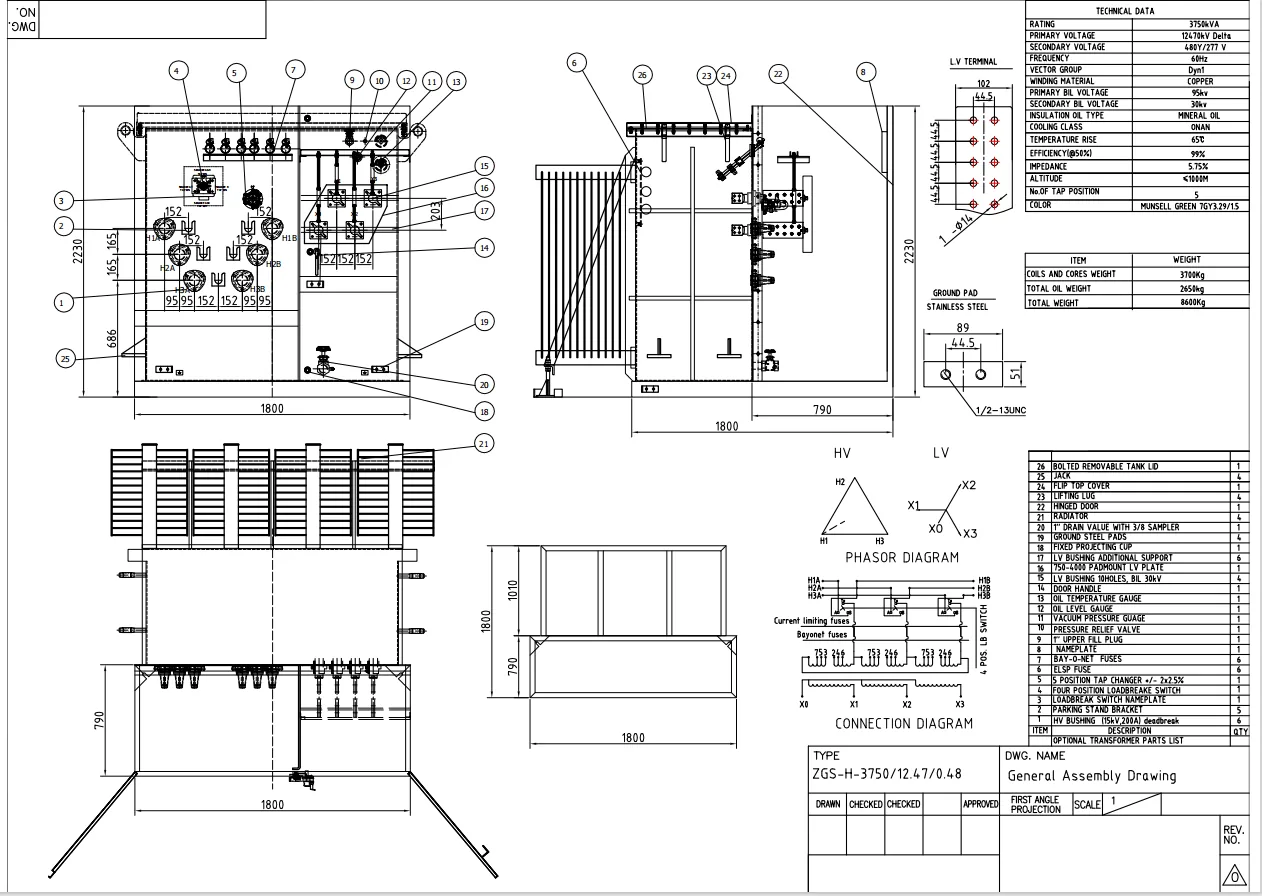
A drawing is not decoration. It is the point where the buyer verifies interfaces, arrangement and scope before the design becomes difficult or expensive to change. The RFQ should state which documents are for information and which require approval.
- Outline and dimensional drawing
- Primary and secondary compartment layout
- Single-line or connection diagram
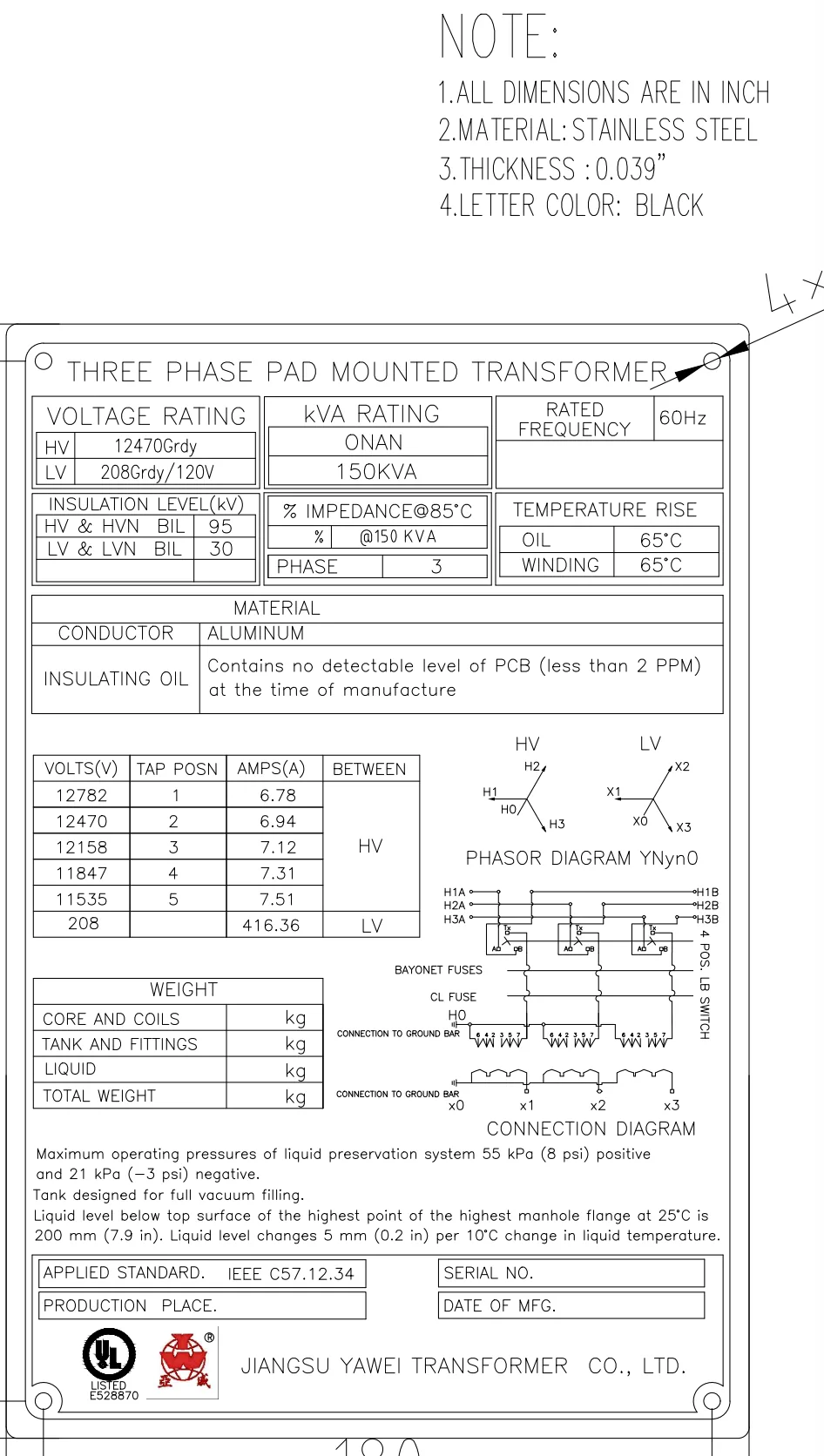
- Nameplate drawing
- Switching/operating diagram when applicable
- Accessory and terminal schedule
- Document register and deviation list
Testing must verify the approved requirement
“Tested before shipment” is too vague for a procurement decision. The test schedule should identify the agreed standard or project procedure, the applicable tests, acceptance criteria, reporting format, witness or hold points, and the documents required for release.
| Stage | Minimum RFQ question | Evidence expected |
|---|---|---|
| Before production | Which approved data and drawings control manufacture? | Approved data sheet, drawings and deviation list |
| Before testing | Which tests apply, and which are witnessed or reviewed? | Agreed test schedule or ITP |
| Before release | Which documents must be accepted before shipment? | Release package and outstanding-item status |
Download sample drawing and test documents
These sample files show the type of evidence buyers can request before shipment. Use them as document-format references, not as a substitute for your project-specific approved drawings, standards and release package.
PDF sample
FAT Test Plan
Includes insulation resistance, ratio/vector group, winding resistance, impedance/load loss, no-load loss, applied/induced voltage, oil and leakage test plan.
PDF sample
Transformer Test Report
Shows voltage ratio, winding resistance, insulation resistance, withstand tests, no-load/load loss, impedance and tank sealing result format.
ZIP pack
Download Both Files
A compact document pack for early RFQ review and buyer-side comparison preparation.
Engineering RFQ portal: what to submit
When a browser upload portal is not used, email the same package to [email protected]. PDF, DWG/DXF screenshot, JPG/PNG nameplate photo and Excel load list formats are acceptable for initial review.
Project data
Country, utility, quantity, destination, target delivery date and application.
Electrical data
kVA, voltage, phase, frequency, grounding, connection, BIL, impedance and fault-current basis.
Drawings
SLD, pad size, cable entry, compartment layout, nameplate or old unit photos.
Test and documents
Required routine tests, special tests, witness points, reports, certificates and release documents.
A clear path from inquiry to release
1. Submit
Send SLD, specification, nameplate or available project data.
2. Clarify
Confirm electrical, mechanical, environmental and document decisions.
3. Quote
Review the commercial offer together with the technical scope.
4. Approve
Review required drawings and resolve comments.
5. Verify
Apply the agreed inspection and test plan.
6. Ship
Confirm final document package and release status.
Frequently asked questions
What information is required to quote a pad-mounted transformer?
At minimum, provide kVA, primary and secondary voltage, phase, frequency, connection/grounding requirements and the application. A reliable quotation also needs the SLD or utility specification, fault/protection basis, primary arrangement, cable interfaces, site conditions, accessories, testing scope and document requirements.
Can you quote without a single-line diagram?
A preliminary budgetary offer may be possible from partial data, but assumptions must be clearly identified. Final technical scope should not be frozen until the system connection, grounding, protection and interfaces are confirmed.
What drawings should be approved before production?
Typical review documents include the outline drawing, compartment layout, connection or single-line diagram, nameplate drawing, switching diagram when applicable, and accessory/terminal schedule.
How should two quotations be compared?
Compare the same specification fields, accessories, drawing package, tests, exclusions, losses or efficiency basis, delivery scope and release documents. Normalize assumptions before comparing price.
Submit your specification or SLD
Send your SLD, specification, existing nameplate or RFQ package. TransformerGrid will organize the requirement, identify missing decisions and prepare the technical scope needed for a comparable quotation.