Pad-Mounted Transformer Buyer Guide · Engineering RFQ Checklist
The Pad-Mounted Transformer Buying Guide That Would Have Saved a Solar Farm $180,000
A technical and procurement guide for three-phase pad-mounted transformers, covering specifications, cost drivers, Delta-Wye connections, factory testing, shipping review, drawings and RFQ preparation.
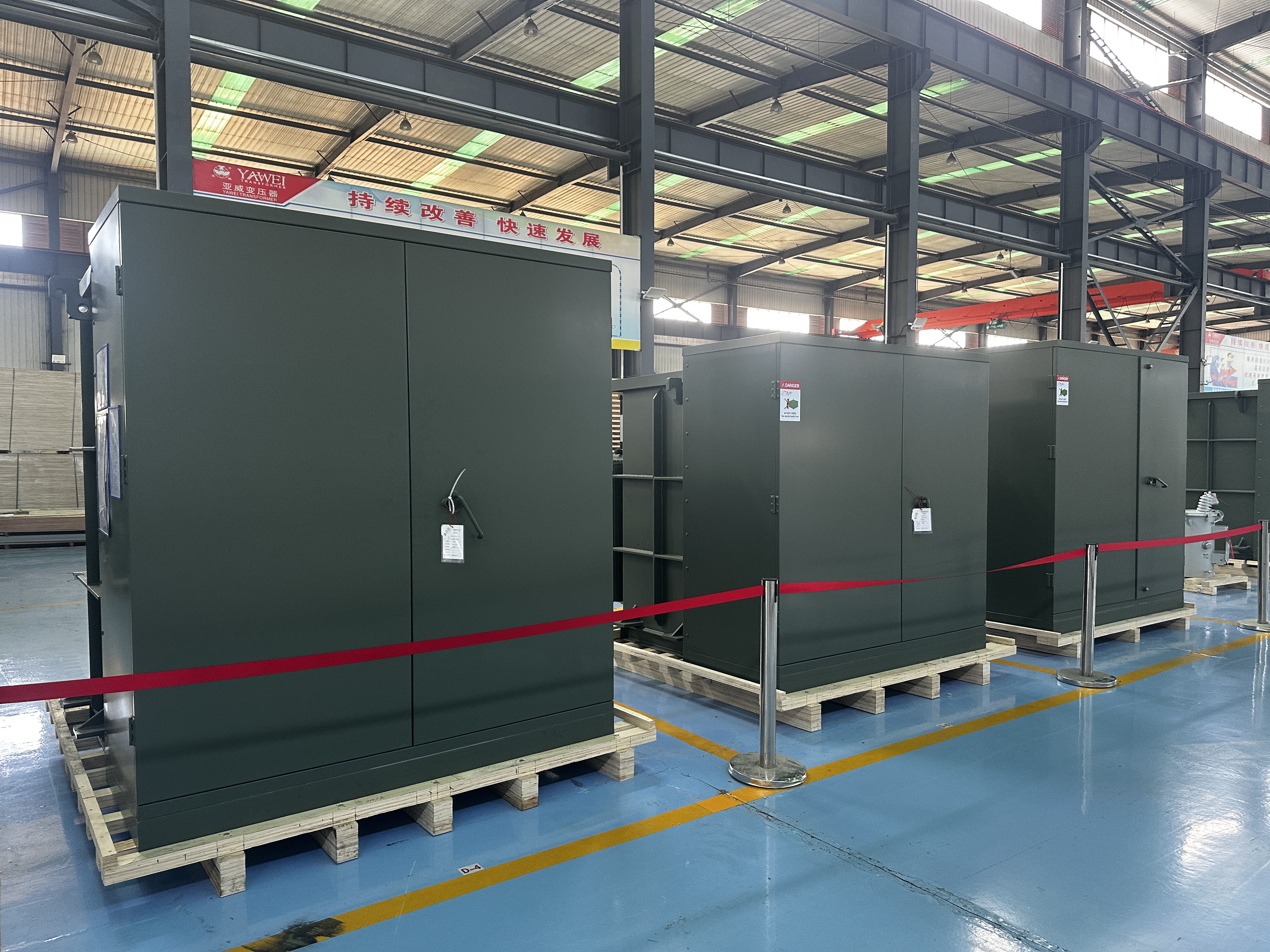
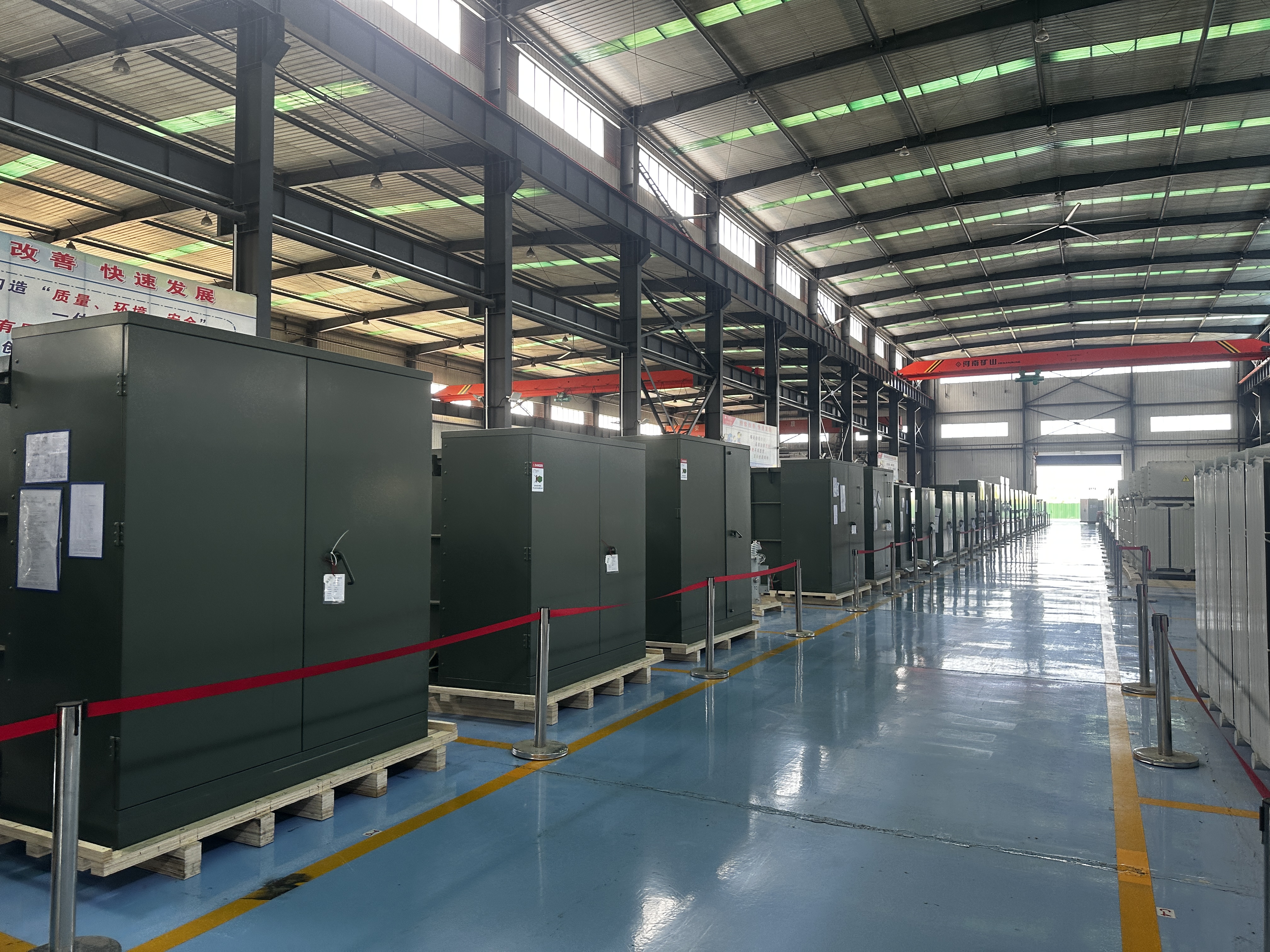
Direct Answer: What Should a Buyer Confirm Before Ordering?
A three-phase pad-mounted transformer is a ground-level, enclosed distribution transformer used to step down medium voltage for commercial, industrial, utility and renewable energy projects. Before quotation, buyers should confirm kVA, primary voltage, secondary voltage, phase, frequency, vector group, impedance, BIL, feed type, local utility requirements, drawings, nameplate photos, test documents, delivery schedule and destination country.
Introduction: The $180,000 Question
If you've ever walked past a locked green metal box on a concrete pad near a commercial building or solar farm and wondered what's inside — that's a pad-mounted transformer. And if you're reading this, you're probably responsible for buying one, specifying one, or maintaining one. Which means one thing: when something goes wrong, the phone rings for you.
In 2022, a solar farm developer in Southeast Asia learned this the hard way. They ordered a 500 kVA pad-mounted transformer for their PV installation. The spec looked fine on paper. But nobody asked about harmonic loading from the inverters. Nobody checked whether the winding was K-factor rated. Eighteen months later, the transformer was running above its design temperature, DGA showed acetylene, and the insulation was failing. The replacement — including downtime, crane rental, and emergency shipping — cost $180,000.
That $180,000 was completely avoidable. This guide puts everything in one place: technical specs that engineers need, cost factors that procurement managers care about, and the standards that make the difference between a transformer that lasts a few years and one that supports a project for decades.
1. What Is a Three-Phase Pad-Mounted Transformer?
A three-phase pad-mounted transformer is a ground-level, lockable steel enclosure that steps down medium-voltage electricity — commonly 11 kV, 13.8 kV, 25 kV, or 34.5 kV — to low-voltage power such as 480Y/277 V or 240/120 V for commercial, industrial, and utility-scale applications. The pad-mounted designation means the unit sits on a reinforced concrete pad at ground level, not on a utility pole.
Why ground-level instead of pole-mounted? Safety and accessibility. Underground cables enter from below, eliminating overhead line exposure. The tamper-resistant, dead-front construction means no live parts are accessible without special tools, which is critical for units installed in public areas like shopping centers, hospitals, solar farms, and residential complexes.
At its core, every three-phase transformer operates on electromagnetic induction: alternating current in the primary winding creates magnetic flux in the iron core, inducing proportional voltage in the secondary winding. The turns ratio determines the voltage transformation, while core material, winding design, insulation system and cooling method determine long-term performance.
2. Key Technical Specifications: 75 kVA to 500 kVA and Beyond
When you are comparing a 500 kVA pad-mounted transformer, four parameters determine performance, lifespan and total cost: rated power with environmental derating, short-circuit impedance, no-load and load loss, and winding temperature rise. These are not decoration words for a data sheet — they decide fault current, voltage drop, lifetime heat stress and the long-term electricity bill.
Rated Power and Environmental Derating
The rated power in kVA is the apparent power the transformer can deliver continuously at rated voltage and frequency without exceeding its temperature limits. This rating assumes a defined ambient temperature and altitude. If the installation site regularly reaches 40°C to 50°C ambient air, or sits above 1,000 m altitude, the buyer should ask whether the transformer needs derating, a larger kVA rating, stronger cooling margin or a higher temperature-class design.
For example, a 500 kVA unit running near full load in a tropical solar farm is not the same duty as a 500 kVA unit serving a lightly loaded commercial building. The RFQ should state project country, maximum ambient temperature, altitude, load profile and expected future expansion.
Short-Circuit Impedance
Short-circuit impedance directly affects secondary fault current, voltage regulation and the mechanical forces windings must withstand during through-faults. For many distribution pad-mounted transformer projects, impedance commonly falls around 4.5% to 6.0%, but the correct value must follow utility requirements and protection coordination.
If impedance is too low, downstream breakers may face a fault current above their interrupting rating. If impedance is too high, the project may suffer excessive voltage drop during motor starting, EV charger load swings, pump starts or inverter ramp-up. This is why impedance should be reviewed together with protection devices, cable length and the local grid study.
No-Load Loss vs. Load Loss
No-load losses occur whenever the transformer is energized, even at night or during low-load operation. Load losses increase approximately with the square of the load current, so a transformer running at high utilization for many hours per year needs a different cost review than a backup or seasonal unit.
As a practical comparison point, typical no-load loss values may move from about 180 W on small ratings to roughly 310 W, 510 W and 780 W as ratings increase across common distribution transformer sizes. The exact value depends on the loss standard, core material, design grade and buyer specification. A higher-efficiency core, such as 0.23 mm silicon steel with 45° step-lap joints, can reduce long-term operating cost but may increase the upfront equipment price.
Temperature Rise and Insulation Class
Temperature rise defines how much hotter the windings can get above ambient air temperature at continuous full load. Sustained over-temperature accelerates insulation aging; using the Arrhenius aging principle, every major increase in operating temperature can sharply shorten insulation life.
In buyer terms, this means the difference between a 65 K rise design and an 85 K rise operating condition is not cosmetic. Long-term operation above the intended thermal design can consume a large share of insulation life, especially when high ambient temperature, harmonic current, blocked ventilation, overload and poor maintenance happen together.
| Parameter | 75 kVA | 150 kVA | 300 kVA | 500 kVA |
|---|---|---|---|---|
| Primary Voltage | 11 kV / 13.8 kV / 25 kV / 34.5 kV, per project specification | |||
| Secondary Voltage | 480Y/277 V or 240/120 V, per ANSI or regional standard | |||
| Vector Group | Dy11 standard; Yyn0, Dyn1 or other vector groups reviewed by project | |||
| Impedance | 4.5% | 5.0% | 5.0% | 5.0–5.5% |
| Cooling | ONAN oil natural air natural | |||
| Insulation Oil | Mineral oil IEC 60296; natural ester option reviewed by project | |||
| Enclosure | Weatherproof, tamper-resistant outdoor enclosure | |||
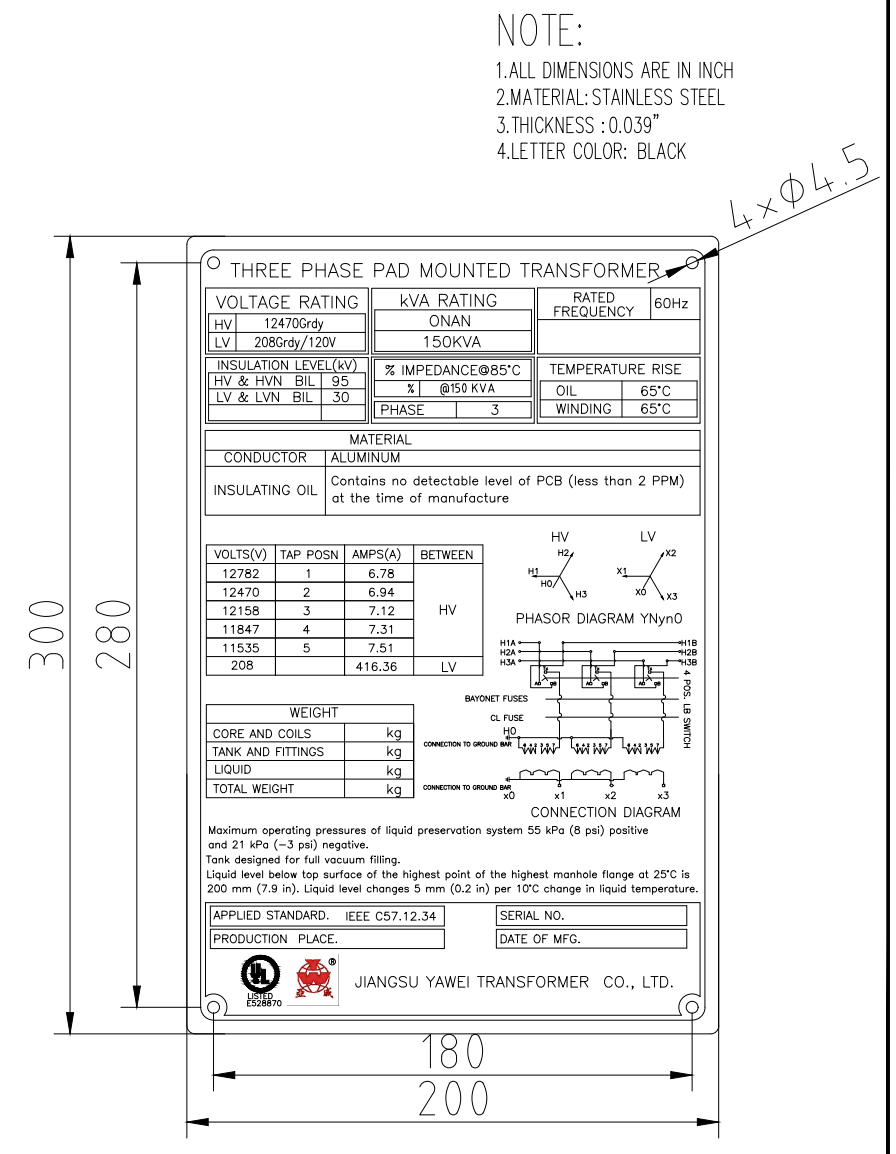
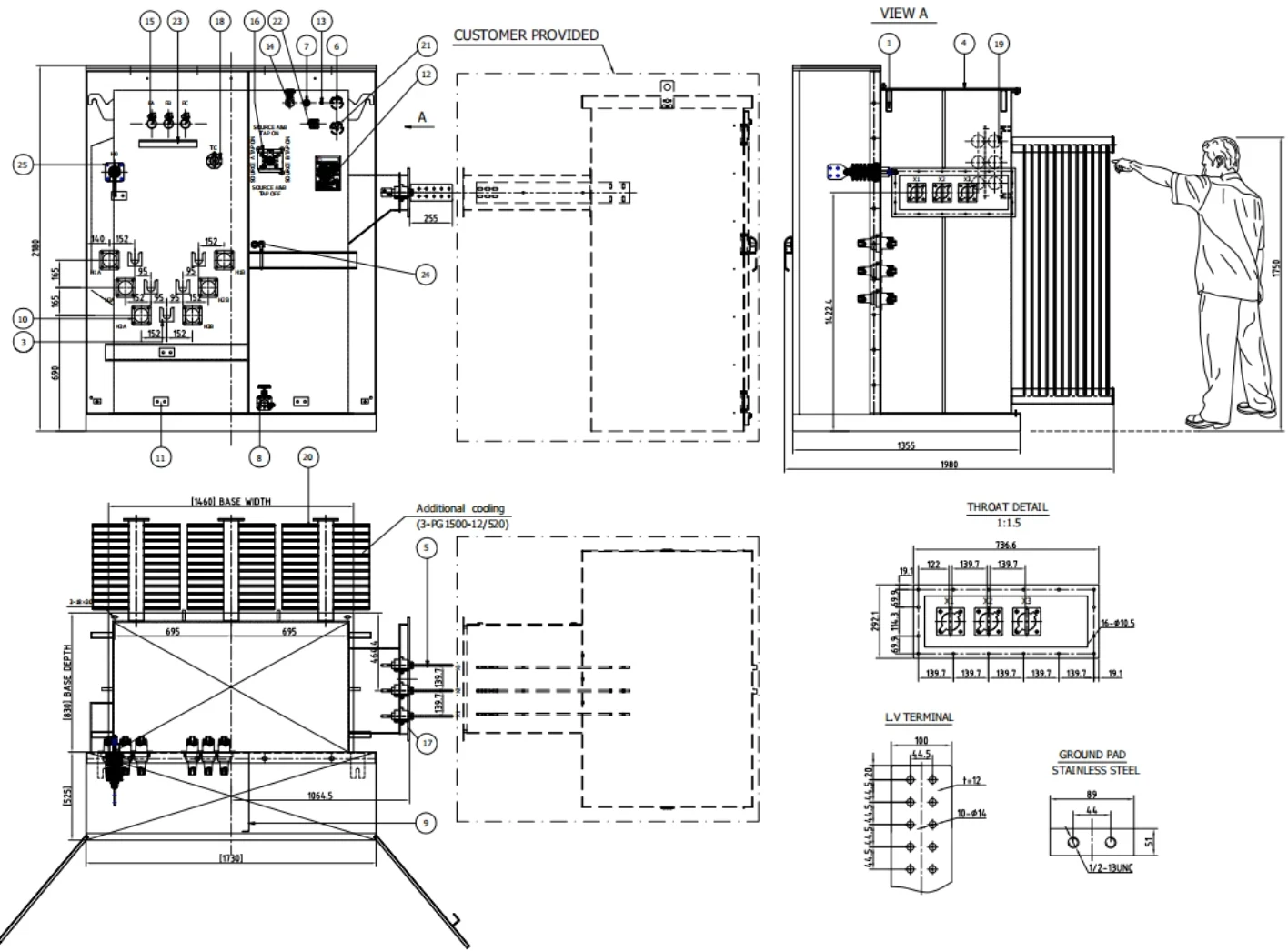
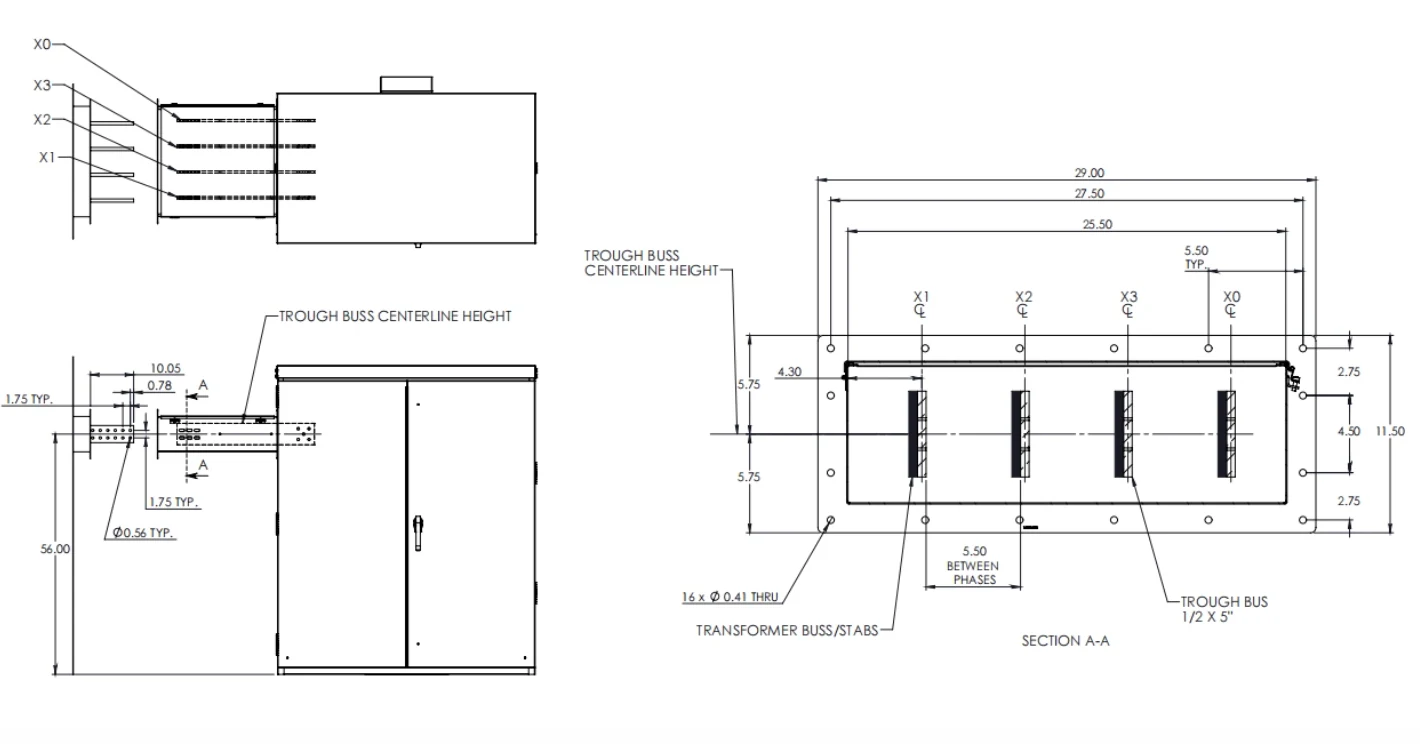
Download Dimension Drawing Package
This dimension drawing package is provided for preliminary layout review. Final drawings should be confirmed according to transformer rating, voltage, terminal arrangement, utility requirements and project country.
Factory Testing: All Required Checks Before Shipment
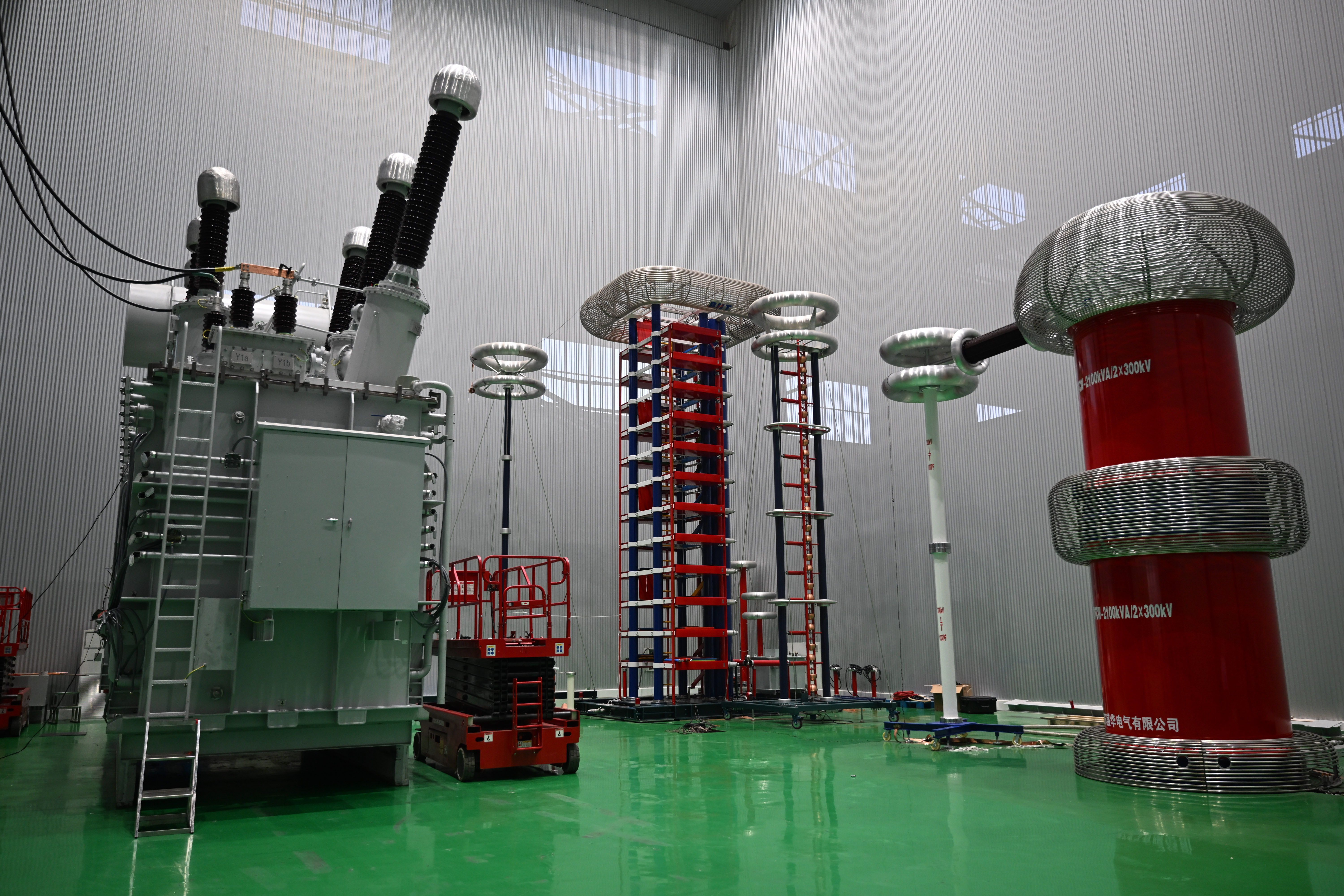
TransformerGrid treats factory testing as a risk-prevention gate, not a paperwork step. Before shipment, every applicable unit is checked against the agreed production drawings, nameplate data, routine test requirements and buyer documents. The normal inspection package covers 10 key checks: insulation resistance, voltage ratio, vector group, winding resistance, no-load loss, load loss, impedance voltage, applied/induced withstand condition, oil or insulation condition, leakage and final document consistency.
This is where many expensive project failures should be prevented. The first 72 hours after energization are a critical risk window for hidden manufacturing, connection or insulation defects. In internal procurement review, we treat early failure risk as a must-screen item, because a large share of avoidable transformer problems can be traced back to unchecked winding, insulation, terminal, oil, leakage, ratio or documentation defects before shipment.
For buyer trust review, ask for the test report, nameplate photo, drawing confirmation, terminal arrangement, oil report when applicable and required utility documents before production release or shipment. The final test scope must follow the project standard, buyer requirement and applicable utility documents.
3. How It Works as a Step-Down Power Transformer
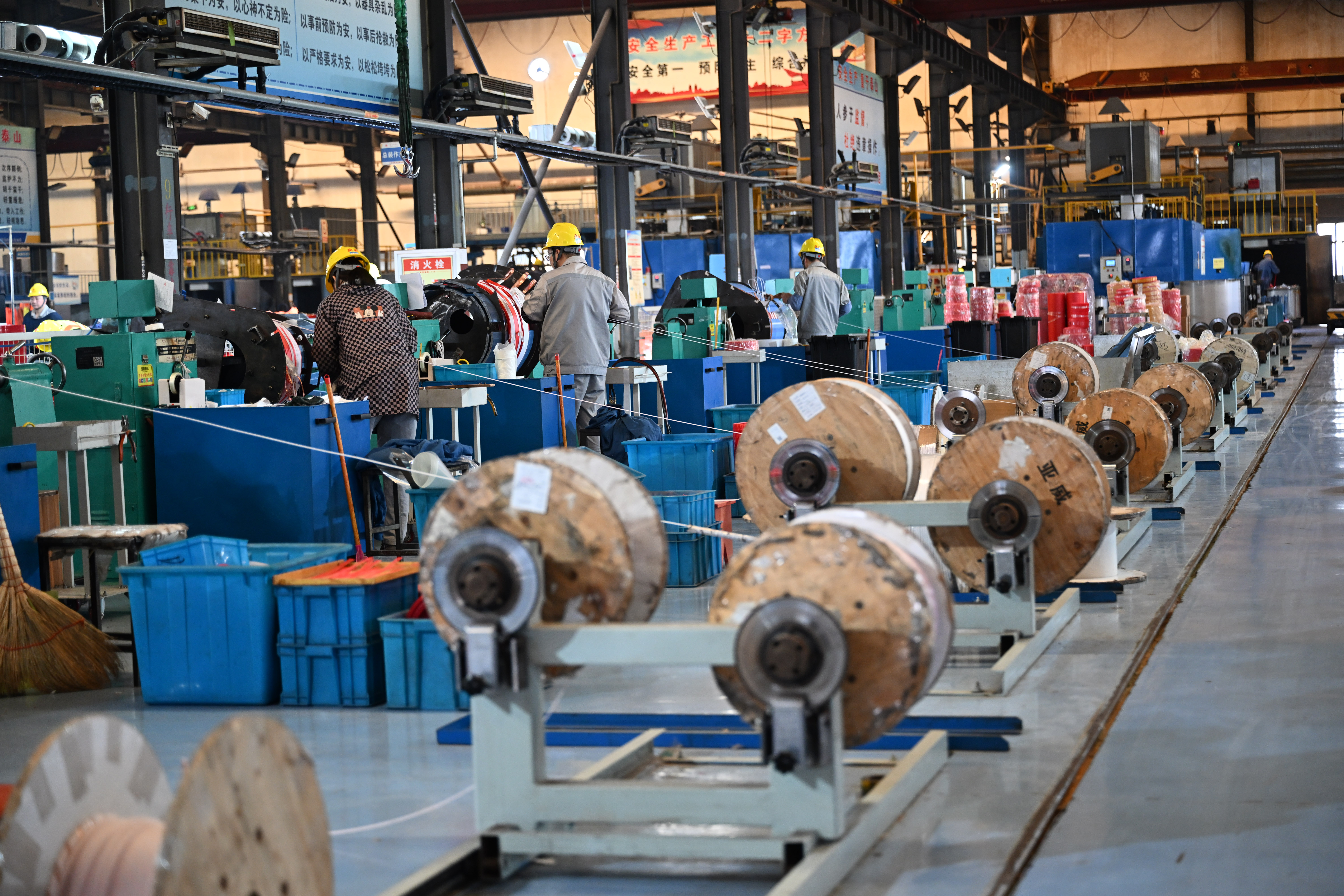
A step-down power transformer reduces voltage from the medium-voltage distribution network to utilization voltage. In an ideal transformer, the voltage reduction follows the turns ratio. In real operation, the secondary voltage at full load is affected by internal impedance and voltage regulation.
Most pad-mounted transformers include an off-circuit tap changer, also called a de-energized tap changer. The transformer must be fully de-energized before tap adjustment. After changing taps on site, turns-ratio verification and resistance review help prevent wrong voltage, poor contact, local heating and later insulation problems.
4. Understanding Delta and Wye Connections
Delta-Wye configuration is one of the most important decisions in a three-phase transformer RFQ. A Delta primary can help circulate triplen harmonic currents inside the delta loop, while a Wye secondary provides a neutral point for grounded low-voltage systems and unbalanced loads.
Dy11 means the primary is connected in Delta, the secondary is connected in Wye, and the secondary line voltage has a 30-degree phase relationship under clock notation. This matters for harmonic behavior, grounding, protection coordination and parallel transformer operation.
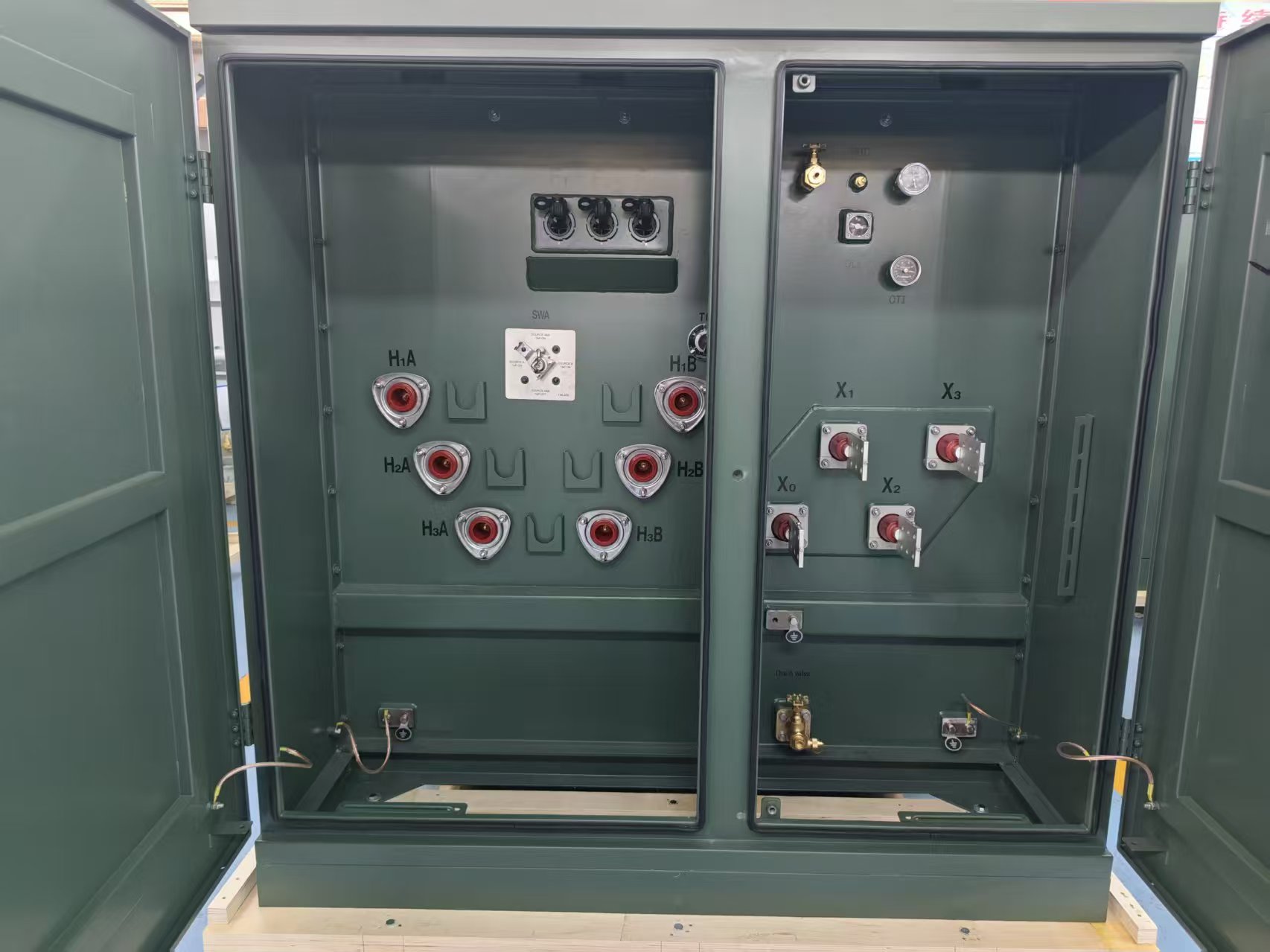
A miswired transformer — wrong vector group, swapped phase sequence, or poor neutral bonding — can cause serious damage on first energization. For this reason, vector group verification, phase sequence testing and polarity checks should be part of the pre-shipment and commissioning review.
5. Real Project Applications — From Solar Farms to Commercial Buildings
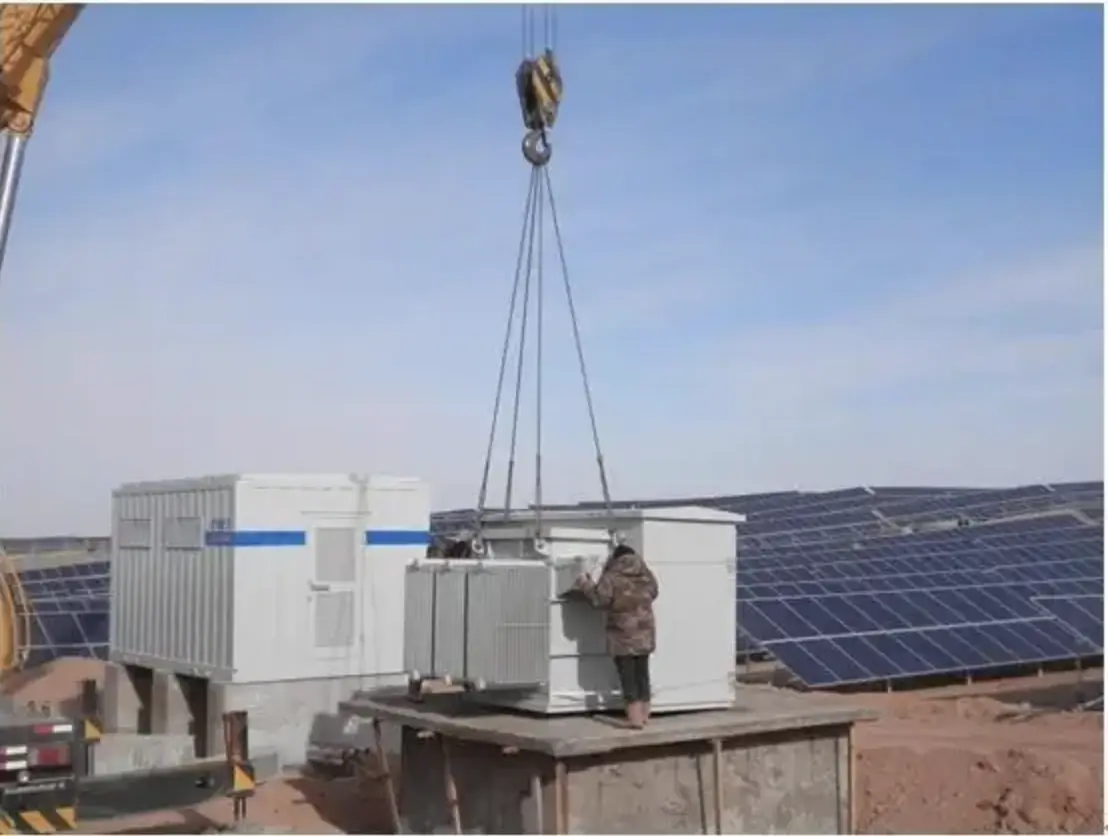
Solar PV Grid Interconnection
A utility-scale solar project may need a pad-mounted transformer to connect inverter output to the medium-voltage grid. The RFQ should review bidirectional power flow, harmonic loading from inverters, K-factor or thermal design, vector group, protection scheme and local utility requirements.
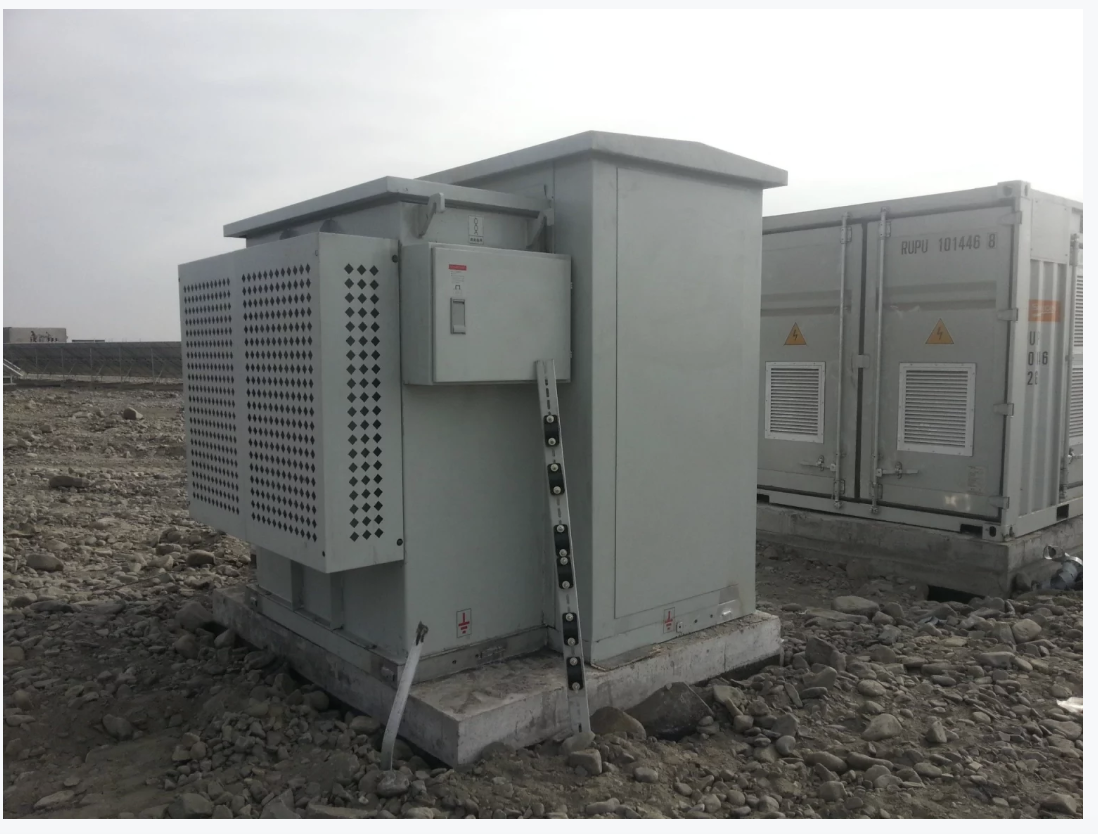
Hospital and Critical Power Applications
For hospitals, data centers and critical facilities, buyers should review load profile, starting current, standby operation, monitoring accessories, temperature alarm contacts, oil temperature indicators, test documents and long-term maintenance strategy.
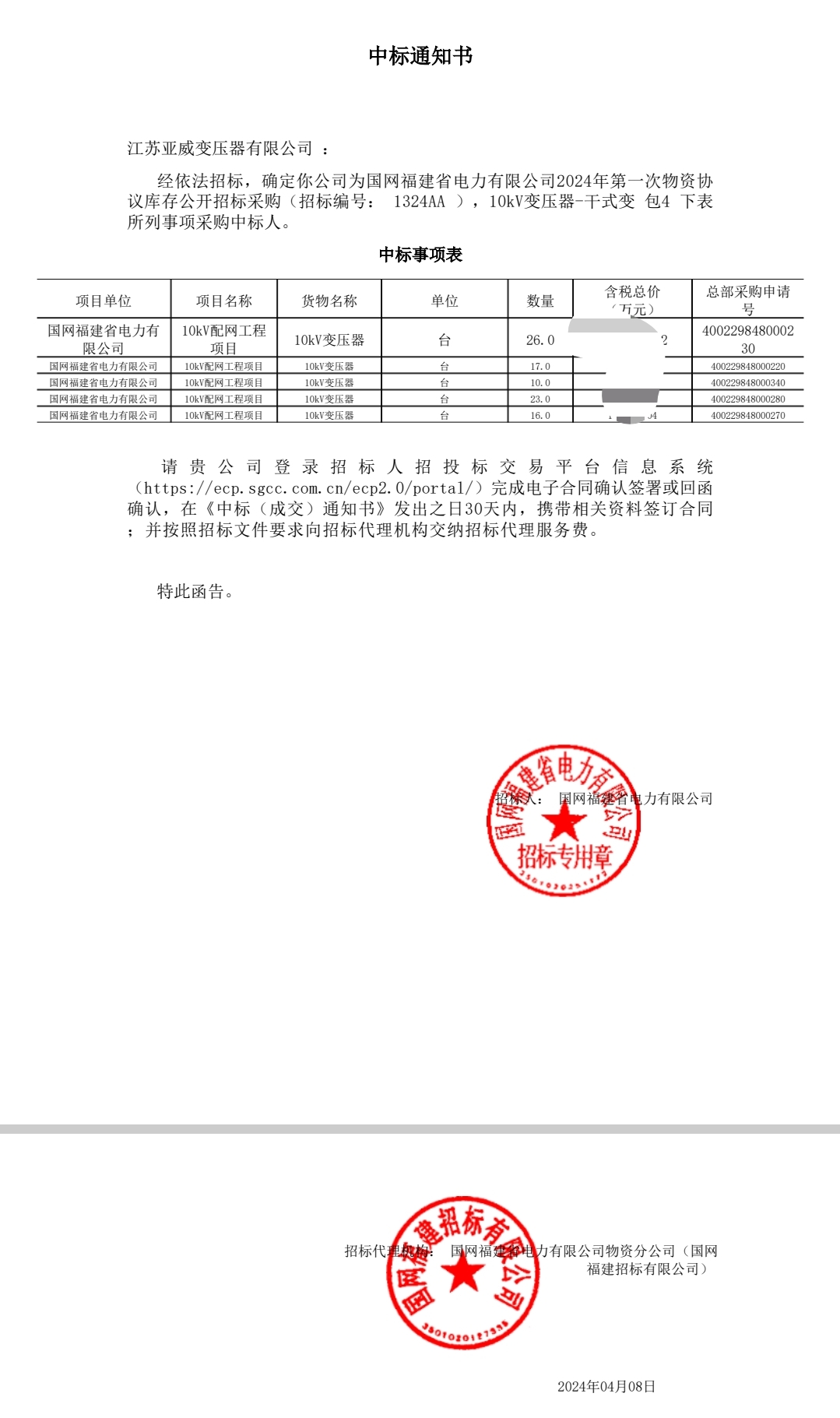
Real Project Reference: State Grid Fujian Supply Reference
Trust is built on track record. TransformerGrid can provide supply references, qualification documents, testing files and project-related document support for buyer review. State Grid reference documents should be described as supply references or award notifications, not as universal approval for every product or market.
6. Cost and Price Factors: 25 kVA to 500 kVA Transformer Cost
Transformer prices should be compared by specification, not by kVA alone. Winding material, oil type, enclosure design, accessories, standard, certification documents, test scope, delivery schedule and destination port can all change the final price.
North American Webstore Price vs. TransformerGrid Factory-Direct Pricing
To give buyers a real market reference, public North American webstore prices for a 500 kVA pad-mounted transformer can be very high. Maddox lists a 500 kVA Padmount Transformer starting at $39,761, while Western Power Line Supply lists a 500 KVA three-phase pad-mounted transformer from $56,000.
Our factory-direct price is far lower than these public North American webstore prices.
The reason is simple: those prices may include local inventory cost, distributor margin, domestic logistics, fast-delivery service, compliance documentation, and the cost of holding ready-to-ship transformer stock in North America. TransformerGrid supplies directly from the manufacturing side in China, so buyers can avoid a large portion of the distributor markup.
However, buyers should compare the complete landed cost, not only the equipment price. The final project cost still depends on winding material, insulation oil, enclosure design, accessories, target standard, test documents, ocean freight, insurance, customs duty, local delivery, installation, and utility approval requirements.
Main Cost Drivers
- Winding material: copper usually costs more upfront, while aluminum may reduce initial purchase cost. The right choice depends on load profile, lifetime and electricity cost.
- Insulation oil: mineral oil is common for outdoor installations; natural ester or FR3 fluid may be required for fire safety or environmental reasons.
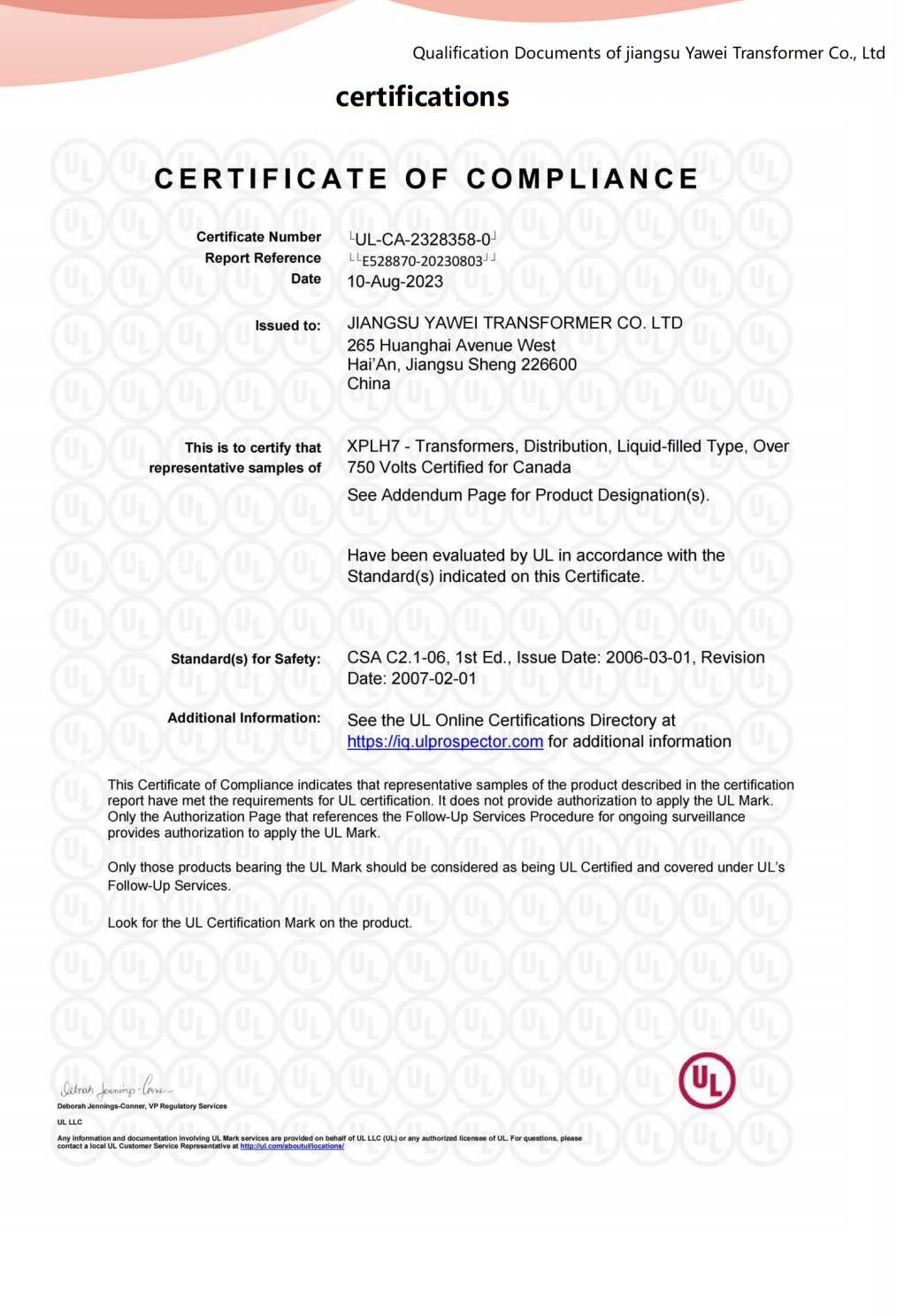
- Compliance and testing: IEC, IEEE/ANSI, UL-related documentation, witnessed tests and utility-specific files should be confirmed before quotation.
- Accessories: tap changer, gauges, pressure relief devices, monitoring contacts, grounding pads and terminal arrangements all affect quotation.
Freight and Landed Cost Should Be Confirmed at the Time of Quotation
Ocean freight should be treated as an indicative and time-sensitive item, not a fixed number. A 500 kVA pad-mounted transformer may require a 20GP, 40GP, 40HQ, open-top container, flat-rack solution or heavy-load inland transportation depending on transformer dimensions, gross weight, packing method and destination port.
Freight from China to North America, the Middle East, Southeast Asia, Europe or Latin America can change sharply with season, fuel cost, container availability, port congestion, insurance and regional shipping disruptions. In some routes, the difference between a normal shipping season and a tight shipping season can be several thousand dollars per container.
For this reason, TransformerGrid does not use a fixed freight price in this buyer guide. We confirm ocean freight, insurance, packing method, destination port charges and delivery terms separately at the time of quotation.
7. Frequently Asked Questions
What is a three-phase pad-mounted transformer?
A three-phase pad-mounted transformer is a ground-level, lockable steel enclosure containing a power transformer that steps down medium voltage to low voltage for commercial, industrial, utility or renewable energy projects.
How much does a 500 kVA pad-mounted transformer cost?
A 500 kVA pad-mounted transformer price depends on winding material, oil type, enclosure design, loop or radial feed, fusing, bushings, arresters, taps, target standard, test documents and freight. As a public webstore anchor, one North American listing starts around $39,761 and another 500 kVA three-phase pad-mounted transformer listing is around $56,000. A factory-direct China quotation can be significantly lower before freight and destination charges, but buyers should compare complete landed cost rather than only equipment price.
What is the difference between Delta and Wye transformer connections?
A Delta primary has no neutral and can help circulate certain harmonic currents inside the delta loop. A Wye secondary provides a neutral point for grounded low-voltage systems and unbalanced loads. The final vector group must match project requirements.
Can pad-mounted transformers be used for solar farms?
Yes. Solar projects often use pad-mounted transformers for inverter connection and medium-voltage grid interconnection. The RFQ should review bidirectional operation, harmonic loading, vector group, temperature rise and utility requirements.
What should I send before requesting a quotation?
Send project country, kVA, primary voltage, secondary voltage, frequency, phase, feed type, vector group, BIL, impedance, utility requirements, drawings, nameplate photos, delivery schedule and required test or qualification documents if available.
8. Next Steps: How to Start Your Project
Send your project country, kVA rating, voltage, drawings, nameplate photos, utility requirements or delivery schedule. TransformerGrid will review the quotation basis before production so the selected transformer matches the local grid, project standard and installation conditions.
Five-Step Risk-Reduction Review Before You Commit
- 24-hour preliminary technical review: send drawings, nameplate photos or basic project data and we will identify the missing RFQ information.
- Specification cross-check: kVA, primary voltage, secondary voltage, impedance, vector group, BIL, feed type and accessories are checked before quotation.
- Factory test and document review: routine test reports, nameplate data, drawings and required qualification files are prepared according to the agreed project scope.
- Shipping and landed-cost review: packing method, gross weight, freight mode, destination port and delivery terms are confirmed before shipment.
- No-obligation ending: if the project requirements do not match our supply scope, we will tell you early instead of pushing the wrong transformer.