Pad Mounted Transformer Cable Entry Direction: HV/LV Compartments, Bottom Entry and RFQ Layout Guide
Cable entry direction is a critical RFQ detail for pad mounted transformers. This guide explains HV/LV compartments, bottom entry, cable trench routing, manhole planning and engineering review before quotation.
Many buyers discuss pad mounted transformer price, kVA rating and delivery time first. Those items matter, but a correct quotation also depends on cable entry direction, HV/LV compartment layout, cable trench route, bottom entry requirement, cable manhole position and utility operation access.
Cable entry direction should not be treated as a small installation detail. It can affect transformer enclosure layout, concrete pad openings, cable trench direction, cable length, maintenance access and even whether the transformer position is practical after fire lane and emergency access requirements are reviewed.
For TransformerGrid, the purpose of early RFQ communication is not only to quote a transformer. It is to help buyers confirm whether the transformer location, high-voltage incoming direction, low-voltage outgoing direction, cable manhole or pull box position, and site layout are consistent before production and delivery.
Key Takeaways
- Cable entry direction affects pad mounted transformer compartment layout, cable trench routing, concrete pad planning and installation cost.
- The transformer location should first be checked against fire lane, emergency access and local safety requirements.
- After the transformer location, HV incoming direction, LV outgoing direction and cable manhole positions are confirmed, buyers can estimate cable length more accurately and avoid layout mismatch.
- In general, the high-voltage incoming side is arranged closer to the utility connection point or power source, while the low-voltage outgoing side is arranged closer to the load side.
- Bottom entry, side entry, front access, door opening space and maintenance clearance should be reviewed before the concrete pad or cable trench is finalized.
- Before RFQ, buyers should send site layout, cable trench drawing, primary voltage, secondary voltage, feed type, BIL, impedance, accessories, destination country and delivery schedule.
Why Cable Entry Direction Matters Before Ordering
A pad mounted transformer quotation should not be based only on kVA and voltage. If the cable entry direction is unclear, the quotation may miss important details such as compartment orientation, cable route, bottom entry requirement, cable bend space, conduit position and maintenance access.
Typical problems caused by poor cable entry planning include:
| Problem | Possible Result |
|---|---|
| Wrong cable trench direction | Trench modification, longer cable route or site rework |
| HV/LV compartment orientation not confirmed | Doors or operation side may face the wrong direction |
| Bottom entry not coordinated with concrete pad | Pad openings or conduit positions may not match the transformer |
| Cable manhole or pull box placed too late | Cable length estimate may be wrong |
| Fire lane or emergency access not reviewed first | Transformer location may need to move after layout review |
| Maintenance access ignored | Technicians may not have enough working space after installation |
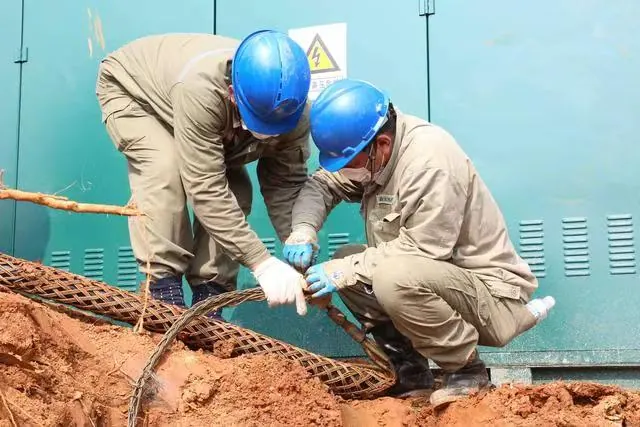
Transformer Location Comes Before Cable Length Estimation
The transformer location should first be reviewed to make sure it does not interfere with fire lanes, emergency access routes, vehicle circulation or local safety requirements. In many projects, fire lane and emergency access planning should be confirmed before the final transformer location is selected.
After the transformer location is confirmed, the HV incoming direction, LV outgoing direction and cable manhole positions should be planned together. In general, the high-voltage incoming side is usually arranged closer to the utility connection point or power source, while the low-voltage outgoing side is usually arranged closer to the load side.
This helps reduce unnecessary cable length, avoid wrong cable route estimation and make the cable trench or manhole layout more practical. Final routing should still follow utility requirements, project drawings and local engineering review.
HV and LV Compartments: What Buyers Should Confirm
For a pad mounted transformer, the high-voltage compartment and low-voltage compartment are not only internal cabinet sections. They define where cables enter, where utility operation may occur, where maintenance access is needed and how the transformer should face the site.
Before quotation, buyers should confirm:
- primary voltage side and high-voltage incoming direction;
- secondary voltage side and low-voltage outgoing direction;
- whether the project needs loop feed or radial feed;
- whether utility operation side has a required direction;
- whether HV and LV doors can fully open after installation;
- whether walls, fences, roads, parking lanes or other equipment block access;
- whether cable trench direction and compartment layout match each other.
If the project is replacing an old transformer, nameplate photos and existing site photos can help. If it is a new project, site layout and cable trench drawings are more important.
Bottom Entry, Side Entry and Cable Trench Direction
Pad mounted transformer cable entry may involve bottom entry, side entry, front access or project-specific routing. The correct option depends on transformer design, utility requirements, cable trench direction, concrete pad design and site conditions.
Bottom cable entry is common in many pad mounted transformer installations, but it must be coordinated before the concrete pad is finalized. If the conduit openings, trench direction or cable pulling route are not reviewed early, the project may face difficult installation or unnecessary civil work changes.
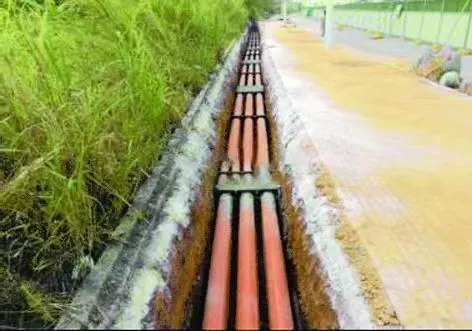
Loop Feed vs Radial Feed and Cable Layout
Loop feed and radial feed configurations can affect cable routing and compartment arrangement. A loop feed configuration may involve incoming and outgoing high-voltage cable paths, while a radial feed configuration may be simpler in some projects. However, final selection depends on utility design and project requirements.
Buyers should not assume that the same concrete pad, trench direction or compartment orientation fits every feed configuration. The RFQ should clearly state whether the project expects loop feed, radial feed or utility-confirmed configuration.
For more detail, buyers can also review TransformerGrid’s loop feed vs radial feed pad mounted transformer RFQ guide.
Cable Trench, Cable Length and Manhole Planning
Cable entry direction should not be reviewed separately from transformer location. Once the transformer position is checked against fire lane and emergency access requirements, the project team should confirm where the HV cable comes from, where the LV cable goes, and where cable manholes or pull boxes should be located.
If these items are not coordinated early, the estimated cable length may be wrong, and the project may face trench changes, longer cable runs or installation difficulty. For commercial buildings, hotels, hospitals, EV charging stations, industrial parks and data centers, this can affect both installation cost and project schedule.
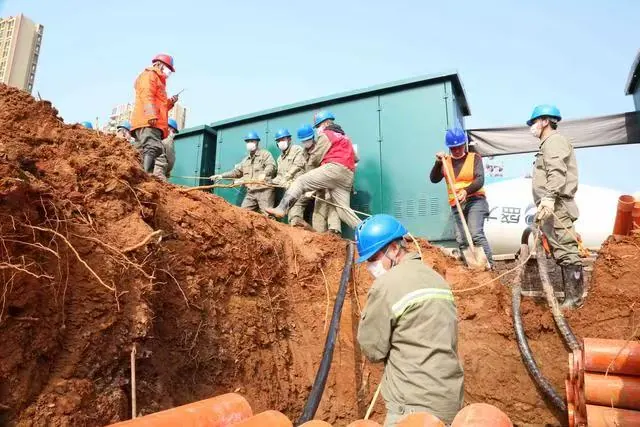
Cable Bend Space, Door Swing and Maintenance Access
Cable routing should be checked together with door opening space and maintenance access. Even if the transformer fits on the concrete pad, the installation can still be difficult if the cable route, compartment doors or maintenance side are blocked by walls, fences, landscaping, parked vehicles or other equipment.
Buyers should review:
- cable trench direction and pull path;
- cable bend space near the transformer;
- HV and LV compartment door swing;
- maintenance and operation space;
- utility access side;
- grounding and accessory access;
- future expansion path for additional cables.
What Buyers Should Send Before RFQ
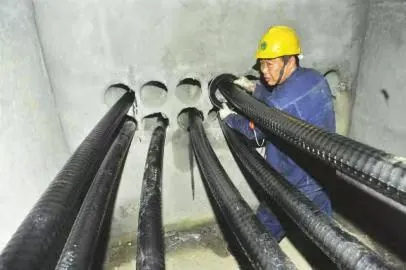
A stronger RFQ includes cable layout information, not only transformer rating. The following details help TransformerGrid understand the project before quotation:
| RFQ Information | Why It Matters |
|---|---|
| Site layout | Shows transformer location, road layout, building position and equipment areas |
| Fire lane and emergency access layout | Helps confirm the transformer does not block emergency access or vehicle circulation |
| Cable trench drawing | Confirms cable route and trench direction |
| Cable manhole or pull box location | Helps estimate HV/LV cable length and avoid trench layout mismatch |
| HV cable direction | Affects high-voltage compartment orientation |
| LV cable direction | Affects low-voltage compartment and load-side routing |
| Primary voltage | Required for transformer design and utility-side review |
| Secondary voltage | Must match downstream loads |
| Loop or radial feed | Affects cable path and compartment arrangement |
| BIL and impedance | Important for utility and protection coordination |
| Accessories | May affect compartment space and operation access |
| Destination country | Helps review documentation and local requirements |
| Delivery schedule | Affects production, inspection and shipping planning |
TransformerGrid Engineering Review Before Quotation
Even if final drawings are not ready, buyers can send preliminary site layout, cable trench direction, expected kVA, primary voltage, secondary voltage, project country and future expansion plans. TransformerGrid can help review what information should be confirmed before quotation.
Early communication is especially useful when buyers are still confirming utility connection point, load side location, fire lane layout, cable manhole position, loop/radial feed configuration or future EV charging, solar, storage and step-up transformer planning.
Have a pad mounted transformer cable entry or layout question?
Email: [email protected]
WhatsApp: +86 176 8746 9988
FAQ
Q1: Why does cable entry direction matter for a pad mounted transformer?
Cable entry direction affects HV/LV compartment orientation, cable trench direction, concrete pad openings, cable length estimation, maintenance access and installation difficulty.
Q2: What is the difference between HV and LV compartments?
The HV compartment is related to the primary or utility-side connection, while the LV compartment is related to the secondary or load-side connection. Their orientation should match cable routing, utility access and site layout.
Q3: Can a pad mounted transformer use bottom cable entry?
Yes, bottom cable entry is common in many pad mounted transformer projects. However, concrete pad openings, conduit positions and cable trench direction should be confirmed before the foundation is finalized.
Q4: Does loop feed affect cable entry layout?
Yes. Loop feed may involve incoming and outgoing high-voltage cable paths, while radial feed may be simpler. Final configuration should follow utility design and project requirements.
Q5: What should buyers confirm before pouring the concrete pad?
Buyers should confirm transformer location, fire lane and emergency access layout, cable trench direction, HV/LV cable entry direction, compartment orientation, bottom entry requirement, maintenance access and future expansion space.
Q6: Should fire lanes, cable direction and cable manholes be planned before ordering?
Yes. Fire lane and emergency access layout should usually be reviewed before the final transformer location is selected. After the transformer location is confirmed, the HV incoming direction, LV outgoing direction and cable manhole or pull box locations should be planned together. This helps estimate cable length more accurately and reduces the risk of cable trench rework.
Q7: What drawings should be sent before RFQ?
Useful drawings include site layout, transformer location, cable trench route, concrete pad plan, utility connection point, load-side location and any preliminary electrical drawings.
Q8: Can TransformerGrid review cable entry direction before quotation?
Yes. Buyers can send site layout, cable trench direction, expected kVA, voltage, loop/radial feed requirement, destination country and delivery schedule for preliminary engineering communication before quotation.
Related Product and Procurement Guides
- Pad mounted transformer product page
- RFQ and engineering review page
- Pad mounted transformer site planning guide
- Loop feed vs radial feed pad mounted transformer guide
- Pad mounted transformer compartments and accessories guide
- Pad mounted transformer dimensions and concrete pad guide
- What is a pad mounted transformer buyer guide
Final Takeaway
Pad mounted transformer cable entry direction should be reviewed before ordering, not after the concrete pad and cable trench are already fixed.
The transformer location should first satisfy fire lane, emergency access, vehicle circulation and local safety requirements. Then the HV incoming direction, LV outgoing direction, cable trench route and cable manhole or pull box position should be planned together.
In general, the high-voltage incoming side should be closer to the utility connection point or power source, while the low-voltage outgoing side should be closer to the load side. This helps reduce unnecessary cable length, improve layout accuracy and support a clearer RFQ.
TransformerGrid can help buyers review these details before quotation, so the transformer layout, cable route and site planning logic are easier to confirm before production and delivery.