Pad-Mounted Transformer Environmental Protection: Coastal, Desert & Tropical Specification Guide
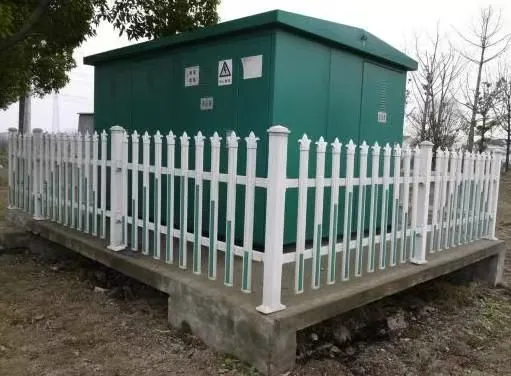
Direct Answer: Do Not Specify “Coastal,” “Desert” or “Tropical” From a Location Label Alone
Do not specify a coastal, desert or tropical pad-mounted transformer from a location label alone. Define the actual exposure — corrosivity, salt deposition, ambient temperature, solar load, altitude, dust, humidity, condensation, flooding and pollution — then require the manufacturer to show how the tank, cable compartments, control enclosure and external insulation address it.
The correct environmental protection package is a documented project decision, not a universal material grade, IP rating, stainless-steel label or salt-spray hour number.

Illustrative engineering scenario · not a completed TransformerGrid project
The Quotation That Looked Expensive
An EPC team issues one short requirement for an outdoor pad-mounted transformer: “corrosion-resistant enclosure suitable for site conditions.” Three bidders quote the same kVA and voltage. Two use standard outdoor construction. The third asks for the distance from breaking surf, prevailing wind, maximum ambient temperature, flood level, airborne dust, utility coating requirements and the cable-compartment arrangement.
That third quotation appears higher because it carries several items the other quotations do not identify. Procurement is ready to remove it from the comparison — until the project engineer asks a better question:
Are we comparing three prices for the same environmental duty, or three different assumptions hidden behind the words “outdoor transformer”?
No transformer has failed in this scenario. That is the point. The least expensive time to discover an environmental mismatch is before award, while the specification and drawings can still be corrected.
Review the specification before you compare the price.
1. First Separate the Four Protection Boundaries
A pad-mounted transformer is not protected by one enclosure decision. The RFQ should address four different boundaries, each with a different failure path and verification method.
| Protection boundary | What the environment can affect | Procurement should request |
|---|---|---|
| Transformer tank and structural enclosure | Corrosion, coating breakdown, water accumulation, damaged seams or hardware | Material schedule, surface preparation, coating system, dry-film-thickness records and fabrication details |
| HV/LV cable compartments | Wind-driven rain, dust, salt deposits, cable-entry leakage, drainage and access issues | Compartment drawing, sealing/drainage details, interface ratings and applicable enclosure test evidence |
| Control or instrumentation enclosure | Condensation, humidity, contaminated terminals and auxiliary-device failure | Enclosure rating where applicable, heater/hygrostat logic, wiring materials, terminal protection and power supply |
| External insulation and accessories | Pollution flashover, tracking, corrosion of hardware and surge-protection mismatch | Insulator/bushing selection, pollution study inputs, creepage basis, arrester and connector data |
Procurement warning: An IP code for one compartment does not automatically describe the transformer tank, cable interfaces, bushings, radiators, doors, hinges and control box as one tested assembly.
2. Coastal Sites: Specify the Exposure, Not Just “Marine Grade”
Coastal risk varies with salt deposition, wet-time, wind direction, breaking surf, industrial pollutants, sheltering, cleaning and maintenance. Distance from the shoreline is useful input, but it is not a universal pass/fail threshold.
What the RFQ should define
- Project location and site description, including distance and orientation relative to salt water where relevant.
- Required atmospheric-corrosivity classification or the data needed to determine it. ISO 9223 is one recognized framework for classifying atmospheric corrosivity.
- Applicable utility requirements and whether IEEE Std C57.12.29-2023 is required for North American coastal pad-mounted equipment.
- Expected washdown, standing water, flood exposure, salt deposition and maintenance/cleaning practice.
- Required design life or coating durability objective — stated as a maintenance-planning objective, not a warranty of years without inspection.
What the supplier should return
- A material schedule for the tank, doors, hinges, handles, fasteners, radiator surfaces and cable-compartment hardware.
- A complete coating-system description: substrate preparation, primer/intermediate/topcoat, nominal dry-film thickness, edge and weld treatment, repair method and color.
- Evidence tied to the offered construction — not a generic certificate for a different substrate, paint stack or specimen.
- A statement explaining how galvanic compatibility, water traps, crevices, drainage and field coating damage are controlled.
- The basis for external-insulation selection under site pollution, including utility or project-engineer approval where required.
Do not turn a test into a lifespan claim: ASTM B117 is a controlled salt-fog test method. A stated number of test hours does not, by itself, prove an equivalent number of coastal service years. Compare the specimen, substrate, coating system, scribe method and acceptance criteria before using the result.
3. Desert Sites: Heat, Solar Load and Dust Must Be Reviewed Together
“Desert” is not only a dust problem. Maximum ambient temperature, daily average temperature, solar radiation, altitude, wind-blown sand, dust conductivity and maintenance access can affect thermal margin, cooling surfaces, seals, compartments and accessories.
- Confirm the maximum and average ambient temperatures, altitude and solar exposure used for the transformer rating.
- Ask whether derating, a revised temperature-rise design or additional cooling surface is required.
- Identify where dust can enter or accumulate: cable compartments, control enclosures, louvers, radiator surfaces and cable trenches.
- Specify ingress or enclosure performance only for the relevant boundary, and confirm that any filter, labyrinth or seal does not compromise cooling or safe pressure equalization.
- Define inspection and cleaning access. A protection concept that cannot be maintained at site is not a complete design.
Common shortcut to reject: “Use IP66 everywhere” is not a thermal design. More sealing can change ventilation and heat dissipation. The manufacturer must reconcile ingress control with the transformer’s actual cooling architecture.
4. Tropical Sites: Control Condensation, Drainage and Material Compatibility
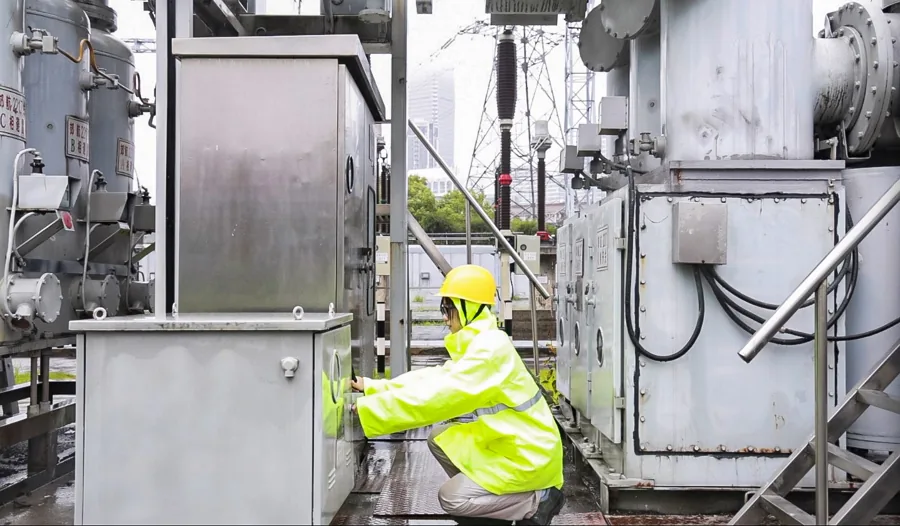
High relative humidity does not automatically mean water is inside every sealed part. Practical risk appears when surface temperature falls below dew point, when cable entries or doors leak, when drainage is blocked, or when auxiliary compartments repeatedly breathe humid air.
- Will the site experience daily condensation cycles, monsoon rain, flooding, washdown or long periods without maintenance?
- Which compartments contain terminals, relays, meters, communication devices or moisture-sensitive auxiliaries?
- Does the project require anti-condensation heating, a hygrostat/thermostat, conformal coating or fungus-resistant materials?
- Where will condensed or wind-driven water drain without entering cable trenches or contacting energized interfaces?
- Are gaskets, sealants, labels, wiring and coatings compatible with UV, humidity, temperature and cleaning chemicals?
Anti-condensation heaters are normally a compartment-specific auxiliary. State where the heater is installed, its supply voltage, control logic, power, terminals and safe clearances. Do not describe one heater as protection for the entire oil-filled transformer.
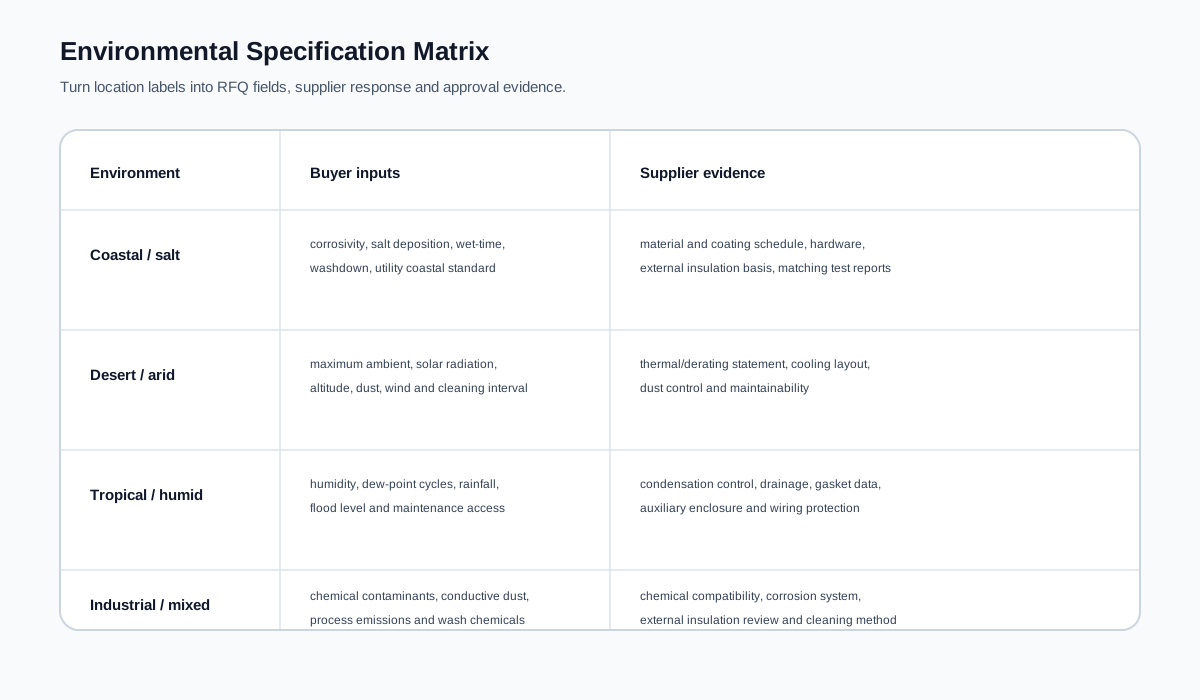
5. Environmental Specification Matrix for Procurement
| Environment | Buyer inputs | Supplier response and evidence |
|---|---|---|
| Coastal / salt exposure | Corrosion classification, salt deposition, wet-time, wind, washdown, utility coastal standard | Material and coating schedule; weld/edge repair; hardware compatibility; external-insulation basis; test reports tied to offered design |
| Desert / arid | Maximum and average ambient, solar radiation, altitude, dust/sand, wind and cleaning interval | Thermal/derating statement; cooling layout; dust-control details; compartment sealing; maintainability and inspection plan |
| Tropical / humid | Humidity, dew-point cycles, rainfall, flood level, biological exposure and maintenance access | Condensation-control logic; drainage; gasket/sealant data; auxiliary-enclosure protection; wiring/coating materials |
| Industrial / mixed pollution | Chemical contaminants, conductive dust, process emissions, wash chemicals and prevailing wind | Chemical compatibility; corrosion system; external-insulation review; cleaning method; project-specific acceptance evidence |
This matrix is a specification starting point, not a substitute for the utility requirements, engineer of record or manufacturer’s approved design.
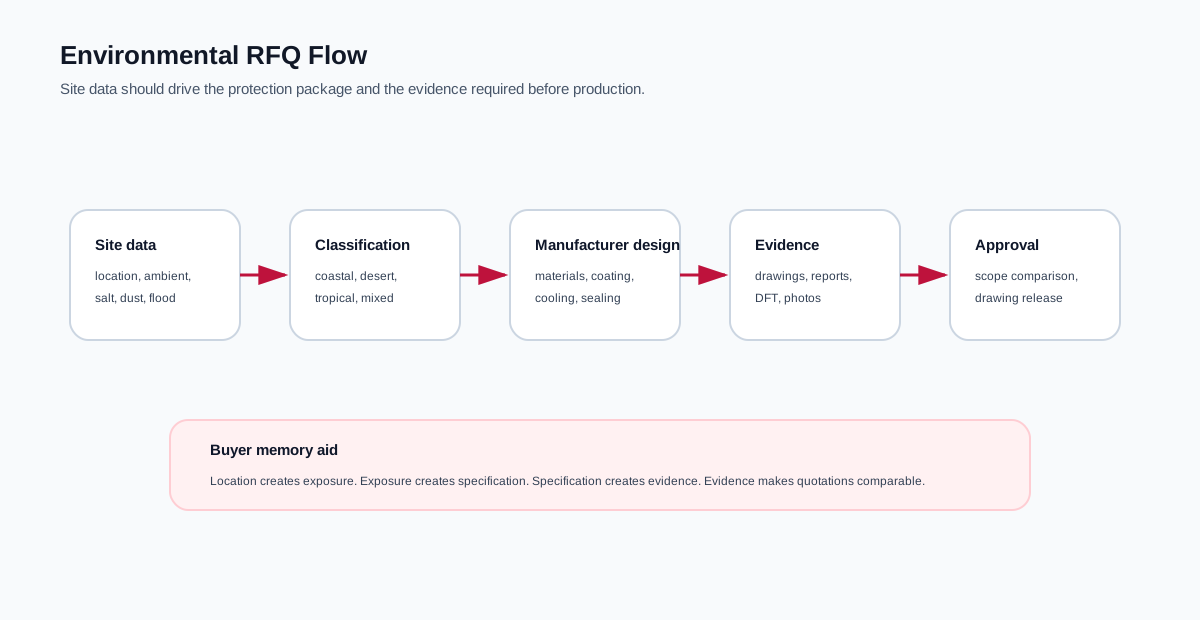
6. Ten Site Inputs to Put in the RFQ
- Project country, site coordinates and utility/owner specification.
- Installation type: outdoor, indoor, sheltered, vault-adjacent or exposed.
- Maximum, minimum and daily-average ambient temperatures.
- Altitude and relevant solar-radiation data.
- Atmospheric-corrosivity classification or raw site data for classification.
- Distance/orientation to salt water and known salt-deposition or industrial-pollution data.
- Dust/sand type, severity, wind exposure and expected cleaning interval.
- Humidity, condensation pattern, rainfall, washdown and flood design level.
- Required standards, coating qualification, enclosure tests and acceptance criteria.
- Maintenance capability, access restrictions and target service/maintenance strategy.
7. Eight Pieces of Evidence to Require Before Production
- Approved general-arrangement and compartment drawings showing materials, cable entries, drainage and environmental accessories.
- Bill of materials or material schedule for exposed parts and fasteners.
- Coating procedure and product data sheets, including surface preparation and repair procedure.
- Production dry-film-thickness inspection records at agreed locations.
- Applicable type/design test reports with the tested construction clearly identified.
- Supplier compliance matrix against each environmental clause of the RFQ.
- Photographs of surface preparation, completed coating, seams, doors, hardware and cable compartments before shipment.
- Site inspection and maintenance instructions, including cleaning and coating-repair guidance.
The buyer’s memory aid: Location creates exposure. Exposure creates specification. Specification creates evidence. Evidence makes quotations comparable.
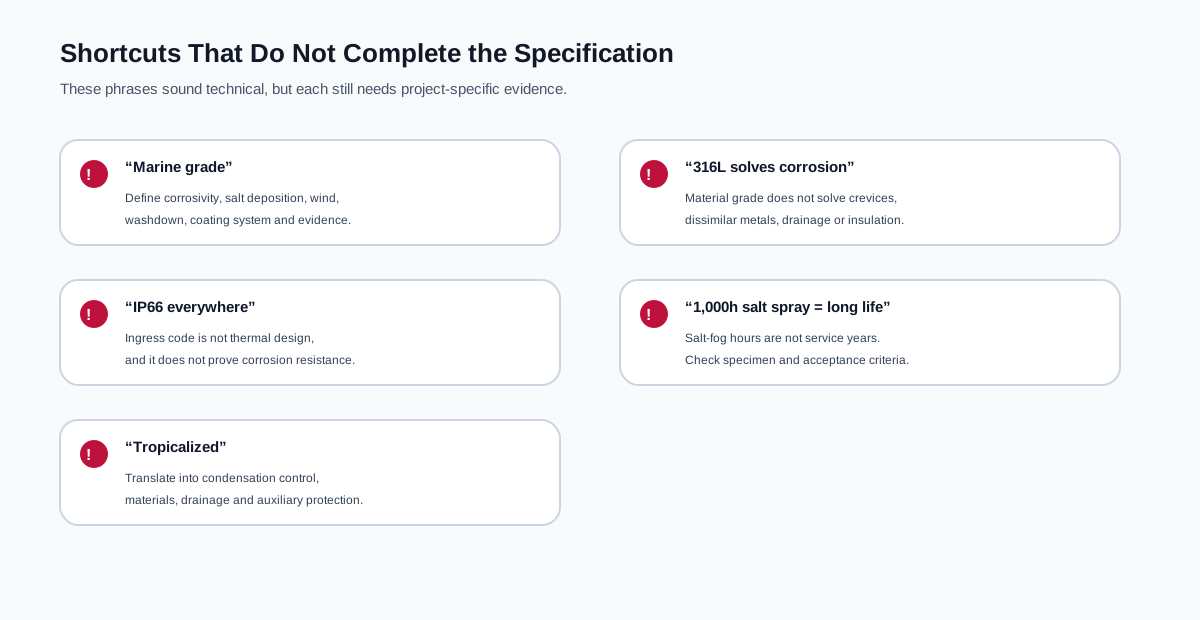
8. Shortcuts That Sound Technical but Do Not Complete the Specification
| Shortcut | What is missing |
|---|---|
| “Five kilometers from the coast means coastal grade.” | No universal distance threshold captures wind, surf, terrain, sheltering, pollutants and wet-time. |
| “316L solves corrosion.” | Material grade alone does not address fabrication, crevices, dissimilar metals, surface contamination, drainage or external insulation. |
| “IP66 is better than IP55.” | An ingress code applies to a defined enclosure and test condition; it does not rank every transformer design or prove corrosion resistance. |
| “1,000 hours salt spray equals long life.” | Salt-fog hours are not service-life years. Test specimen and acceptance criteria must match the claim. |
| “Tropicalized” is a complete scope. | The word must be translated into condensation control, materials, sealing, drainage, auxiliary-circuit protection and evidence. |
9. Frequently Asked Questions
How far from the coast does a transformer need coastal protection?
There is no universal distance. Use project/utility requirements and site factors such as wind direction, breaking surf, wet-time, terrain, industrial pollution and measured or classified corrosivity.
Is a stainless-steel enclosure always required near the sea?
No. Stainless steel may be selected for some duties, while other projects use qualified coating systems or different material combinations. Specify the required performance and evidence, then review fabrication details and lifecycle maintenance.
Does IP66 prove that a pad-mounted transformer is suitable for salt spray?
No. Ingress protection and corrosion performance are different questions. Confirm exactly which compartment the IP rating applies to and separately review coating/materials, hardware, seams, drainage and coastal-standard requirements.
How many ASTM B117 hours should the RFQ require?
Do not choose hours without a governing specification and acceptance criteria. The result is meaningful only when the tested substrate, preparation, coating stack, damage/scribe method and evaluation criteria are relevant to the offered product.
Can environmental protection be added after delivery?
Some items may be improved, such as selected seals, auxiliary heaters or coating repairs. Tank materials, compartment architecture, cooling layout and external-insulation selection are often factory-design decisions. Review them before drawing approval.
What should I send for an environmental scope review?
Send the SLD, utility or owner specification, site location, ambient/altitude data, coastal/dust/humidity/flood information, cable-entry layout and any required coating or enclosure standard.
10. Request an Environment-Matched Scope Review
Send TransformerGrid your current SLD, utility specification and site conditions. The review will identify which environmental inputs are complete, which assumptions are still hidden and which supplier documents should be compared before award.
Send these first: SLD + utility specification + site location + ambient/altitude + coastal/dust/humidity/flood data + cable-compartment layout.
Email Site Conditions for Environmental Scope Review Open RFQ Review Page
Review the specification before you compare the price.
Continue Reading
- Pad-Mounted Transformer Buying Guide
- BIL and Lightning Protection Guide (Satellite 3)
- Cable Entry Direction and HV/LV Compartment RFQ Guide
- Pad-Mounted Transformer Product and RFQ Support
Technical References
- IEEE Std C57.12.28-2023 — Pad-Mounted Equipment—Enclosure Integrity.
- IEEE Std C57.12.29-2023 — Pad-Mounted Equipment—Enclosure Integrity for Coastal Environments.
- ISO 9223:2012 — Corrosion of metals and alloys—Corrosivity of atmospheres.
- ISO 12944-2:2017 — Corrosion protection of steel structures by protective paint systems—classification of environments.
- ASTM B117 — Standard Practice for Operating Salt Spray (Fog) Apparatus.