Dry-Type Transformer Buying Guide · Batch 6
Dry-Type Transformer RFQ Checklist: Ratings, Drawings, Enclosure, Harmonics and FAT
Published 2026-07-28 · Prepared by the TransformerGrid technical editorial team · Project-specific requirements require manufacturer, utility and applicable-standard verification.
A dry-type transformer RFQ should make supplier assumptions visible before they become price differences or engineering changes. The document does not need to be perfect on day one, but it should separate confirmed data, pending decisions and supplier responsibilities.
This checklist is designed for early budgeting and formal procurement. It links to the paired technical guide on ventilation and enclosure because room conditions are among the most frequently omitted inputs.
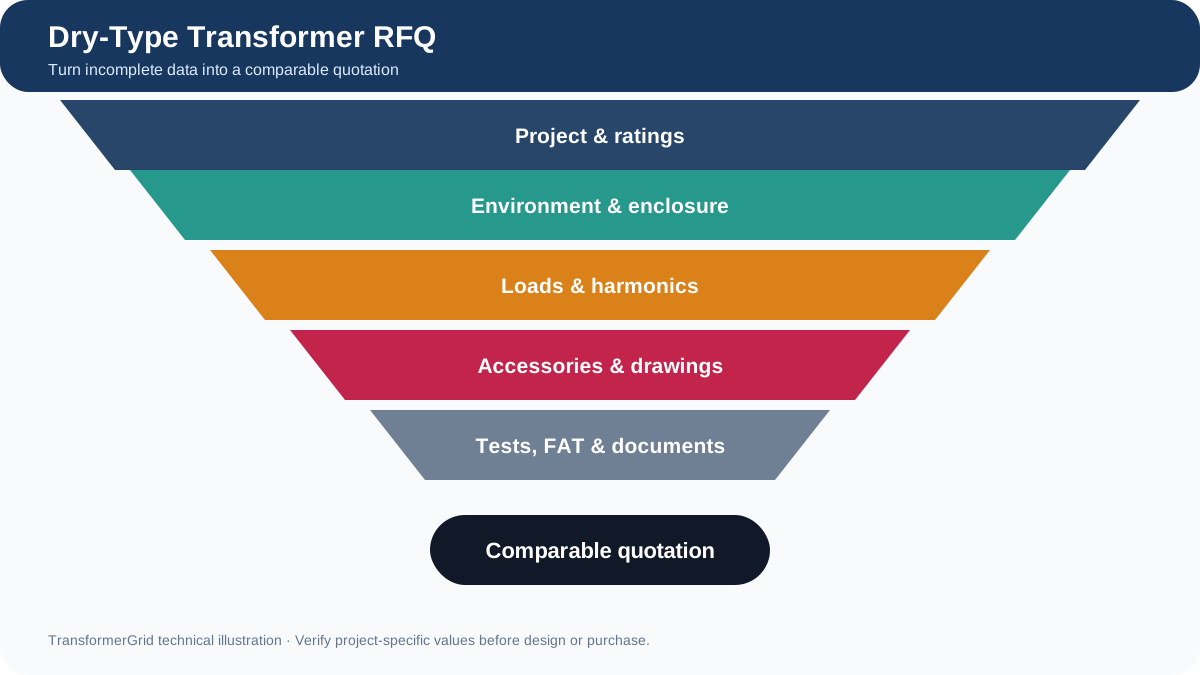
Project and electrical data
State the project country, application, quantity, required date, kVA, primary and secondary voltage, frequency, phase, connection, neutral arrangement, impedance target and tap requirement. If parallel operation is possible, identify the existing transformer data and protection context.
Include the one-line diagram when available. If it is not available, describe the upstream source, downstream system, grounding and major loads so the supplier can list assumptions.
Environment, room and enclosure
Identify indoor or outdoor location, ambient temperature, altitude, humidity, dust, chemical exposure, cleanliness requirements, room dimensions, available airflow, cable-entry direction and maintenance access. State the desired NEMA or IP concept if it has been selected.
Do not specify a closed enclosure without checking heat removal. The transformer supplier can provide loss data and equipment airflow needs, while the building or electrical designer must verify room ventilation and code compliance.
Load characteristics and harmonics
List major nonlinear loads such as UPS systems, VFDs, rectifiers, LED drivers and server power supplies. Provide harmonic data or the expected nonlinear-load share if known. State whether a K-rated transformer is required or whether the supplier should propose one.
Also identify motor starting, cyclic duty, expected average load, future expansion and required overload strategy. These details affect temperature and life more than a simple connected-load total.
Accessories, drawings and tests
Define temperature sensors, controller, fan stages, alarms, communication contacts, terminal arrangements, cable boxes, anti-vibration requirements and any special labeling. Request a preliminary general arrangement and connection diagram with the quotation when the project schedule requires early review.
State routine tests, special tests, witnessed FAT, partial-discharge requirements, temperature-rise evidence, sound data, report language and acceptance criteria. Avoid asking every possible test without a risk-based reason, because unnecessary scope adds cost and schedule.
Commercial and document checklist
Request Incoterm, destination, packing method, lead-time breakdown, warranty, drawing-revision allowance, final document list and clear identification of the proposed manufacturer. Require a deviation schedule so that missing or alternative requirements cannot remain hidden.
TransformerGrid can help turn incomplete information into an open-point list, coordinate technical responses and align quotations from verified manufacturing partners. The final RFQ must still be reviewed by the project’s qualified engineers and local approval parties.
FAQ
Can an RFQ be issued before final drawings exist?
Yes. Mark assumptions and open points clearly, then require the supplier to update the quote after critical data are confirmed.
What data are most often missing?
Room ventilation, nonlinear-load characteristics, cable interface, enclosure scope and the exact test/document package are common gaps.
Should the RFQ request a deviation list?
Yes. It is one of the best tools for comparing suppliers and preventing hidden exclusions.
Does every project need witnessed FAT?
No. FAT scope should reflect project risk, rating, contract requirements and the value of independent witness.
Send your dry-type transformer RFQ
We can help organize the technical data, open points, drawings, FAT documents and comparable quotation scope with verified manufacturing partners.