Dry-Type Transformer Buying Guide · Batch 6
500 kVA Dry-Type Transformer Price: Cast Resin, Windings, Enclosure and Test Scope
Published 2026-07-28 · Prepared by the TransformerGrid technical editorial team · Project-specific requirements require manufacturer, utility and applicable-standard verification.
A 500 kVA dry-type transformer is common in commercial buildings, light manufacturing, hospitals, schools and industrial auxiliary systems. That common rating can create a false sense that the product is standardized. In reality, voltage combination, winding design, enclosure, temperature rise and testing scope can move both price and delivery time.
The correct buying question is not “What is the price of a 500 kVA transformer?” It is “What 500 kVA design, under what operating conditions, with which included evidence, is being quoted?” This page provides a commercial review framework and links to the paired technical guide on insulation class and temperature rise.
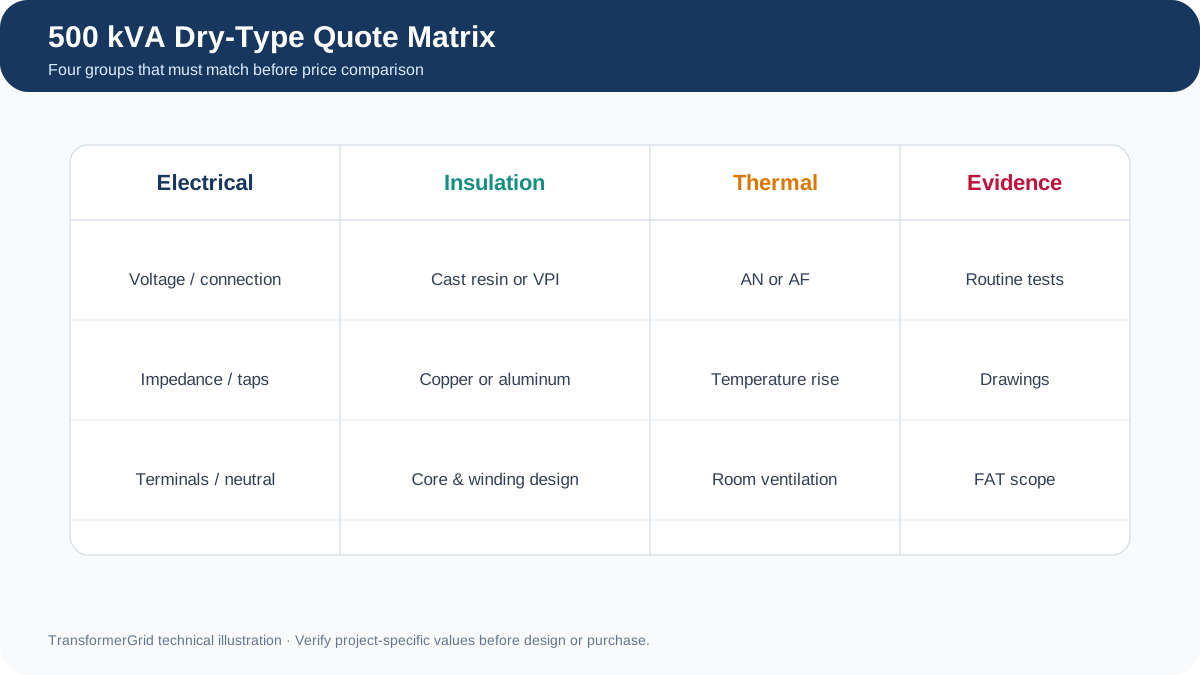
Confirm the electrical system before discussing price
The RFQ should identify primary and secondary voltage, frequency, phase, connection, neutral requirements, tap range and impedance. Secondary current changes significantly with voltage, so conductor size, terminals and thermal stress cannot be inferred from kVA alone. Replacement projects also need existing cable, busway, footprint and protection information.
If the project may operate transformers in parallel, impedance tolerance, vector relationship and voltage ratio require additional review. A supplier that quotes before asking these questions is probably embedding assumptions in the price.
How insulation and winding choices change the offer
At 500 kVA, cast resin versus VPI can affect material cost, process time, moisture resistance, cleaning strategy and repairability. Copper versus aluminum influences dimensions, weight, losses and terminal design. Neither choice should be accepted or rejected from a single marketing claim.
Ask the supplier to provide guaranteed no-load loss, load loss, temperature rise, winding material, core material and total mass. These data make it possible to compare designs rather than labels.
Enclosure and room ventilation are part of the product
An open dry-type unit, a ventilated indoor enclosure and a more protected cabinet are not the same scope. The selected enclosure affects clearances, cable entry, airflow and maintenance access. If the room is hot or poorly ventilated, the transformer may need a different thermal design or a more conservative loading plan.
Natural-air cooling can be sufficient for many applications. Forced-air fans may provide additional capacity or contingency, but they also add sensors, controls, noise and maintenance. The quotation should distinguish base AN rating from any AF rating.
Routine tests, special tests and document deliverables
A buyer should normally expect identification of routine tests such as ratio, winding resistance, losses, impedance and dielectric checks applicable to the design. Additional requests may include partial-discharge evidence, temperature-rise evidence, sound data or witnessed FAT. The exact requirement should follow the applicable standard and contract.
Drawings, connection diagrams, nameplate proposal, accessory list, loss table and test-report format should be defined before purchase. The supplier should state whether these are included and how many review cycles are allowed.
A comparison method that exposes hidden exclusions
Create five columns: electrical scope; insulation and winding design; thermal and enclosure scope; tests and documents; commercial and logistics scope. Put every supplier response into those columns and mark each deviation. The cheapest compliant design may still be the correct choice, but the decision will be based on a comparable scope.
TransformerGrid can help organize this matrix and coordinate open points with verified manufacturing partners. Local room design, cable sizing, protection coordination and approvals must be confirmed by qualified project professionals.
FAQ
Is there a standard market price for 500 kVA?
No. Voltage, insulation, winding material, losses, temperature, enclosure, tests, destination and commercial terms all affect the quotation.
Does 500 kVA require fans?
Not automatically. Many designs use natural air. Fans are selected for additional capacity, contingency or site-specific thermal needs.
Should buyers request partial-discharge testing?
The requirement depends on the insulation system, standard and contract. It should be defined before quotation so all suppliers price the same scope.
What is the most overlooked item?
The interaction between enclosure airflow and room ventilation is frequently left until late in the project.
Send your dry-type transformer RFQ
We can help organize the technical data, open points, drawings, FAT documents and comparable quotation scope with verified manufacturing partners.