Technical Library · Replacement Engineering Hub
Distribution Transformer Replacement Engineering: Assessment, Conversion, Outage and Spare Strategy
Engineering reference prepared by TransformerGrid · Project-specific requirements require manufacturer, utility and qualified-engineer verification.
Why “Quote a Replacement Transformer” Is Not a Complete Engineering Question
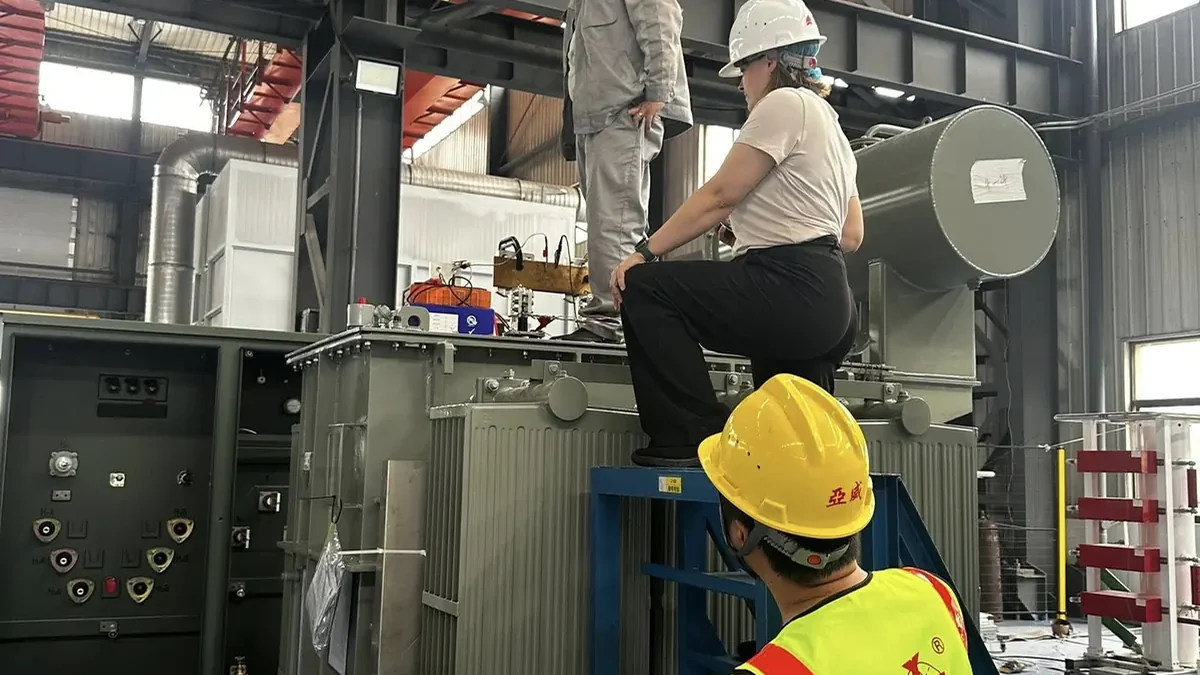
When an existing distribution transformer develops leakage, overheating, abnormal gas generation, damaged bushings, insufficient capacity or repeated protection operations, procurement often begins with one request: “Please quote the same kVA.” That request may produce an equipment price, but it does not define the replacement project.
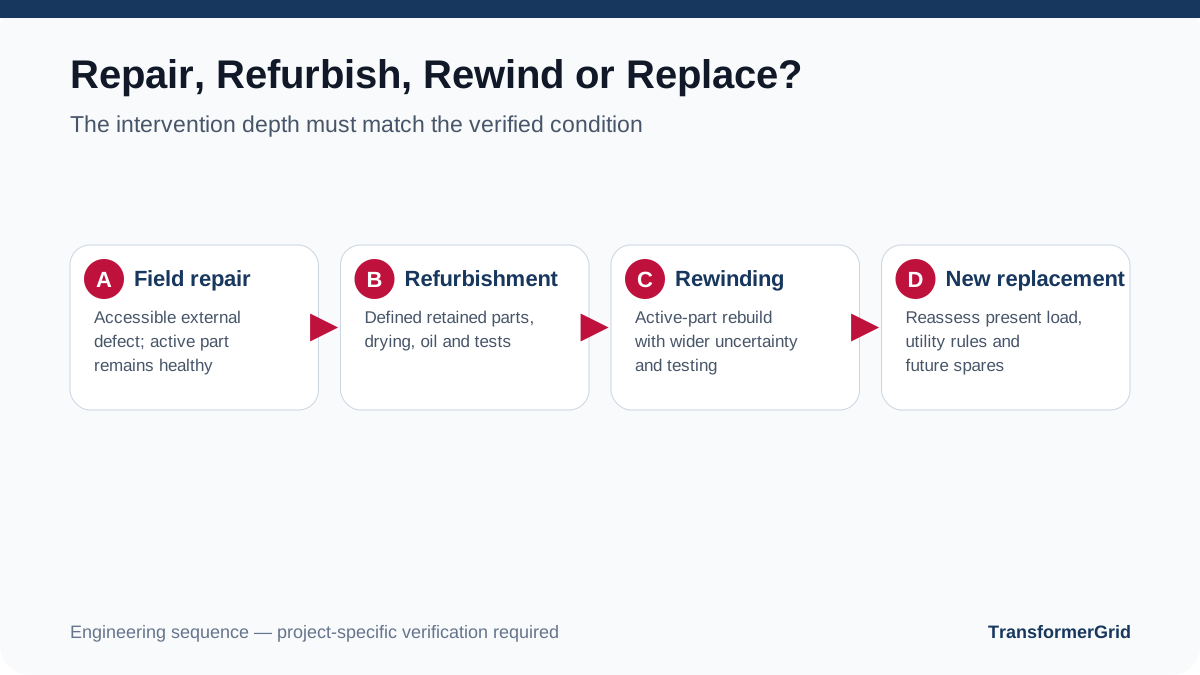
The project must determine whether the old unit can be safely repaired, whether refurbishment or rewinding is defensible, whether the original rating and voltage remain correct, whether the installation should stay pole-mounted or move to a pad-mounted arrangement, how critical loads will be supported during the outage, and how the new unit will be tested, energized, documented and supported by a spare strategy.
A Six-Stage Replacement-Engineering Process
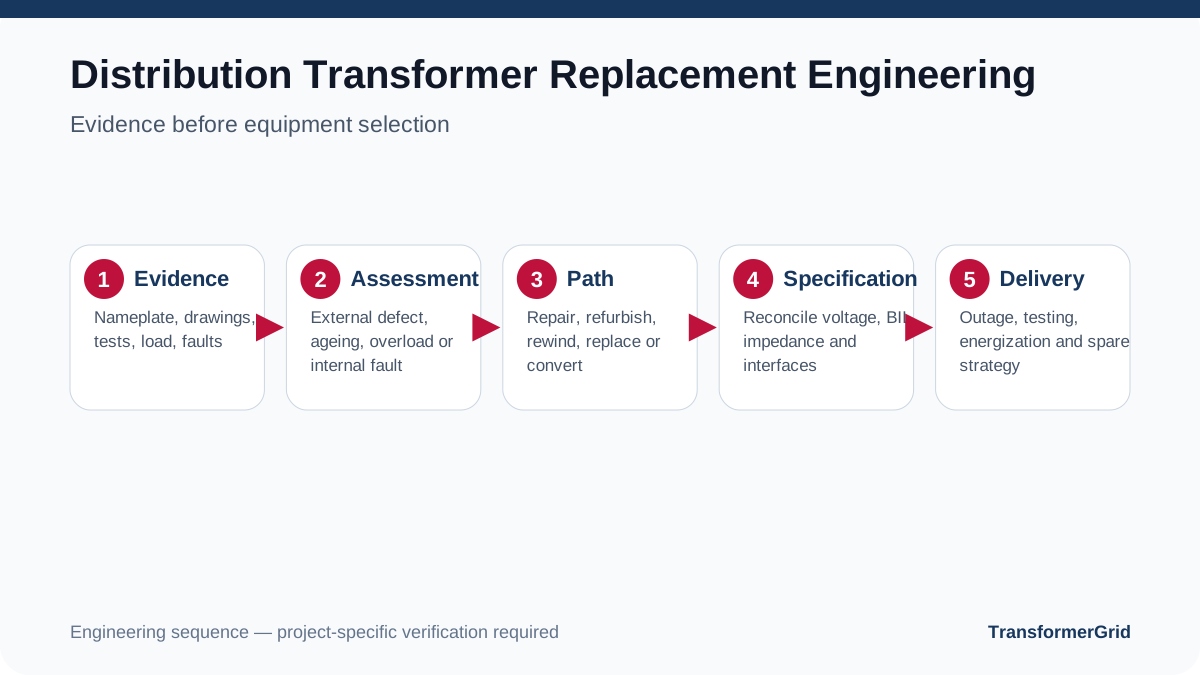
- Collect evidence. Obtain the old nameplate, original drawings, test records, oil and DGA results, load history, protection operations, site photographs, utility requirements, outage window and future expansion plan.
- Assess condition. Separate accessible external defects from oil problems, insulation ageing, winding deformation, internal faults and chronic overload.
- Select the path. Compare field repair, factory refurbishment, rewinding, like-for-like new replacement and installation conversion on the same technical and schedule basis.
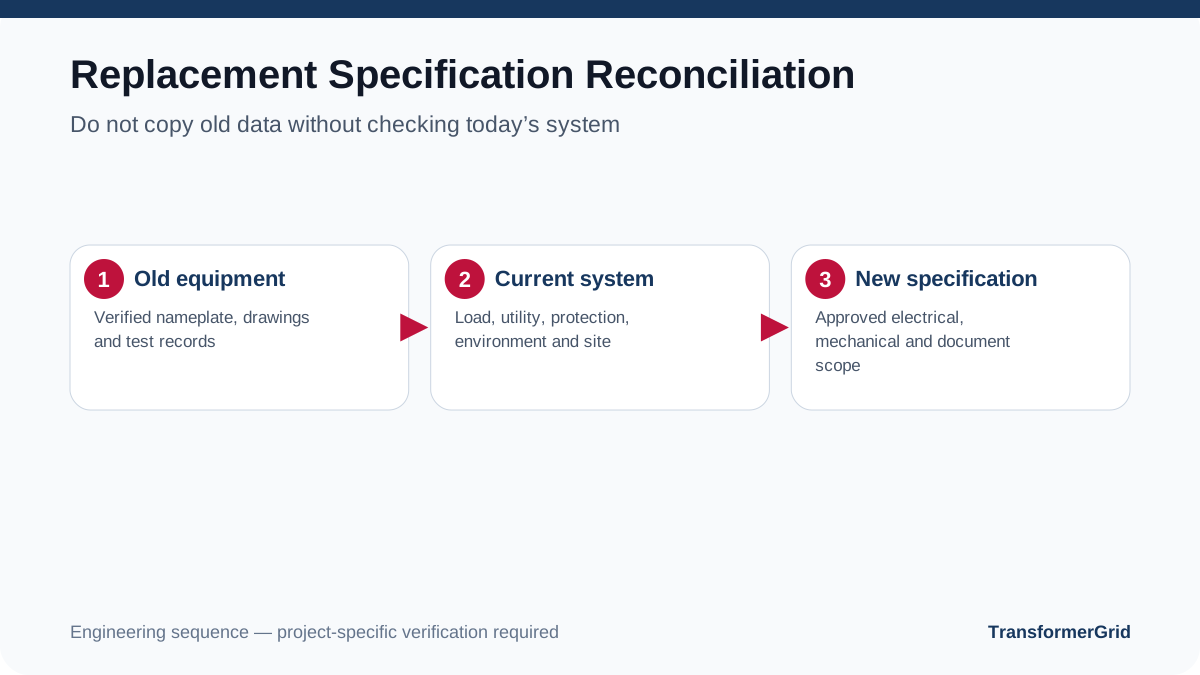
- Reconcile the specification. Confirm present load, voltage, BIL, impedance, taps, connection, grounding, protection, mechanical interface, environment and document requirements.
- Plan outage and commissioning. Define temporary power, isolation, removal, lifting, site-interface repair, field testing, protection confirmation, no-load energization and staged loading.
- Close out and standardize. Archive as-built drawings, nameplate data, tests, settings, spare parts and maintenance requirements, then evaluate whether multiple sites can share a verified spare family.
Use Evidence Strength, Not Equipment Age Alone
Service age is useful context but it is not a diagnosis. An older transformer with stable loading, complete maintenance records and verified insulation condition may remain a credible refurbishment candidate. A younger unit that has suffered severe internal faults, water ingress or repeated overload may not justify further investment.
A practical review separates evidence into four levels: verified test data and controlled records; reliable historical documents; observable site information; and unverified assumptions. Critical decisions should not rest on phrases such as “it looks usable,” “the old unit was this size,” or “the repair shop thinks it is minor.”
When the Installation Method Should Be Reconsidered
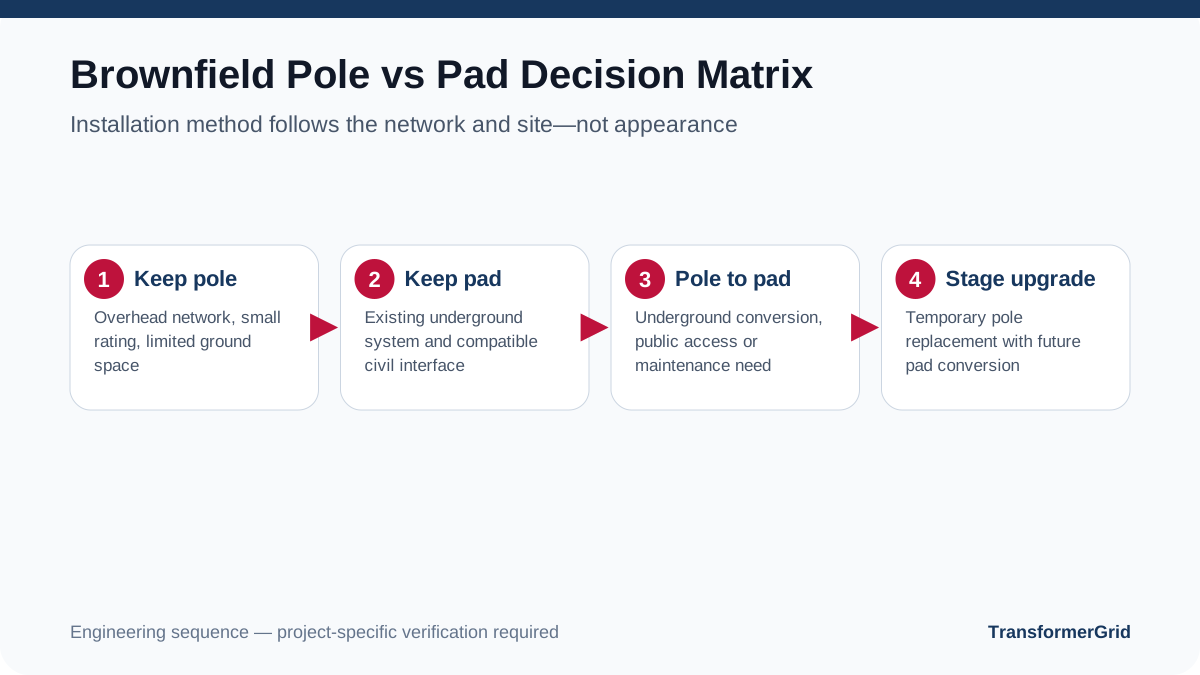
Keeping a pole-mounted arrangement is often reasonable when the upstream network remains overhead, rating is modest, ground space is constrained and underground conversion would add disproportionate civil and cable work.
A pad-mounted arrangement deserves review when the site is becoming public or commercial, the network is moving underground, ground-level maintenance is preferred, the old pole location presents access or safety concerns, or future loading and site planning have changed.
A pole-to-pad conversion is not simply a different enclosure. It changes the overhead-to-underground transition, protection location, cable system, foundation, grounding, drainage, vehicle protection, maintenance access and utility interface.
Required Engineering Deliverables
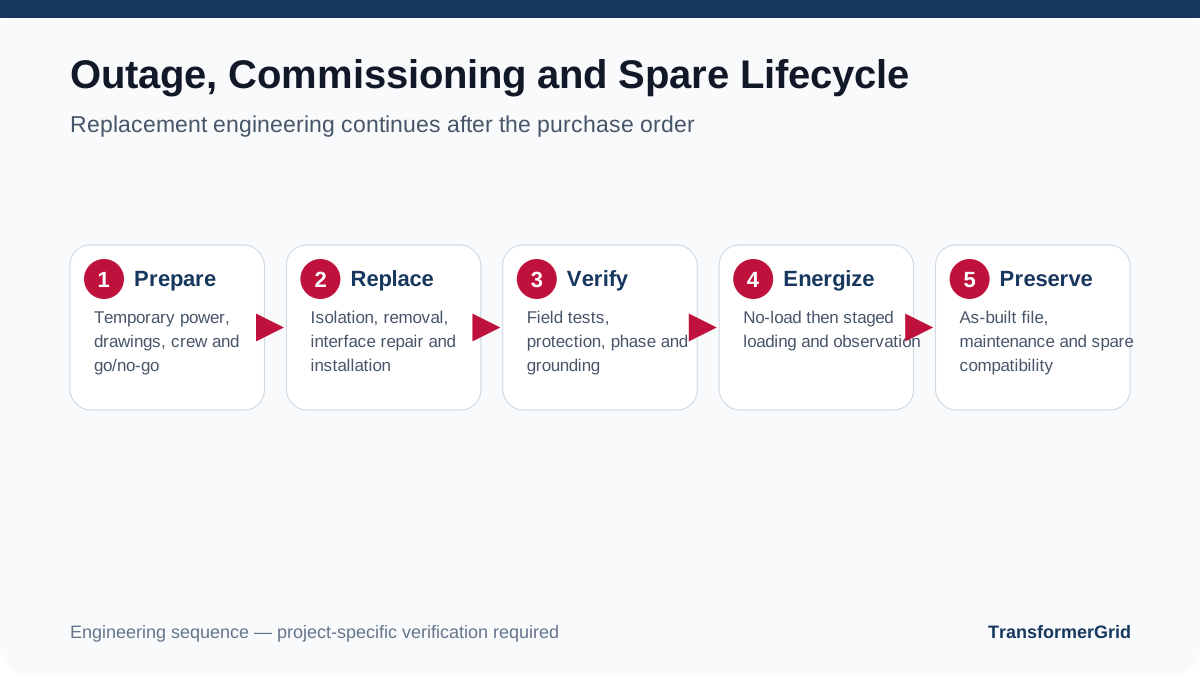
A controlled replacement package should contain the final technical specification, an old-versus-new parameter schedule, approved drawings, nameplate data, accessory list, test plan and results, protection and grounding confirmation, installation and energization records, final settings, logistics documents, maintenance requirements and a spare-compatibility statement.
TransformerGrid can help organize RFQ information, identify open technical points and coordinate drawings, documents, FAT and delivery communication with verified manufacturing partners. Local design, construction, protection settings, permits and energization remain within the responsibility of the utility and appropriately qualified project personnel.
FAQ
Is an old nameplate enough to order the replacement?
No. It is a valuable baseline, but present load, utility requirements, protection, environment, mechanical interface and the cause of the old problem must also be checked.
Must the replacement use the same installation method?
Not always. The network, site, maintenance, safety, civil work and utility requirements should be reviewed before changing from pole to pad or vice versa.
Does this guide replace a site-specific design?
No. It is an engineering framework. A qualified project team must apply local standards, utility rules and site-specific calculations.
This Technical Library page is educational. Project design, protection settings, construction, permits and energization must be completed by the utility and appropriately qualified local parties. TransformerGrid coordinates RFQ clarification, drawings, documents, FAT and export delivery with verified manufacturing partners.