Technical Library · Replacement-004
Replacement Transformer Specification Reconciliation: Old Nameplate, Current Load, BIL, Impedance and Mechanical Fit
Engineering reference prepared by TransformerGrid · Project-specific requirements require manufacturer, utility and qualified-engineer verification.
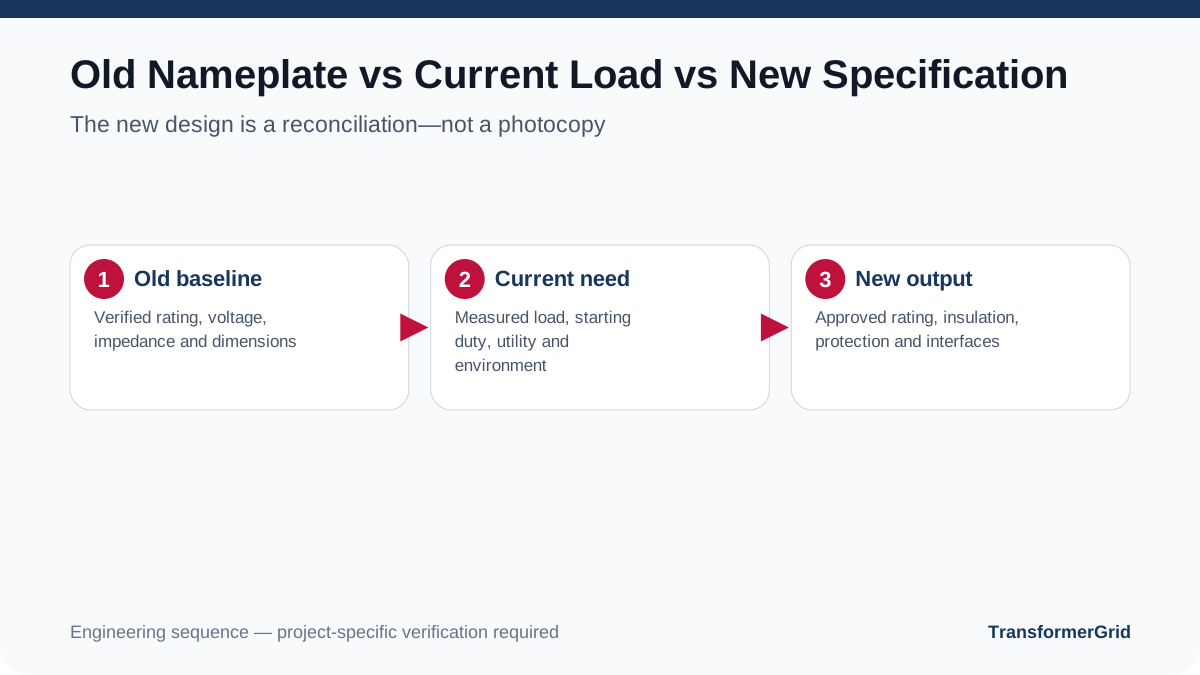
The Old Nameplate Is a Baseline, Not the Final Design
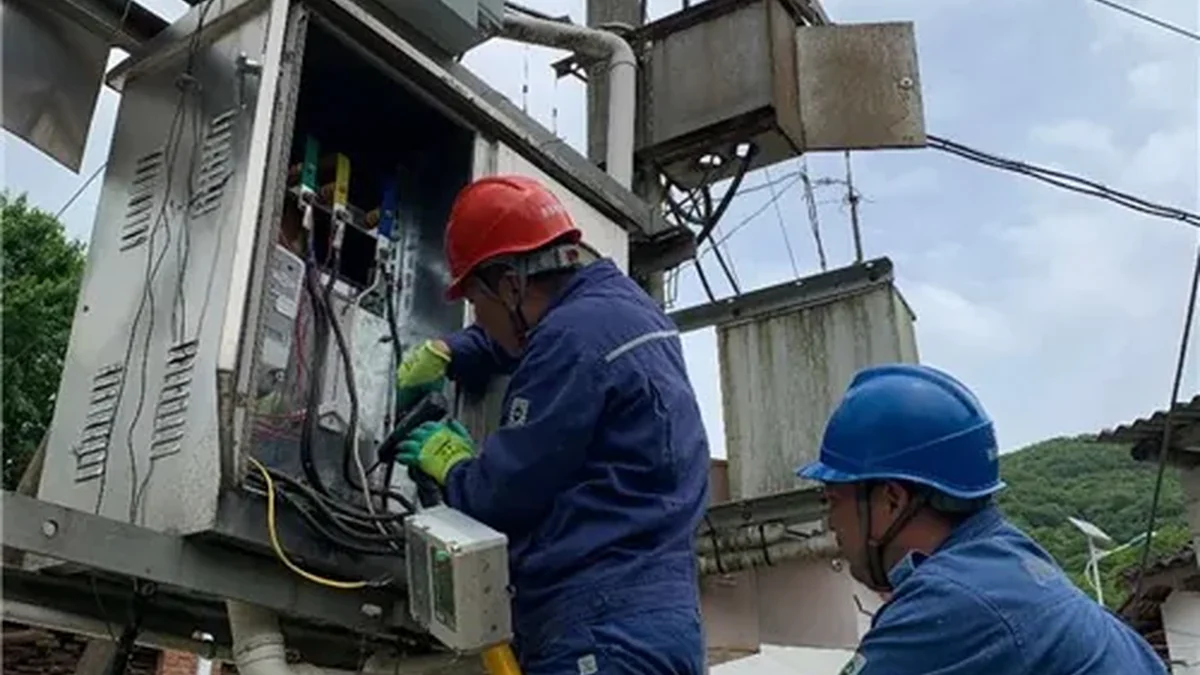
An old nameplate can identify original kVA, primary and secondary voltage, phase, frequency, impedance, connection, weight and part of the insulation specification. It describes the transformer as built; it does not prove that the same design remains correct today.
Loading may have increased, utility rules may have changed, protection and grounding may have been modified, the environment may have become more severe, or the old unit may have failed partly because capacity, BIL, corrosion protection or protection coordination was inadequate.
Use a Three-Column Reconciliation Schedule
Column one contains verified old-equipment data. Column two contains present project conditions. Column three defines the approved replacement specification. Any parameter that cannot be inherited directly should identify the confirming party and evidence.
| Old equipment baseline | Current project condition | Replacement output |
|---|---|---|
| Old kVA | Measured peak, continuous duty, motor starting and expansion | Confirmed replacement kVA and loading basis |
| Old primary/secondary voltage | Present utility and load-system voltage | Complete winding voltage and connection |
| Old BIL | Current voltage class, surge exposure and utility rule | Approved BIL and arrester coordination |
| Old impedance | Current fault level and protection settings | Approved impedance and fault-current basis |
| Old mechanical arrangement | Pole, pad, cable, access and lifting condition | Approved dimensions, weight and interfaces |
Electrical Parameter Reconciliation
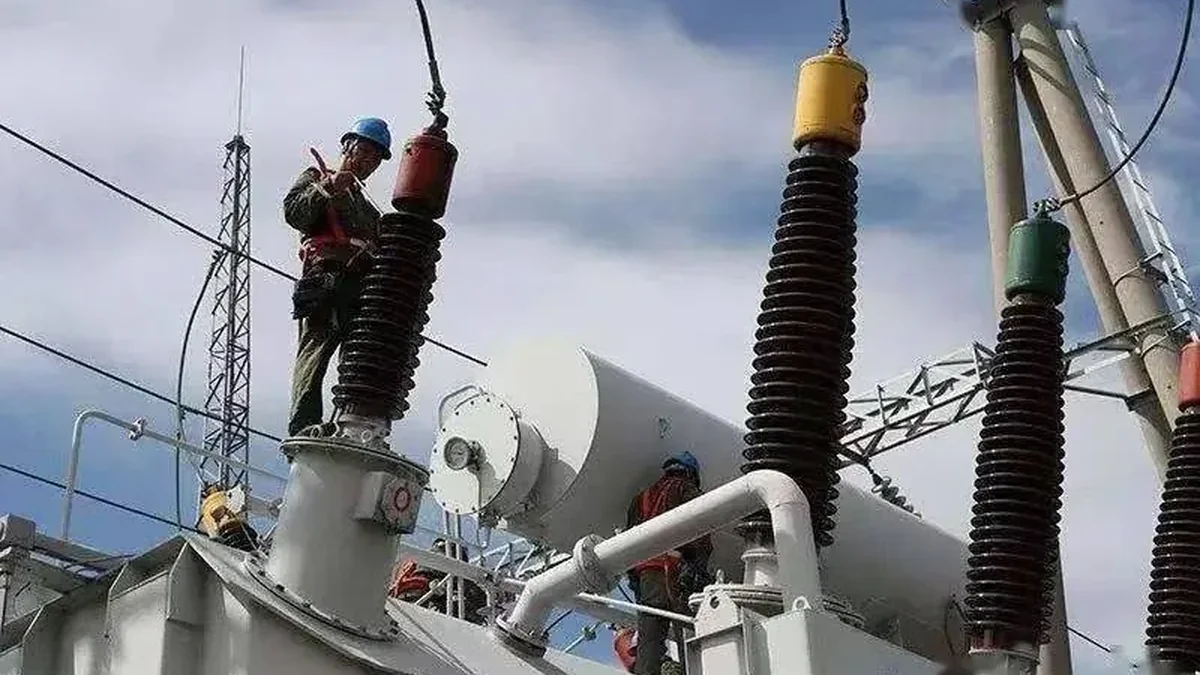
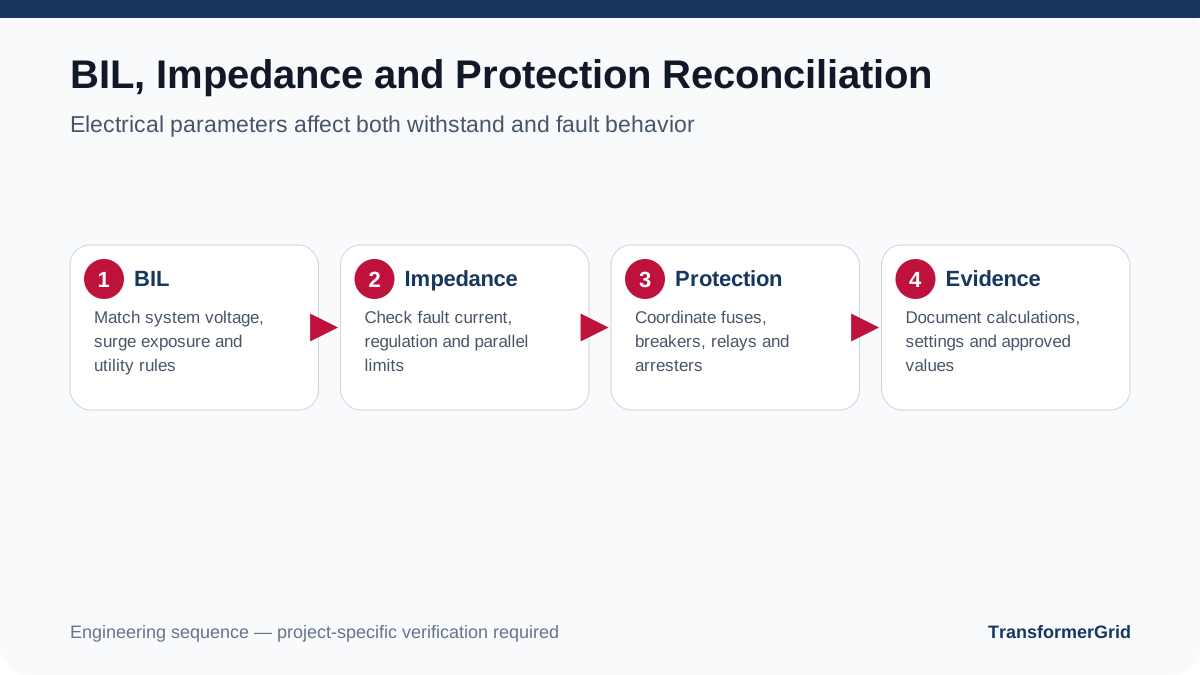
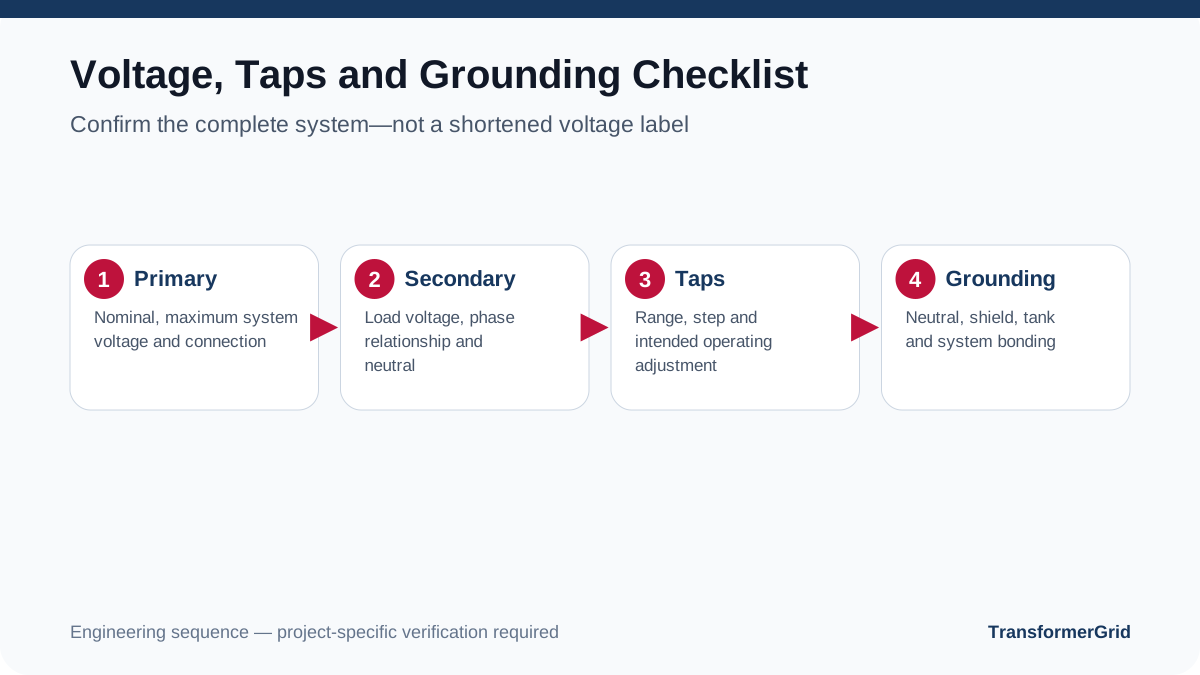
Confirm actual primary and secondary systems, including grounding and phase relationship, rather than copying a shortened voltage label. Verify frequency, tap range, winding connection and neutral requirements.
BIL should match the voltage class, surge environment and utility requirements. Impedance affects fault current, voltage regulation and protection coordination. When the old transformer suffered lightning damage, repeated fuse operation or unexplained protection trips, the cause should be reviewed before the old insulation and protection configuration is repeated.
Mechanical and Site Compatibility
For pole-mounted equipment, verify single-pole or two-pole arrangement, bracket and hole spacing, bushing orientation, conductor space, weight, centre of gravity, lifting points and pole loading.
For pad-mounted equipment, verify foundation dimensions and openings, cable entry, compartment arrangement, bushings and terminations, door swing, maintenance clearances, bollards and drainage.
Visual similarity is not evidence of interchangeability. Approved drawings and reliable site measurements should control the interface.
Documents, Requirements and Change Control
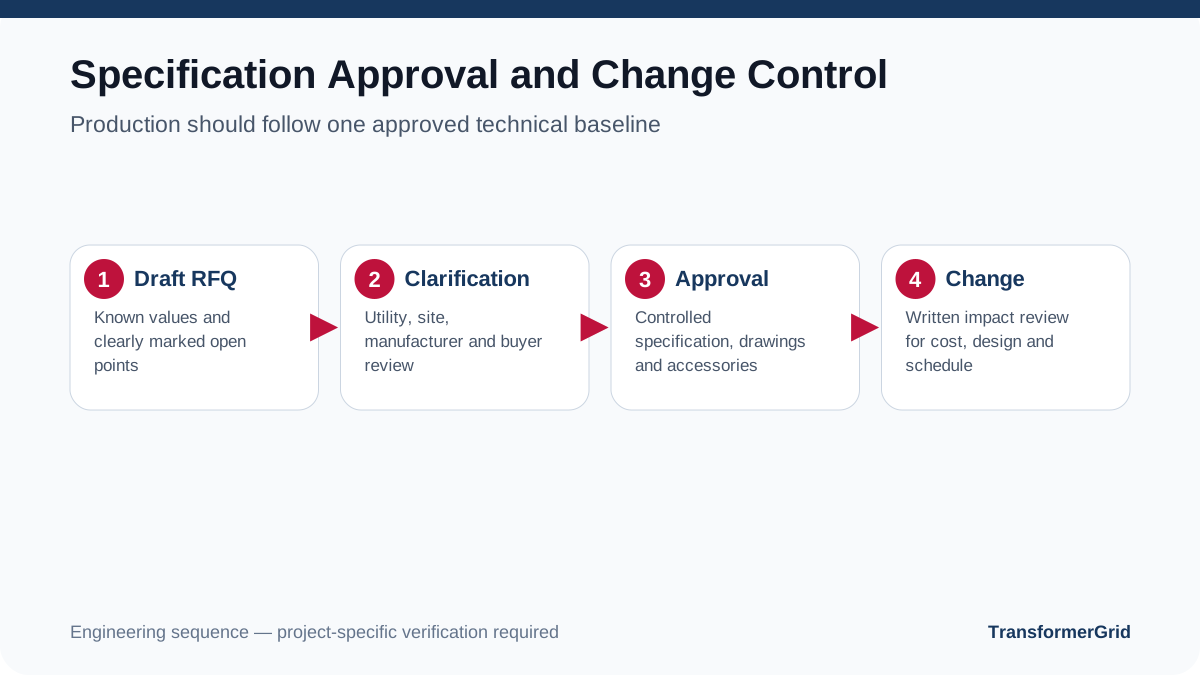
Confirm the current project or utility specification, loss or efficiency requirements, nameplate format, tests, drawings and language requirements. Old documents are useful evidence but do not automatically override current requirements.
The specification, drawings and accessory schedule should carry revision control. Changes to voltage, interface or accessories after production release require written review of design, price and schedule impact.
The Output Is a Comparable RFQ
A controlled RFQ contains the old-equipment record, current loading, confirmed values, open values, applicable requirements, site interfaces, test and document scope, delivery need and responsibility boundary. It is more useful than a message asking for “the same transformer as the old nameplate.”
Related buying guide: Read the commercial decision guide that applies this technical framework to cost, scope and RFQ review.
FAQ
Can a transformer that operated well for years simply be copied?
Good service history is positive evidence, but present load, utility, protection, environment and requirements still need confirmation.
Why does replacement impedance matter?
It can change available fault current, voltage regulation and protection coordination. Project engineers should evaluate the effect.
What if the old drawings are missing?
Start with the nameplate, utility records, site measurements, protection data and qualified inspection, clearly marking confirmed and open items.
This Technical Library page is educational. Project design, protection settings, construction, permits and energization must be completed by the utility and appropriately qualified local parties. TransformerGrid coordinates RFQ clarification, drawings, documents, FAT and export delivery with verified manufacturing partners.