It Passed FAT—So Why Was the Pad-Mounted Transformer Still Too Loud on Site?
Published July 22, 2026 · Prepared by the TransformerGrid technical editorial team · Project-specific requirements require manufacturer, utility and applicable-standard verification.
“The report says pass. Why can we hear the transformer in the office at night?”
Composite scenario: this scenario combines recurring issues from procurement and site coordination. It is not presented as one actual customer project.
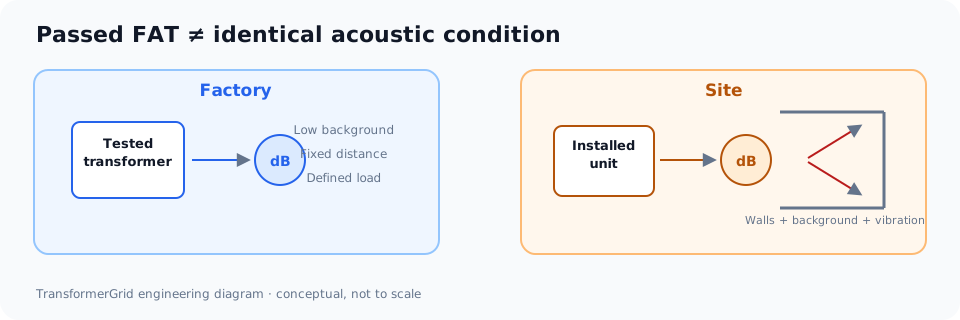
A commercial campus received its pad-mounted transformer on schedule. The FAT package showed no obvious acoustic nonconformity. After energization, a steady hum became prominent at offices beside the equipment court. The buyer suspected a defective unit; the factory pointed to the passed test. Both sides were comparing results that had never been placed on the same basis.
Five reasons the two observations may differ
- Reflections: two hard walls and a paved floor can reinforce sound at selected positions.
- Structure-borne vibration: a rigid foundation or connected building element can carry vibration into occupied space.
- Operating condition: voltage, V/Hz, load, harmonics and cooling status may differ from the factory condition.
- Metric: a sound-power result cannot be compared directly with a spot sound-pressure reading.
- Method: distance, microphone height, weather, background noise and time weighting change a site result.
Stop arguing; make the evidence comparable
First identify the standard, quantity, measurement surface, background correction and operating condition in the FAT report. Then document site voltage, frequency, current, harmonic distortion, tap position, cooling status, time, weather and measurement locations. Record both the equipment vicinity and the relevant receiver. Inspect the foundation and external components for a mechanical path, but do not approach or touch energized equipment.
A phone application or recording can document that a change exists; it is rarely sufficient as the sole contractual acceptance measurement. Likewise, a factory “pass” establishes only what the agreed factory procedure actually tested.
Define two layers of responsibility before production
The manufacturer should be accountable for the project-specific equipment requirement under an agreed test. The EPC, designer or owner must address site layout, foundations, barriers and local boundary criteria. TransformerGrid coordinates these interfaces early, instead of waiting until each party can point to a different number.
Reliability is not claiming that a noise issue can never occur. It is creating a record that shows what was promised, how it was measured, what changed on site and what action follows. Return to the complete transformer-noise procurement guide or send the FAT page and site layout for a comparability review.