Delta and Wye Transformer Connections: Vector Group and RFQ Guide
Direct Answer: Delta and Wye Transformer Connections
Delta and wye connections affect neutral availability, grounding, phase shift, harmonic behavior and utility approval. The buyer should not write “standard vector group” in an RFQ. The correct vector group must be confirmed from the application, grid operator, inverter supplier if renewable, and existing system requirements.
| Vector Group | Typical Use | Buyer Warning |
|---|---|---|
| Dyn11 | Common distribution step-down | Do not assume it is correct for step-up |
| Yyn0 | Balanced loads with neutral needs | Confirm grounding requirement |
| YNd11 / Yd11 | Solar or wind step-up discussion | Confirm inverter and grid operator requirements |
| Dd0 | Industrial no-neutral applications | Not suitable where LV neutral is needed |
Renewable Step-Up Warning
Do not assume a step-down distribution transformer can be used in reverse for solar or wind step-up. Winding design, insulation coordination, tap changer position, grounding and harmonic behavior must match the intended power flow direction and grid interconnection requirement.
Composite Buyer Scenario: The following delta and wye transformer connection scenario is fictionalized for engineering education. It is not presented as a single real customer case. It combines common transformer RFQ mistakes that can appear in utility, EPC, commercial and industrial projects.
Vector Group Reference for Buyers
| Vector Group | Typical Use | Buyer Warning |
|---|---|---|
| Dyn11 | Common step-down distribution transformer | Do not assume it is correct for renewable step-up projects |
| Yyn0 | Balanced loads and some utility systems | Confirm grounding and neutral requirements |
| YNd11 / Yd11 | Common in step-up and renewable applications | Confirm inverter and grid operator requirements |
| Dd0 | Industrial systems without neutral requirement | Not suitable where LV neutral is required |
Fictionalized Project Example: “Standard Vector Group” Was Not Enough
This fictionalized project example is written for buyer education. A solar project engineer prepares a transformer RFQ using voltage and kVA data from an inverter package. The team selects a familiar distribution vector group because it looks standard.
During utility review, the interconnection engineer asks for the confirmed vector group, grounding method and harmonic behavior. The project team then realizes that transformer connection is not just a factory preference. It affects neutral grounding, phase displacement, harmonic behavior and grid acceptance.
The correction is simple before manufacturing: confirm the required vector group with the utility and inverter supplier, then write it clearly into the RFQ.
Can a Step-Down Transformer Be Used in Reverse?
Do not assume a step-down distribution transformer can simply be used as a step-up transformer. Winding design, insulation coordination, tap position, neutral grounding and vector group must match the intended application and utility interconnection requirement.
How TransformerGrid Prevents Vector Group and Grounding Errors Before Quotation
For delta and wye transformer connections, TransformerGrid reviews the application before accepting a “standard vector group” request. A distribution transformer, a solar step-up transformer, a wind project transformer and an industrial load transformer may use very different connection logic. The vector group affects phase displacement, neutral availability, grounding, harmonic behavior and parallel operation.
Before quotation, we ask whether the transformer is step-down or step-up, whether the load requires a neutral, whether the inverter or grid operator specifies grounding, and whether existing transformers must be paralleled. For renewable energy projects, we compare inverter requirements with grid interconnection requirements instead of assuming that a common distribution vector group is acceptable.
- Vector group, phase shift and neutral requirement are checked against the actual application.
- Grounding method and neutral bushing requirements are clarified before production.
- Step-up renewable projects are reviewed for inverter, harmonic and grid-operator requirements.
- Replacement and parallel-operation projects are checked against existing transformer vector group and impedance compatibility.
This helps buyers avoid a transformer that matches voltage and kVA but fails interconnection review, grounding design, harmonic control or parallel operation because the connection group was assumed instead of confirmed.
Decision Snapshot
Delta and wye connections are not just wiring labels. They affect grounding, phase shift, neutral availability, protection coordination, utility acceptance and how the transformer should be written into the RFQ.
Vector Group Details Buyers Should Confirm
| RFQ Item | Why It Matters |
|---|---|
| Primary connection | Confirms whether the high-voltage side is delta, wye or another required arrangement. |
| Secondary connection | Determines neutral availability, grounding and usable low-voltage system. |
| Vector group | Examples such as Dyn11 or Yyn0 affect phase displacement and parallel operation. |
| Grounding | Must match the utility and protection design. |
| Parallel operation | Requires compatible voltage ratio, impedance and vector group. |
When purchasing a three-phase transformer, many buyers believe that providing the capacity (kVA) and the primary/secondary voltages is enough to receive an accurate quotation. However, the internal wiring of a three-phase transformer is just as critical as its voltage rating. Victor Harris, a senior electrical engineer managing procurement for a large industrial park expansion, almost made a costly mistake by submitting an incomplete Request for Quotation (RFQ). His initial inquiry requested several 1500 kVA pad mounted transformers and 100 kVA pole mounted transformers, but he omitted a crucial detail: the delta and wye transformer connections.
Fortunately, Victor's supplier engaged in a rigorous engineering review before issuing a price, prompting Victor to consult with his local design institute. This intervention saved his company from purchasing equipment that would have failed to integrate with the local utility grid. This article explores how delta and wye connections work, why they are essential for specifying pole and pad mounted transformers, and how buyers can avoid common specification errors.
Why Victor Did Not Send a Three Phase Transformer RFQ Too Quickly
Victor was under intense pressure to finalize equipment procurement for the new industrial park. The project schedule was tight, and his procurement team urged him to blast out generic RFQs to multiple overseas suppliers to secure the lowest price quickly.
However, Victor knew from past experience that three-phase electrical distribution is highly complex. A transformer is not a generic commodity. If a transformer is manufactured with the wrong vector group or incompatible neutral grounding, it cannot be safely connected to the grid. In some cases, it can cause severe harmonic distortion, unbalanced phase voltages, or immediate catastrophic failure upon energization. Realizing the stakes, Victor paused the procurement process to thoroughly document the facility's grounding requirements and connection standards before engaging with manufacturers.
What Are Delta and Wye Transformer Connections?
In a three-phase electrical system, the transformer coils (windings) can be connected internally in different configurations. The two primary connection methods are Delta (Δ) and Wye (Y, also known as Star).
- Delta (Δ) Connection: The three windings are connected end-to-end in a closed loop, resembling a triangle (the Greek letter Delta). In a Delta connection, there is no neutral point. The voltage across each winding is equal to the line-to-line voltage. This configuration is highly reliable for power transmission and handles unbalanced loads and third harmonics exceptionally well.
- Wye (Y) Connection: One end of each of the three windings is connected together at a common central point, resembling the letter Y or a star. This central point forms the neutral (N). The Wye connection provides two voltage levels: line-to-line (between any two phases) and line-to-neutral (between any phase and the neutral point). It is the standard connection for providing power to commercial and residential end-users.
These connections can be applied independently to the primary (high voltage) and secondary (low voltage) sides of the transformer, resulting in common configurations such as Delta-Wye (Dyn), Delta-Delta (Dd), Wye-Wye (Yy), and Wye-Delta (Yd).
Why Delta or Wye Matters for Pole and Pad Mounted Transformers
For distribution transformers—whether pole mounted transformer units serving rural communities or pad mounted transformer units powering commercial facilities—the most critical function is safely stepping down utility voltage to usable consumer voltage.
The vast majority of distribution transformers utilize a Delta-Wye (Dyn) configuration. The primary side is wired in Delta, which provides a robust connection to the high-voltage utility grid, trapping third-harmonic currents to prevent them from circulating and causing interference. The secondary side is wired in Wye, establishing a solid neutral point that is securely grounded. This grounded neutral ensures safety and allows the transformer to provide both three-phase power for large motors and single-phase power (line-to-neutral) for standard lighting and appliances.
If Victor had accidentally ordered a Wye-Wye or Delta-Delta transformer for his industrial park, the lack of a proper secondary neutral or the inability to handle harmonic loads would have rendered the equipment useless for the facility's mixed electrical loads.
Primary Voltage, Secondary Voltage and Neutral Requirements
The specific voltage requirements of a project dictate the necessary connections. When specifying secondary voltage, buyers must explicitly state the line-to-line and line-to-neutral values. For example, in many regions, a standard specification is 400Y/230V. This means the secondary is Wye-connected (Y), delivering 400V between any two phases (acting as a three phase transformer for industrial loads) and 230V between any phase and the neutral (for standard office equipment).
The neutral requirement is paramount for safety. The secondary neutral bushing (typically designated as X0) must be solidly grounded at the transformer pad or utility pole. This grounding provides a safe path for fault currents and stabilizes the phase voltages during unbalanced loading conditions. If a buyer fails to specify the need for a neutral bushing, the manufacturer might build a Delta secondary, which cannot provide the line-to-neutral voltage required by most modern facilities.
Victor's Story: From Incomplete RFQ to Correct Transformer Specification
Victor's initial RFQ simply read: "Need (5) 1500 kVA pad mounted transformers and (10) 100 kVA pole mounted transformers. 11kV to 400V. 50Hz."
When he submitted this to TransformerGrid, the engineering team immediately responded with a technical clarification request. They asked for the required vector group (e.g., Dyn11, Yyn0) and the specific grounding arrangements required by his local utility. Victor realized he didn't have this information on hand. He had assumed "11kV to 400V" implied a standard configuration, but as the engineers explained, standard configurations vary drastically by country and utility provider.
Victor pulled the facility's single-line diagrams and realized the industrial park required a Dyn11 vector group for the pad mounted transformers to match existing parallel units, and specific neutral grounding resistors for fault protection. By clarifying these details upfront, Victor avoided ordering incompatible equipment.
Victor's Design Institute Perspective: From Connection Standards to Supplier Confidence
To ensure absolute compliance, Victor took the technical questions raised by TransformerGrid to the local design institute responsible for the industrial park's electrical architecture. The lead design engineer commended Victor for confirming the vector group before procurement.
The institute explained that grid operators have strict standards for how transformers interact with the distribution network. A transformer with the wrong connection group could cause massive circulating currents if operated in parallel with the grid, leading to catastrophic overheating. The fact that the overseas supplier—TransformerGrid—insisted on confirming the vector group, rather than just quoting the cheapest standard unit, gave the design institute immense confidence in the supplier's engineering competence and manufacturing reliability.
Common RFQ Mistakes with Delta and Wye Transformers
Based on Victor's experience and industry best practices, buyers should avoid these six common mistakes when requesting a three-phase transformer quotation:
- Omitting the Vector Group: Failing to specify the exact vector group (such as Dyn11, Ynd11, or Yyn0). The vector group defines the winding connections and the phase shift between primary and secondary voltages.
- Forgetting Grounding Requirements: Not clearly stating whether the system is solidly grounded, resistance grounded, or ungrounded. This dictates how the transformer neutral must be designed.
- Confusing Line-to-Line vs Line-to-Neutral Voltages: Simply stating "400V" can be ambiguous. Buyers must specify if they need a Wye secondary capable of providing a line-to-neutral voltage (e.g., 400Y/230V), or failing to specify if you need a step up or step down transformer.
- Ignoring Phase Shift in Parallel Operations: If the new transformer will operate in parallel with existing units, it must have the exact same vector group and phase shift. An incompatible phase shift will result in destructive circulating currents.
- Failing to Specify Neutral Bushings: Assuming a neutral bushing is included by default. If a Delta secondary is mistakenly built, there will be no physical neutral point to ground or connect to.
- Misunderstanding Local Grid Standards: Assuming that the standard configuration in the manufacturer's country matches the standard configuration of the destination country's utility grid.
Delta, Wye and Step-Up Transformers for Solar and Wind Projects
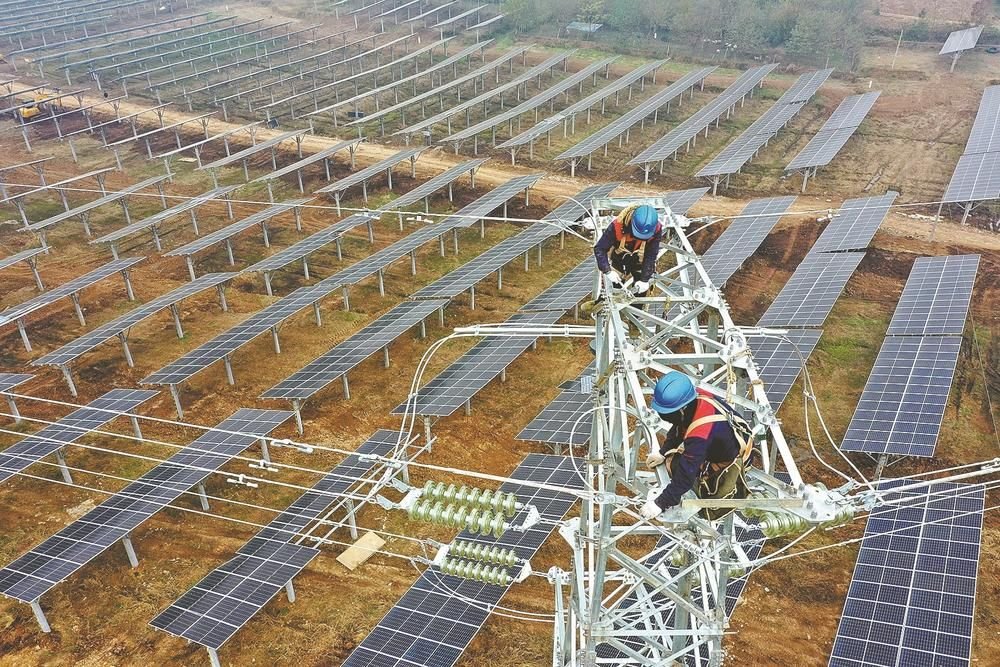
The importance of connections extends beyond standard distribution. In renewable energy projects, such as solar farms and wind parks, the step-up transformers face unique challenges. These transformers take low voltage from inverters and step it up to high voltage for the transmission grid.
Solar step-up transformers often utilize a Wye-Delta (Yd) configuration. The low-voltage Wye connection provides a grounded neutral for the inverters, while the high-voltage Delta connection traps harmonic currents generated by the power electronics, preventing them from polluting the wider utility grid. Incorrectly specifying the delta and wye arrangement for a renewable project can lead to severe grid non-compliance and rejected interconnection applications.
What Buyers Should Send Before Requesting a Transformer Quotation
To ensure a fast, accurate, and technically sound quotation, buyers must provide a comprehensive specification package. This should include:
- The exact capacity (kVA) and frequency (e.g., 50Hz or 60Hz).
- Detailed primary and secondary voltages (specifying line-to-line and line-to-neutral values).
- The required vector group (e.g., Dyn11).
- A single-line electrical diagram of the facility.
- Specific local utility standards or design institute requirements regarding grounding and neutral connections.
How TransformerGrid Helps Review Transformer Connection Requirements
At TransformerGrid, we do not blindly quote based on incomplete data. Our engineering team conducts a thorough pre-quotation review of every inquiry. If a buyer like Victor submits an RFQ without a vector group or grounding specification, we immediately engage in a technical consultation.
We cross-reference the requested specifications with local grid standards and assist the buyer in clarifying requirements with their local design institutes. This proactive approach ensures that every pole mounted and pad mounted transformer we manufacture is fully compliant, safe to energize, and perfectly matched to the customer's exact electrical infrastructure.
Conclusion
The internal connections of a three-phase transformer—whether Delta or Wye—are the foundation of safe and reliable electrical distribution. As Victor's experience demonstrates, treating utility transformer procurement as a simple hardware purchase is a high-risk strategy. By understanding the critical role of vector groups, grounding, and neutral requirements, and by partnering with a manufacturer committed to rigorous engineering review, buyers can confidently specify and procure transformers that ensure seamless grid integration and long-term operational success.
Frequently Asked Questions
1. What is the difference between Delta and Wye transformer connections?
Delta connects the windings in a closed triangle with no neutral, handling harmonics well. Wye connects the windings at a central point to create a neutral, allowing for both three-phase and single-phase (line-to-neutral) power delivery.
2. Why is the Wye connection common for distribution transformers?
A Wye secondary provides a solid neutral point that can be grounded for safety. It also allows the transformer to supply two voltage levels simultaneously, such as 400V for large machinery and 230V for standard appliances.
3. Can I use a Delta connection on the secondary side?
Yes, but a Delta secondary does not have a natural neutral point. It is typically used for specialized industrial applications where only three-phase power is required and specific ungrounded or corner-grounded systems are designed.
4. What is a vector group?
A vector group (like Dyn11) is a standardized code that specifies the winding configurations (Delta primary, Wye secondary) and the phase shift angle between the primary and secondary voltage waveforms.
5. Does the connection type affect the physical size of the transformer?
The connection type influences the internal wiring, bushing arrangement, and insulation design. While the overall physical footprint is largely driven by kVA capacity, the specific internal engineering required for Delta or Wye configurations must be precisely manufactured.
6. What happens if I order the wrong connection group?
The transformer may be unable to provide the correct voltages for your equipment, it cannot be safely grounded according to local standards, and if operated in parallel with other transformers, it will cause destructive short-circuits.
7. What information is needed for an accurate transformer quote?
Buyers must provide the kVA capacity, frequency, primary and secondary voltages (specifying line-to-neutral requirements), the specific vector group, and any local utility grounding standards.
Buyer FAQ
Can I order a transformer without confirming vector group?
It is risky. The vector group affects phase displacement, grounding, neutral availability and compatibility with the electrical system. Buyers should confirm it with the utility or electrical engineer before RFQ.
What does Dyn11 mean?
Dyn11 generally indicates a delta high-voltage winding, wye low-voltage winding with neutral, and a specific phase displacement. The exact requirement should follow project standards and utility approval.
What should I send before RFQ?
Send voltage ratio, kVA, phase, frequency, connection group, grounding requirement, utility specification and single-line diagram if available.
Related: Pad Mounted Transformer Product Page | Send RFQ Details
Need a Three Phase Transformer with Delta or Wye Connection Requirements?
Don't risk ordering the wrong specification. Send us your project drawing, connection requirements, and single-line diagrams. Our engineering team will review your vector group, grounding needs, and voltage specs before providing an accurate quotation. today.
Need a Transformer Quotation?
Contact our engineering team for a fast, accurate review of your project requirements.
For faster review, send your drawing, nameplate photo, kVA rating, voltage, project country and required delivery time if available. If you are not sure, contact us first — we can help you clarify the requirements.
For product scope, kVA ranges, compartment options and RFQ information, review the TransformerGrid pad mounted transformer product page.