“Received in Good Condition” — Four Words That Can Destroy Your Evidence Chain
Paired technical guide: site-receiving evidence chain
What happened — and why it matters
Before unloading, the driver handed the delivery sheet to Ana, the owner’s site representative. He pointed at the signature box. “Just write ‘received in good condition.’ We have another stop.” Ana looked at the transformer. No obvious oil leak. No dented tank. Packaging looked intact. Her pen touched the paper when the site engineer said, “Don’t write that yet.”
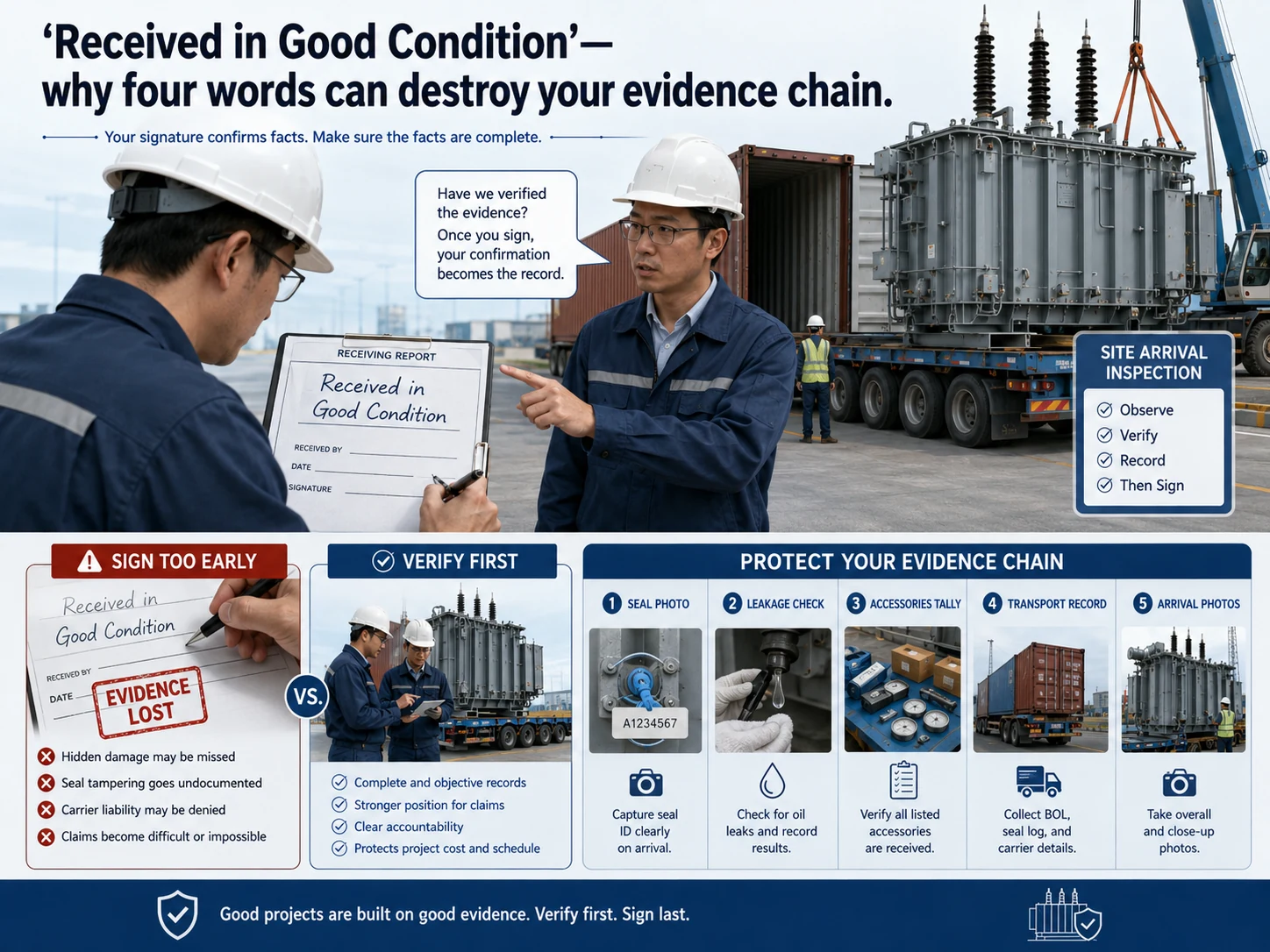
The technical backbone is the site-receiving evidence chain. The reason was not bureaucracy. Site receiving is the moment when evidence should be frozen as responsibility moves from transport into site custody. External condition, oil traces, sealing, transport-removed parts, accessory-package count, shock records, seals or packing condition, documents and photos are most useful when captured before the handover point. Photos taken later may still help, but the timeline becomes weaker: was that mark present on arrival, or did it happen during unloading?
The paradox is that the most obvious damage usually causes the least careless paperwork. Nobody wants to sign clean receipt for a transformer with a crushed radiator. The dangerous cases are smaller: a slight seepage mark, one missing accessory package, a broken gauge, a loose protective cap, wet packing, a missing transport record. These are exactly the issues people postpone with “sign first, check later.” Expensive disputes often begin not because nobody noticed, but because the moment of clear attribution was allowed to pass.
A better receiving form separates observation, evidence and status. Photograph the unit from all sides and then key interfaces. Record visible leakage and oil-level indications where applicable. Tally accessories against the packing list. Download transport evidence. Put specific abnormalities under reservation instead of hiding everything under a single “good condition” statement. If the full inspection cannot be completed, the wording of receipt should follow the contract and clearly identify what remains subject to verification.
Ana did not refuse the delivery. She crossed out “good condition,” wrote “received subject to detailed inspection and attached photo record,” and had the driver acknowledge the reservation field. Professional receiving is not about blaming the carrier or blocking the gate. It is about ensuring that everyone sees the same facts at the same moment.
Technical deep dive
Continue with the paired Wiki: site-receiving evidence chain
Project Action
Prepare the receiving checklist and package list before shipment. Deciding what to inspect while the truck is waiting at the gate is how evidence gets missed.
Selected for State Grid projects. Proven across extreme climates.
Manufacturing experience backed by documented project awards through a verified manufacturing partner.
Buying or sourcing a transformer? Contact:
WhatsApp: +86 176 8746 9988